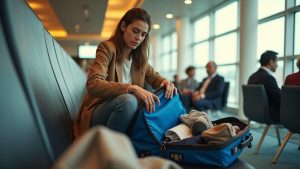
Shopping for anti-theft travel bags can feel overwhelming. Every product page promises slash-proof fabric, locking zippers, secret pockets, and RFID protection. But here’s the thing most articles won’t tell you: not every traveler needs every feature.
The bag that works perfectly for someone backpacking through crowded European train stations might be overkill for a business traveler hopping between hotels in Singapore. And the features that matter in a busy Bangkok market are different from what you’d want for a quiet road trip through rural New Zealand.
Think of it this way. You wouldn’t buy the same kind of lock for every situation. A bike lock, a house lock, and a luggage lock all protect things, but they’re designed for different threats. Anti-theft travel bags work the same way.
The goal isn’t to find the bag with the most security features. It’s to match the right protection to your actual trip. Where are you going? How will you be moving around? What are you most worried about losing? These questions matter more than any spec sheet.
This guide will help you figure out which features actually matter for your travel style. You’ll learn when a slash-proof bag is worth the extra weight, when hidden zippers make sense, and when you can skip the fancy stuff entirely. Because the best anti-theft travel bag isn’t the one with everything. It’s the one that fits how you actually travel.
Start by matching the bag to your real trip risks
Before you start comparing anti-theft travel bags, think about what your typical day will actually look like on this trip. Not every journey needs the same level of security, and not every bag feature will matter for how you travel.
If your trip involves a lot of crowded metro rides or packed bus stations, you’re facing a different risk than someone spending most of their time hiking or driving between small towns. Pickpockets work in crowds where they can get close without standing out. That’s when features like lockable zippers and bags that sit against your body start to matter.
The gear you’re carrying makes a difference too. A passport and some cash tucked in a day pack needs less protection than a laptop you’re working on at café tables. If you’re planning to set your bag down frequently, or hang it on chair backs while you eat, you want something harder to grab or slash open.
Here’s a helpful way to think about it: if your trip looks like hopping between hostels on public transport with your phone and wallet always in your bag, you need more active protection. If you’re road tripping with everything locked in a car trunk except a small crossbody for sightseeing, a simpler bag probably works fine.
The same goes for beach days versus urban exploring, or quiet villages versus busy night markets. Each setting changes how exposed your belongings are and how much attention your bag might attract. Match the security level to the actual situations you’ll face, not just the destination name on your ticket.
Look at how the bag closes and how someone could access it in a crowd
The best anti-theft travel bags make it hard for someone to open your bag without you noticing. That sounds obvious, but most regular bags fail this basic test. A tote with an open top? Someone can slip their hand in while you’re looking at your phone. A backpack with exposed zippers? A pickpocket can unzip it in seconds while you’re standing in a crowded metro.
This is where hidden zippers earn their keep. A hidden zipper doesn’t mean invisible. It means the zipper pull sits against your body when you wear the bag, or it’s tucked under a fabric flap. Either way, someone standing behind you can’t easily grab and pull it open. You still access it normally by swinging the bag forward or reaching back, but a stranger can’t do it unnoticed.
Lockable zipper pulls add another layer. These are just zipper pulls with small holes that let you thread a tiny lock or clip through them. When locked together, the zippers can’t slide apart. It’s not Fort Knox, but it stops the quick unzip that pickpockets rely on. They work fast and move on if a bag takes too much effort.
Flap coverage works the same way. Some bags have a Storm Flap or magnetic panel that covers the main zipper. You flip it up to access your stuff, but someone else would need to lift the flap first, then find and open the zipper. That’s too many steps for a quick grab.
The trick is finding a bag that protects you without frustrating you. If you can’t open your own bag easily when you need your passport, you won’t use those security features. Test the closures before you buy.
Decide if you need slash resistance for straps and panels
When people talk about a slash-proof bag, they usually mean something with reinforced straps and panels that resist cutting. These bags often have steel cable woven into the shoulder straps or a tough mesh layer hidden inside the fabric. The idea is to make it harder for someone to slice through your bag or cut the strap to grab it and run.
This feature matters most in specific situations. If you’re wearing a crossbody bag loosely in a crowded market or metro, someone could potentially cut the strap to take the whole bag. If you hang your bag on the back of a cafe chair or hook it somewhere out of sight, a slash to the bottom panel could give access to your stuff. These scenarios do happen in certain busy tourist areas and transit hubs.
That said, slash resistance isn’t relevant everywhere. Pickpockets usually work through openings, not by cutting fabric. And most casual theft targets bags that are easier to grab or left unattended, not ones that require tools or force.
The trade-offs are real. Slash-resistant bags tend to be heavier and stiffer than regular ones. They cost more, and the reinforced materials can make the bag less flexible to pack. Cut-resistant doesn’t mean indestructible either. It slows someone down and discourages opportunistic attempts, but it’s not armor.
If you’re traveling through places known for bag slashing or plan to carry expensive gear in crowded spaces, it’s worth considering. For casual trips or destinations where that’s not a common concern, a lighter bag with good zipper security might serve you better.
Choose a carry style that keeps valuables in your control
The way you carry a bag changes how vulnerable it is. A backpack sits behind you, out of sight. You won’t notice someone unzipping it on a crowded bus or metro. A crossbody bag worn in front puts your belongings where you can see them, but only if you actually position it that way.
Crossbody bags work well when you’re moving through busy areas or standing in crowds. You can swing the bag around to your front and keep one hand resting on it while you’re looking at your phone or taking a photo. The strap crosses your body, which makes it harder for someone to grab and run.
Backpacks offer comfort for longer walks, but they’re risky in tight spaces. If you’re on packed public transit or navigating a street market, you can’t see what’s happening behind you. Some travelers flip their backpack to the front in these situations, but that gets awkward fast. If you prefer a backpack, look for one with lockable zippers you can secure before stepping onto a train.
Sling bags split the difference. They sit across your chest or back, and you can rotate them forward in seconds without taking them off. That makes them practical when you’re hopping on and off transportation or stopping frequently to pay for things.
Totes and shoulder bags slide off easily, which becomes a problem when you set them down to order coffee or check a map. If the strap is short and sits high on your shoulder, it’s less likely to slip. If it’s long and dangles, you’ll set it on the ground more often, and that’s when people forget it or walk away without noticing someone else picked it up.
Think about how often you’ll be reaching into your bag while standing, and whether you’ll need quick access without removing it completely. That tells you which style keeps things secure without slowing you down.
Understand what RFID protection does (and when it matters)
RFID protection is one of those features that sounds impressive but needs a reality check. It’s designed to block unauthorized readers from scanning the contactless chips in your credit cards or passport while they’re still in your bag. Someone would theoretically walk past you with a hidden reader and grab your card data wirelessly.
Here’s the thing: this type of theft is extremely rare in practice. Most card fraud happens online or through compromised payment terminals, not someone brushing past you in a crowd. Your bank’s fraud monitoring catches suspicious charges quickly, and contactless transactions usually have low limits anyway.
RFID blocking also won’t protect your phone, stop pickpockets from unzipping your bag, or prevent any kind of theft that involves actually taking something. It’s a narrow shield for a narrow threat.
That said, some travelers simply feel better knowing their passport and cards have that extra layer. If you’re visiting crowded metro systems or busy tourist markets and the peace of mind matters to you, an RFID pocket might be worth having. Just don’t pay a big premium for it.
You also don’t need to buy a whole new bag just for this feature. Simple RFID-blocking card sleeves cost a few dollars and slide right into any bag. Or just tuck your contactless cards into a zipped inner pocket rather than an outer one. That physical barrier works just as well for the unlikely scenario you’re trying to prevent.
Bottom line: RFID protection is a nice-to-have, not a must-have. Don’t let it be the deciding factor when choosing anti-theft travel bags.
Plan for moments when the bag leaves your body
You won’t always have your bag strapped to your shoulder. You’ll set it down at a café while you work. You’ll place it on a luggage rack on a train. You’ll rest it by your feet in a waiting area while scrolling your phone.
These are the moments when bags disappear. Not because someone planned an elaborate heist, but because the opportunity was just sitting there.
Lockable zippers won’t stop a determined thief, but they do something more useful: they eliminate casual opportunities. Someone walking past your table can’t quietly unzip your bag and reach inside while you’re looking at your laptop. The small metal loops that let you thread a tiny padlock through the zipper pulls create just enough hassle that most people move on.
Some anti-theft travel bags also include anchor straps or cable loops. These let you wrap a strap around a table leg or chair arm, or thread a small cable lock through a fixed point. Again, this isn’t Fort Knox. Someone with wire cutters and bad intentions can get through. But that’s not the point.
The point is changing the calculation for someone who’s looking for an easy grab. A bag locked to a chair takes time and tools and attracts attention. An unlocked bag sitting on the floor next to a distracted traveler? That’s gone in three seconds.
Think about your trip. Will you work from cafés in busy cities? Take overnight trains? Wait in crowded terminals? These features matter most when you need to focus on something else for a few minutes and can’t keep one hand physically on your bag the whole time.
Make sure the security features don’t ruin comfort and daily use
The most secure bag in the world won’t help you if it’s so uncomfortable that you leave it at the hotel or carry it with the zippers hanging open. Security features often come with real trade-offs that affect how the bag feels and functions during a long day of travel.
Heavy-duty materials and reinforced panels add weight. A bag that feels fine when empty might dig into your shoulders after six hours of sightseeing with a water bottle, guidebook, and layers inside. Slash-proof mesh and wire-reinforced straps make bags stiffer and less packable. Hidden zipper paths can be awkward to open when you just need to grab your phone quickly.
Before you buy, think about the practical details. Check that the shoulder straps have real padding, especially where they rest on your body. Look at the back panel and make sure it won’t trap heat against your spine all day. Pick up the bag and see if it feels balanced, not lopsided or stiff. Open and close the zippers a few times to confirm they move smoothly, not in some frustrating zigzag pattern that requires two hands.
Water resistance matters too, because fumbling with a soaked bag makes you less careful about security. And pay attention to how the straps attach and where the fabric takes stress when loaded. Weak points fail first.
Here’s the thing: when a bag is annoying to use, people adapt in ways that undo the security. They leave zippers half open for convenience. They switch to a lighter bag partway through the trip. They set it down more often instead of keeping it on their body. A slightly less secure bag that you’ll actually use properly often protects you better than a fortress you’ll resent carrying.