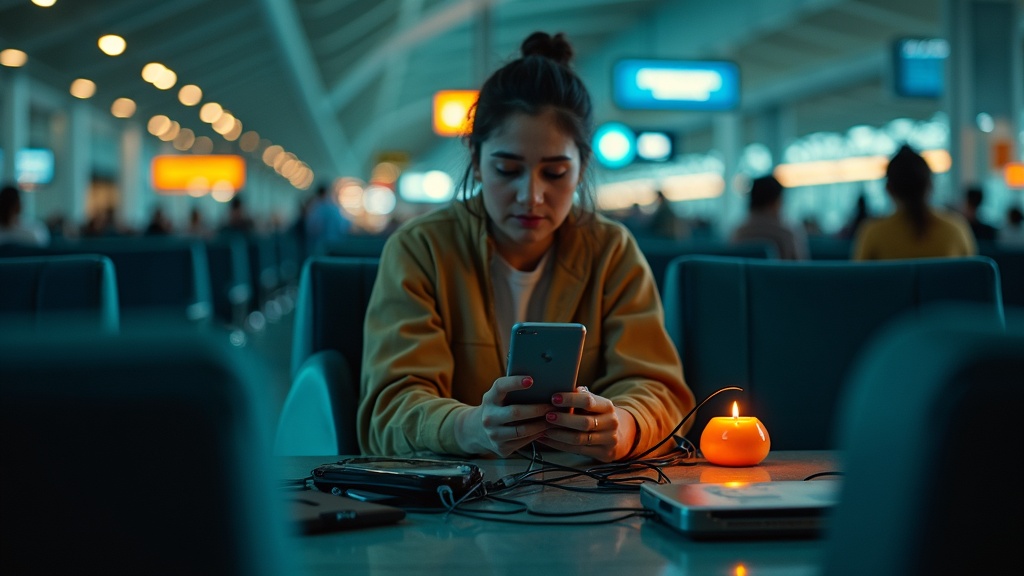
You’ve packed your bags, checked your passport, and downloaded all the apps you need for your trip. But have you thought about how you’ll actually charge your phone when you land in Tokyo, London, or Buenos Aires?
Most travelers grab a cheap travel adapter at the airport and call it a day. That works sometimes. But other times, your phone charges painfully slowly, your laptop refuses to charge at all, or worst case, you smell burning plastic and realize something has gone very wrong.
The problem isn’t just about plug shapes. Different countries use different voltages, and not all adapters are created equal. Some devices can handle the switch automatically, while others can’t. And that innocent-looking USB port in your hotel room? It might deliver way less power than you expect.
The good news is that keeping your gear charged abroad doesn’t have to be complicated or scary. Once you understand a few key differences in how countries deliver electricity, and what your devices actually need, you can travel with confidence. No more guessing whether that adapter will work, no more waiting hours for a half-charged battery, and definitely no more fried chargers.
This guide will walk you through the essential things you need to know before plugging in overseas. We’ll cover what can actually go wrong, how to avoid it, and what gear is worth packing.
An adapter changes the shape, not the electricity
Here’s the mistake that destroys more travel electronics than anything else: assuming a travel adapter protects your devices from different electrical systems. It doesn’t. An adapter is just a shape-shifter for your plug. It lets a US two-prong plug fit into a UK three-prong socket, or a European round plug fit into an Australian angled socket. That’s it.
The electricity coming out of that wall socket hasn’t changed at all. If the outlet delivers 240 volts and your device expects 110 volts, plugging in with just an adapter means you’re feeding your gadget more than double the power it was designed to handle. That’s when you get smoke, melted plastic, and a ruined hair dryer.
This is where a voltage converter comes in. A converter actually changes the electrical current from one voltage to another. If you’re taking something that only works on 110 volts to a country with 240-volt outlets, you need a converter between the wall and your device.
The good news? Most modern electronics don’t need a converter at all. Your phone charger, laptop power brick, camera battery charger, and tablet adapter are almost certainly dual voltage. Look for tiny text on the device that says something like “Input: 100-240V.” That means it automatically adjusts to whatever power it receives. You only need the adapter to fit the socket.
But older hair dryers, flat irons, electric razors, and some heated beauty tools are single voltage. Plug one of those directly into a 240-volt outlet with just an adapter, and it’s toast. For these items, you either need a converter or should buy a dual-voltage version before you travel.
How to check if your device is dual voltage before you plug in
Before you leave home, grab each charger you plan to bring and flip it over. Look for a small printed label, usually on the power brick itself or the part that plugs into the wall. This label tells you everything you need to know.
Find the line that starts with “Input” or “IN.” If it says something like “100–240V” or “100–240V 50/60Hz,” you’re golden. That device can handle the electricity in virtually any country. The voltage range covers both the lower voltages used in North America and the higher ones common in Europe, Asia, and elsewhere.
If you only see “110–120V” or “220–240V,” stop right there. That device is not dual voltage. It’s built for one type of electrical system only. Plugging a 110V-only device into a 240V outlet can fry it in seconds, sometimes with smoke or a loud pop. The reverse won’t destroy it immediately, but it won’t work properly either.
The same rule applies to built-in chargers on hairdryers, curling irons, and older electronics. Check the underside or back panel for that input label. If there’s no range listed, assume it’s single voltage and leave it home or buy a dedicated travel version.
Once you’ve confirmed your gear is dual voltage, you still need the right plug shape to fit foreign outlets. That’s where travel adapters come in. But adapters don’t convert voltage, they just change the shape of the prongs. Never rely on an adapter alone if your device isn’t already dual voltage.
Universal adapters are convenient, but they have hidden limits
Walk into any travel store and you’ll see universal adapters marketed as the one device that works everywhere. That’s partly true, but misleading. These adapters handle different plug shapes, not different voltages. If your device needs 110 volts and the outlet delivers 240, the adapter won’t save you.
Even when voltage isn’t an issue, universal adapters come with quirks that can frustrate or endanger you. The sliding prongs that flip out to match different outlets often fit loosely. A wobbly connection means your phone might charge intermittently, or the adapter could spark and overheat. Some countries have tight outlet standards, and a loose adapter simply won’t stay put.
Grounding is another weak spot. Many universal adapters only provide two-prong connections, even when the outlet offers three. If you’re plugging in a laptop or hair dryer that relies on a ground for safety, you’re bypassing an important protection. Not every country enforces grounding the same way, but skipping it when it’s available adds unnecessary risk.
Size matters too. Universal adapters tend to be chunky because they cram multiple plug configurations into one unit. That bulk can block neighboring outlets in a power strip or wall socket, leaving you with fewer places to charge. Some also struggle with high-power devices like travel kettles or hair straighteners, even if the voltage matches.
When you’re shopping for an adapter, look for a snug fit in the outlets you’ll actually use. Check the power rating printed on the adapter to make sure it handles your devices. Stick with brands that have a solid reputation, even if they cost a bit more. A poorly made adapter can ruin your trip, or worse.
USB charging abroad: why fast charging sometimes fails
Just because your phone is plugged in doesn’t mean it’s charging quickly. You might notice your device crawling to full battery even though the adapter seems fine and the outlet works. The culprit is usually not the plug shape, but what’s happening inside the charging setup.
Many hotel USB ports and cheap travel adapters deliver very weak power. They’re designed to charge something eventually, but they might pump out only enough electricity to slowly trickle charge your phone overnight. If you’re trying to top up quickly before heading out, you’ll be disappointed.
Your cable matters more than you’d think. A worn-out or low-quality USB cable can’t carry enough power, even if your charger is capable. Think of it like trying to fill a bucket through a narrow straw instead of a wide hose. The same principle applies whether you’re using USB-A, the older rectangular port, or USB-C, the newer reversible oval one.
Multi-port chargers add another wrinkle. When you plug in two or three devices at once, the charger splits its available power between them. Each device charges slower than it would alone. Some smarter chargers distribute power more efficiently, but budget models often don’t.
Fast charging only works when your charger, cable, and device all speak the same language. They need to agree on how much power to send and receive. If any piece of that chain doesn’t support the same charging method, everything defaults to basic slow charging. Your phone might show it’s charging, but without that three-way agreement, you won’t get the speed you’re used to at home.
Portable chargers: what helps on the road and what gets you stopped at security
A portable charger can be a lifesaver when you’re out all day sightseeing, stuck in an airport during a delay, or staying somewhere with dodgy outlets. It’s basically a rechargeable battery you carry with you, giving your phone or tablet a boost without needing to find a wall socket.
The capacity of a power bank tells you how much charge it holds. You’ll see numbers like 10,000 mAh or 20,000 mAh. Think of it this way: a 10,000 mAh charger can typically refill a smartphone two or three times before it needs recharging itself. Bigger numbers mean more refills, but also more weight in your bag.
Here’s the catch when you’re flying. Airlines require you to pack lithium battery power banks in your carry-on luggage, not in checked bags. That’s a safety rule because lithium batteries can overheat, and crew can respond faster if something goes wrong in the cabin. Most everyday power banks are fine to bring aboard, but very large ones may be restricted or require approval. The general guideline is that moderate-sized chargers won’t raise eyebrows, but if you’re packing something enormous, check with your airline before you leave.
A few habits will keep you safe on the road. Use quality charging cables, not frayed or ultra-cheap ones. Don’t leave your power bank charging unattended on soft surfaces like beds or couches where heat can build up. And if a charger ever feels unusually hot, smells odd, or looks swollen, stop using it immediately.
Carried sensibly, a portable charger is one of the simplest ways to keep your devices alive when you’re far from home and wall outlets are scarce.
Outlet safety in hotels and rentals: small habits that prevent big problems
Hotel rooms and vacation rentals aren’t always maintained like your home. That wall outlet might look fine, but it could be loose, worn out, or wired in a way that makes your expensive gear vulnerable. The good news is that most problems announce themselves if you know what to watch for.
Before plugging anything in, give the outlet a quick look. Does your plug wobble when you insert it? Does it slide out easily on its own? Loose sockets create poor connections that can spark or overheat. If an outlet feels sketchy, use a different one. It’s that simple.
Once your device is charging, check back after ten or fifteen minutes. Touch your adapter gently. A little warmth is normal, but if it’s uncomfortably hot to hold, unplug it. Same goes if you hear buzzing, see any discoloration around the plug, or smell something burnt or plasticky. These aren’t subtle hints. They’re your cue to stop using that setup immediately.
Power strips and extension cords are common in rentals, but not all of them are trustworthy. Avoid anything that looks frayed, taped up, or suspiciously cheap. And don’t daisy-chain multiple strips together or plug too many high-draw devices into one outlet. Just because everything physically fits doesn’t mean it’s safe to run simultaneously.
If something feels wrong, trust that instinct. Charge your phone in the bathroom instead. Use your laptop battery for the evening. Ask the front desk for a different room. Small adjustments beat risking your devices or worse. You’re not being paranoid. You’re being smart.
A simple packing setup that covers most international trips
Most travelers pack way too many chargers. They bring a different power brick for each device, then panic when none of the plugs fit the wall socket. There’s a simpler way that works almost everywhere.
Start with one good travel adapter. Not the flimsy kind that wiggles loose, but something solid that handles multiple plug types. This becomes your single point of contact with foreign outlets. Alternatively, if you travel to the same region repeatedly, a couple of region-specific adapters work fine and cost less.
Next, add one multi-port wall charger with enough USB ports for all your devices. This plugs into your travel adapter and becomes your personal charging station. Instead of three separate bricks fighting for outlet space, you have one hub that powers everything at once. Most hotel rooms only have one or two accessible outlets anyway, so this setup makes practical sense.
Think about charging points per person rather than chargers per device. One charging point with four USB ports can handle your phone, tablet, headphones, and camera simultaneously. Pack the right cables for your gear, and you’re set.
Finally, bring one decent portable charger. This covers you during long travel days when outlets aren’t available. It also means you’re not hunting for sketchy charging kiosks in airports or borrowing mystery chargers from hotel reception.
This whole setup fits in a small pouch and eliminates most of the compatibility headaches that come with charging devices abroad. You’re not carrying five different power bricks, you’re not stuck with incompatible plugs, and you’re not dependent on whatever random charger the hotel might lend you.
What to do in common charging scenarios abroad
You arrive at your hotel in Paris with your American phone charger and find a completely different socket on the wall. This is the moment most travelers panic. The simple fix is a travel adapter, which just changes the shape of the plug to fit the socket. Your phone charger almost certainly works with both 120V and 240V, so the adapter is all you need. Check the tiny print on your charger block. If it says something like “100-240V,” you’re good to go.
Now imagine your room has only USB ports built into the nightstand. These are usually safe for phones and tablets because USB delivers a standard low voltage. But don’t try to charge a laptop this way unless it’s specifically designed for USB charging. Most laptops need more power than a basic USB port can provide.
What if you need to charge three devices but only have one outlet? A multi-port USB charger works great for phones, tablets, and cameras. For a laptop plus other gear, bring a small power strip from home. Just make sure the power strip doesn’t have surge protection, because that feature can behave unpredictably with different voltages and might even cause problems.
You see a hair dryer in the bathroom of your Tokyo hotel. Use that one, not the high-wattage dryer you packed from home. Heat-producing devices like dryers, straighteners, and curling irons often aren’t dual voltage. Plugging a 120V hair dryer into a 240V socket can burn it out instantly, even with an adapter.
In a hostel with a shared power strip that looks overloaded? Find another outlet or wait. Overloaded strips are a real fire risk, especially when you don’t know the building’s wiring quality.