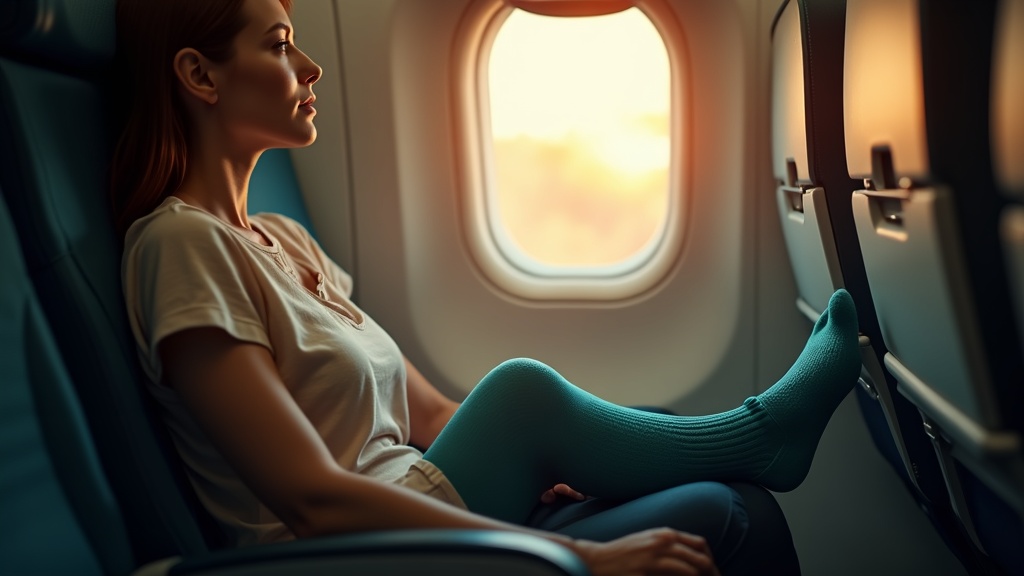
You’ve probably heard that compression socks can help during flights. Maybe a friend swears by them, or you saw them advertised at the airport. So you decide to give them a try.
Then you start shopping, and everything gets confusing fast.
Some compression socks cost eight dollars at the pharmacy. Others are fifty dollars and require you to measure your calves with a tape measure. Some look like regular dress socks, while others resemble medical equipment. The packaging throws around numbers like fifteen to twenty millimeters of mercury, but nobody explains what that actually means for your legs at thirty thousand feet.
Here’s the thing that most people don’t realize: compression socks for travel aren’t one-size-fits-all, and they’re definitely not all created equal. The pair that works perfectly for your seatmate might feel uncomfortably tight on you, or worse, do absolutely nothing.
If you’ve ever bought compression socks that felt like torture devices within an hour, or ones that seemed to have zero effect on your swollen ankles, you’re not alone. The problem isn’t you. It’s that the market is flooded with options designed for completely different purposes, and almost nobody explains which type actually makes sense for flying.
Getting the right pair means understanding a few simple distinctions that stores and websites rarely bother to clarify. Once you know what to look for, choosing becomes straightforward instead of overwhelming.
How to match socks to your flight and your comfort needs
The right compression level depends more on your personal comfort tolerance than on precise flight duration. A two-hour hop might feel fine without any compression at all, especially if you’re in an aisle seat and getting up frequently. But that same person on a nine-hour overnight flight might want gentle support just to wake up without puffy ankles.
If you run cold or the cabin tends to feel warm to you, lighter compression often works better. Thicker medical-grade socks can feel stifling when you’re already overheated, and many people peel them off mid-flight in frustration. At that point, they’re not doing anything for travel circulation because they’re balled up in the seat pocket.
Window seat passengers face a different challenge. You’re less likely to get up and move around, which means blood pools more easily in your lower legs. That’s when moderate compression becomes more helpful for reducing swelling on flights, even if you wouldn’t normally bother on shorter trips.
Comfort details matter more than most people expect. A tight band at the top of the sock can dig into your calf after a few hours, making you want to rip them off. Bulky toe seams press against your shoes during long airport walks and start to irritate. If something feels annoying in the airport, it’ll feel worse six hours into the flight.
The practical test is simple. If you can’t imagine wearing the socks for the entire journey without adjusting or removing them, they’re probably not the right fit. Compression socks for travel only work when you actually keep them on.
Compression sock sizing mistakes that ruin the experience
Here’s the thing nobody tells you: compression socks don’t work like regular socks. Your usual shoe size means almost nothing here. What actually matters is the circumference of your calf and ankle, because compression socks need to apply graduated pressure from your ankle upward. If they’re too loose, they won’t work. If they’re too tight, you’ll want to rip them off halfway through your flight.
The right fit feels snug but not painful. Think of it like a firm handshake, not a stranglehold. You should be able to slide them on with some effort, but they shouldn’t cut off your circulation or leave deep red marks. Your toes should have wiggle room and feel normal, not numb or tingly.
Common problems point directly to sizing issues. If the sock keeps rolling down at the top of your calf, it’s too big. If you feel pinching behind your knee or the fabric bunches up there, the length is wrong for your leg shape. If your foot slides around inside the sock, go down a size. And if your toes go numb or turn white, take them off immediately because they’re too tight.
When you’re between sizes, your height and leg shape become the tiebreaker. Taller people with longer calves often need to size up even if their measurements fall in the smaller range. People with muscular calves might need a wider size, while those with slim legs should choose the smaller option. Most brands show a size chart with calf and ankle measurements, so grab a soft measuring tape before you shop.
Don’t try to tough out pain or ignore warning signs. Compression socks should feel supportive, not torturous. The wrong size won’t just make you uncomfortable, it can actually defeat the whole purpose of wearing them.
Over-the-counter vs medical-grade: which one is actually for flights
The term “medical-grade” gets thrown around a lot with compression socks, and it mostly just means stronger pressure. Medical-grade socks are prescribed by doctors for specific health conditions. They squeeze harder, especially at the ankle, and they’re designed to manage real circulation problems.
For most travelers, that’s overkill. A common mistake is thinking stronger equals better, so people buy the tightest socks they can find and end up miserable. One traveler described feeling like her legs were in a vice for eight hours, then stuffing the socks in the seat pocket and never wearing them again.
The opposite problem happens too. Some “compression” socks sold in airport shops are basically just snug regular socks. They might have some gentle squeeze, but not enough to actually help with swelling on a long flight. You wear them, your ankles still puff up, and you figure compression socks are a scam.
What you want for flights sits in the middle. Look for socks that clearly label their pressure level, usually shown in mmHg. For travel, most people do well with light to moderate compression. The packaging should be specific about numbers, not just vague claims like “energizing” or “soothing.”
Pay attention to sizing too. Proper compression socks for travel should have a sizing chart based on your shoe size or calf measurement, not just small, medium, large. And honestly, a good return policy matters. Compression fit is personal. What feels supportive to one person feels restrictive to another, so being able to return them if they’re not right makes the whole process less stressful.
How to wear them on travel day so they actually help
The best time to put on compression socks for travel is before you start to feel puffy or uncomfortable. That means slipping them on in the morning before your flight, ideally before you’ve been sitting or standing for long periods. Once swelling has already started, the socks have to work harder and might feel tighter than they should.
Pair them with shoes that have a bit of extra room. Your feet might feel slightly fuller with the socks on, so those snug sneakers that usually fit perfectly could pinch by hour three of your long haul flight. Slip-on shoes work great because you can easily take them off mid-flight without wrestling with laces while someone’s asleep next to you.
When you pull the socks up, smooth out any wrinkles or bunched fabric. Those little folds can dig into your skin and create uncomfortable pressure points that defeat the whole purpose. And never fold or roll down the top band to make them shorter. That creates a tight ring around your calf that can actually restrict travel circulation instead of helping it.
Wear them with breathable pants or loose layers. Tight jeans crammed over compression socks can make your legs feel overheated and uncomfortable. You want air to move around a bit, especially on longer flights.
The socks do their job best when you give them a little help. Stand up and walk to the bathroom once or twice during the flight. Flex your feet while you’re seated. Drink water when you’re thirsty. None of this has to be complicated or scheduled. Just small, normal movements that keep things flowing and help reduce swelling on flights without turning your trip into a wellness retreat.