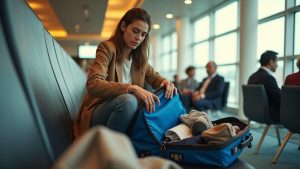
Sleeping on an overnight bus feels a bit like trusting a stranger to watch your wallet. You need the rest, but your valuables are sitting there while you drift off. It’s not paranoia. Theft does happen, and being tired in an unfamiliar place makes you an easier target.
The good news is that you don’t need expensive gear or complicated systems to protect your things. Most theft on buses happens because someone saw an opportunity and took it. A bag left in the aisle. A phone on the seat. Valuables visible and easy to grab.
Simple habits can close those opportunities. Wearing your most important items while you sleep. Keeping your bag physically attached to your body. Choosing a seat that makes it harder for someone to reach your stuff without waking you. These aren’t guarantees, but they shift the odds in your favor.
You’re not trying to build a fortress. You’re just making yourself slightly less convenient to steal from than the person in the next row. That’s often enough. Thieves on buses usually want quick, quiet scores. If your setup takes effort or creates risk of waking you up, they’ll likely move on.
What follows are practical, low-cost ways to keep your valuables safer while you sleep. None of them are perfect, but together they create layers of protection that work even when you’re too exhausted to stay alert.
Pack so your essentials stay with you, even if you doze off
The first step is deciding what actually matters. Not everything in your bag deserves the same level of protection. Your true essentials are the things that would ruin your trip if they disappeared: your phone, passport or ID, bank cards, enough cash for a day or two, any prescription medication, and your house or hotel keys. Everything else can go in your main bag.
Once you know what counts as essential, keep it on your body in a way that makes it hard to remove while you sleep. A zipped inside pocket on your jacket works well if you already have one. A small pouch that tucks into your waistband stays put and stays hidden. Some people clip their phone to a belt loop with a small carabiner or use a simple wrist strap so it can’t be lifted quietly.
The goal is to create a compact sleep bundle that fits in one secure spot. Think of it as your minimum survival kit. If you keep these few items together in a single zippered pocket, nothing ends up loose on the seat next to you or half-falling out of an open bag. Loose items are easy pickings.
You don’t need expensive gear for this. Use what you already own. An old running pouch, a jacket with inner pockets, even a ziplock bag tucked into your waistband can work. The point is that your essentials stay attached to you, not sitting somewhere a stranger could reach while you’re asleep. If someone wants your main luggage, that’s annoying. If they take your passport and cards, that’s a crisis.
Set up your seat so your bag can’t be pulled away quietly
The goal isn’t to create a fortress. You just want to make your bag annoying enough to steal that a thief moves on to an easier target. Most theft on buses happens quickly and quietly while people sleep, so anything that requires extra time or creates noise works in your favor.
Your daypack or small bag should live on the floor between your feet or tucked under your legs. If you can loop a strap around your ankle or tuck it under your thigh, even better. The idea is simple: if someone tries to pull the bag away, the movement will tug on your leg and wake you up. You don’t need complicated knots or locks, just enough contact that you’ll feel something.
When you’re settling in to sleep, rest your arm or hand on top of the bag for the first little while. This adds another layer of awareness during that vulnerable time when you’re drifting off but not fully asleep yet.
If your bag has to go in the overhead rack, pick a spot you can glance at without craning your neck. Before you stash it, turn the zippers toward the wall or window so they’re harder to reach. You can also loop a strap around the metal rail or use a simple clip to attach it. This won’t stop a determined thief with tools, but it makes a quick grab much harder.
The whole point is creating friction. A bag that requires two hands, makes noise, or takes extra seconds to remove is a bag most opportunistic thieves will skip.
Sleep in a way that keeps awareness without staying tense
The good news is you don’t need to stay awake all night or sleep with one eye open. You just need to make it harder for someone to take your things without you noticing. Think of it like this: most opportunistic theft happens when someone is completely zonked out and oblivious to their surroundings.
Start by physically connecting your valuables to your body. Loop your bag strap around your arm or leg, or tuck your daypack between your body and the window. When something is touching you, you’ll naturally notice if it moves. This simple step means you can actually relax instead of staying rigid with worry.
If you like listening to music or podcasts while you drift off, keep the volume low enough to hear what’s happening around you. Better yet, use just one earbud. You’ll still get the comfort of audio, but you won’t be completely cut off from your environment.
Set a gentle vibration alarm on your phone for the times when the bus is likely to make stops. That’s when the most movement happens and when you want to be at least semi-aware. Keep your phone on silent but with vibration turned on so you’ll feel any alerts without disturbing others.
Small habits make a difference too. Never leave anything in the seat pocket in front of you or on the fold-down tray. Those spots are easy pickings. And if you have a choice of seats, skip the ones right next to the bathroom or the door. Less foot traffic past your seat means fewer opportunities for someone to casually grab something.
The goal isn’t hypervigilance. It’s creating a setup where you can genuinely rest while your valuables stay connected to you.
Handle rest stops and boarding moments like high-risk transitions
The times when everyone stands up at once are when things go missing. Boarding, getting off for bathroom breaks, and arrival stops create chaos and distraction. That’s exactly when you need to be most alert.
Before you stand up at any stop, do a quick touch check. Tap your pockets where you keep your phone, wallet, and ID. This takes three seconds and becomes automatic after the first few times. Keep these items in the same pockets every single time so your hands know exactly where to go. When you’re half-asleep at 3 AM, muscle memory helps.
If you’re stepping off the bus for a rest stop, your bag comes with you or stays between your legs while you gather your things. Never leave valuables on your seat, even for a five-minute bathroom break. Buses sometimes leave early, or someone else might think that phone on the seat is fair game.
When people crowd the aisle during boarding or stops, keep one hand on your bag. Not in a paranoid death grip, just resting there. It stops someone from accidentally grabbing it thinking it’s theirs, and it keeps you connected to your stuff during the shuffle.
Speaking of mix-ups, black backpacks and dark duffels all look identical in dim bus lighting. Tie a bright ribbon around your bag’s handle or stick a piece of colorful tape on it. Add a luggage tag if you want. Anything that makes yours obviously different helps both you and other tired passengers avoid grabbing the wrong bag in a hurry.
Use small, cheap accessories that add friction for a thief
You don’t need expensive anti-theft gear to make a thief’s job harder. A few simple, everyday items can add just enough hassle to make your bag less appealing than someone else’s.
A tiny carabiner clipped through two zipper pulls can stop someone from silently opening your bag while you sleep. It’s not a lock, but it forces a thief to fumble or make noise. You can find these at hardware stores for a couple of dollars. The goal isn’t to create a vault. It’s to create friction.
A short strap or hair tie looped around your phone and clipped to a bag strap keeps it from sliding away if you doze off holding it. It won’t stop a determined thief, but it stops the quiet grab-and-go that happens when you’re half asleep.
Covering your bag with a lightweight scarf or tote makes it look less accessible. A thief scanning the bus wants easy targets. If your bag looks like it’s wrapped up or part of your sleeping setup, it’s less tempting. This works especially well if your daypack has visible pockets or looks new and expensive.
A simple zippered pouch for your sleep essentials keeps small items from spilling out if you shift around. Phone, earbuds, glasses, lip balm. Everything stays together and you’re less likely to leave something loose on the seat beside you.
These tools work best when you’ve already tucked your main valuables into a body pouch and placed your bag thoughtfully. They’re not magic, but they add layers of difficulty. And on a dark bus at three in the morning, difficulty is often enough.