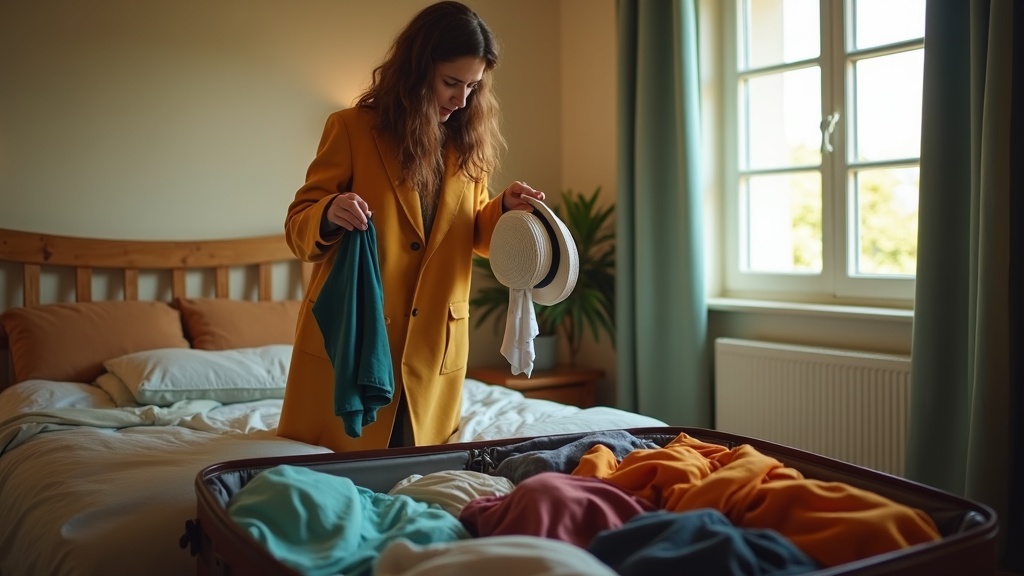
You check the weather app for your trip next week. Monday shows sun. Wednesday predicts rain. Friday might be cold, or mild, or both. By the time you leave, the forecast has changed twice more, and you’re standing in front of your suitcase wondering if you need to pack for four different climates.
This is the reality of packing for variable weather. The forecast shifts. Temperatures swing. And somehow you’re supposed to fit everything into a carry-on without looking like you’re moving abroad.
The usual advice is to layer. Fair enough. But what does that actually mean when you’re trying to keep your bag light? Telling someone to “just layer” is like telling them to “just cook”—technically correct, but not exactly helpful when you’re staring at an empty suitcase at midnight.
Smart packing for unpredictable weather isn’t about covering every possible scenario. It’s about choosing a few versatile pieces that work together in different combinations. The right jacket that handles both wind and light rain. A single pair of shoes that won’t fail you on wet cobblestones. Clothes that layer without adding bulk.
This approach means you can handle a surprise cold snap or an unexpected sunny afternoon without hauling your entire closet across time zones. You’ll have what you need, not everything you might need, and there’s a big difference between the two.
Plan for swings, not perfect forecasts
Weather apps love showing you hourly predictions for the next ten days. Ignore most of it. What you actually need to prepare for isn’t whether it’ll be 68 or 72 degrees at 3pm on Thursday. It’s the difference between stepping out of your hotel at noon versus walking back at sunset.
Think about situations, not forecasts. Will you be outside when the sun goes down and the temperature drops fifteen degrees? Could you get caught in a quick rainstorm between the museum and your dinner reservation? Might you walk from blazing sunshine into an aggressively air-conditioned restaurant?
Here’s a simpler way to think about it: pack for the worst twenty minutes and the coldest two hours. The worst twenty minutes might be a sudden downpour when you’re fifteen minutes from shelter. The coldest two hours are usually early morning or late evening, when you’re tired and your body feels temperature changes more.
You don’t need gear for every possibility. You need enough flexibility to handle the swings. A place might be warm during the day but surprisingly chilly once the wind picks up at the waterfront. Or perfectly comfortable outside but freezing inside every cafe and shop.
This approach kills the anxiety spiral of checking and rechecking the forecast. You’re not trying to predict the future perfectly. You’re just making sure you won’t be miserable during the brief windows when weather actually affects your comfort. Pack for those moments, and the rest takes care of itself.
Use a simple three-layer setup that mixes easily
The smartest way to handle unpredictable weather is to think in three layers that work together. Each layer has one job, and you can add or remove them as the day shifts from sunny to windy to drizzly.
Your base layer sits right against your skin. This is usually a simple tee or long-sleeve top made from fabric that doesn’t trap sweat. Cotton feels nice but stays damp, so look for anything labeled moisture-wicking or quick-dry. That just means it lets moisture evaporate instead of clinging to you. When it’s hot, this might be all you wear. When it’s cool, it’s your foundation.
Your mid layer adds warmth without bulk. Think a light fleece, a thin sweater, or even a button-up shirt. The key is that it’s easy to tie around your waist or stuff in a bag when you don’t need it. This layer traps warm air close to your body, but breathable means it won’t make you overheat the moment you step indoors or start walking uphill.
Your outer layer blocks wind and rain. A packable rain jacket is perfect here because it folds down small but shields you when weather turns. Packable just means it squashes into its own pocket or a small pouch. You’re not looking for a heavy parka, just a lightweight shell that keeps the elements off your other layers.
Here’s how it works in practice. On a warm morning, wear your base layer alone. When clouds roll in and the temperature drops, add your mid layer. If it starts drizzling, throw on the outer shell. You’ve handled three different conditions without changing your entire outfit or dragging along a suitcase full of backup clothes.
Pick multi-use clothing that looks fine in more than one setting
The real trick to packing light is bringing clothes that can handle multiple situations without looking out of place. You want pieces that work just as well on a long walk as they do at dinner, or that transition easily from a chilly morning to a warm afternoon.
Start by thinking about colors and patterns. Solid neutrals like navy, gray, olive, or black mix with everything and don’t draw attention to the fact that you’re wearing the same pants three days in a row. A simple silhouette matters too. Clothes without loud logos or overly technical details can shift between casual exploring and a nicer meal without anyone noticing.
A light button-up shirt is a perfect example. You can wear it open over a t-shirt for sun protection, button it up when you need a bit of warmth, or tuck it in to look more put-together at dinner. It works on a travel day, during a city walk, and at a casual restaurant.
The same goes for pants. Look for something that breathes in heat but blocks a breeze when it picks up. Avoid anything too sporty-looking or too dressy. You want the middle ground that handles movement but doesn’t look like activewear.
Your warm layer should be equally flexible. A plain fleece or a simple sweater can go anywhere without announcing that you just came from a hike. Save the brightly colored puffy jacket for trips where you know you’ll only be outdoors. For variable weather, you want something that looks normal in a cafe, on a bus, or walking through a town.
Stay dry with weatherproof accessories that do more than you expect
Getting caught in the rain can turn a great trip into a miserable slog. But here’s the good news: you don’t need a suitcase full of bulky rain gear to stay comfortable. A few small, smart accessories can keep you dry without weighing you down.
Think of your body as having entry points where water and wind sneak in. Your head, neck, hands, and feet are the weak spots. Once water gets in at these places, you’ll feel cold and cranky no matter how good your clothes are. Protecting these entry points is the real trick.
A packable rain jacket with a hood does more than shield you from rain. Look for one with adjustable cuffs and a hem drawstring. These features seal out wind and keep water from sneaking up your sleeves or around your waist. The hood part is crucial because it keeps your head and neck dry without needing an umbrella in your hand.
Speaking of umbrellas, a compact one is fine if you’ll mostly be in cities with smooth sidewalks. But they’re useless in wind, they tie up one hand, and they don’t work well on hikes or uneven terrain. A rain jacket wins in most situations.
For your head, a simple cap with a brim keeps rain off your face and stops drips from running down your neck. Pair it with a light scarf or a buff that you can pull up over your ears when the wind picks up. Both pack into almost nothing.
Water-resistant shoes are ideal, but if you’re trying to pack light, focus on shoes that dry quickly and bring an extra pair of socks. Wet feet are uncomfortable, but damp shoes that stay damp for days are worse.
Have a footwear plan for wet days without packing extra pairs
Wet shoes can ruin your day faster than almost any other weather problem. Your feet stay cold and uncomfortable, and if you’re stuck wearing damp shoes the next morning, you’re setting yourself up for blisters and misery. But you don’t need to pack multiple pairs of shoes to handle this.
Start with one solid pair that can handle light rain and puddles. Look for shoes with some water resistance, which means they’ll shed light moisture and dry reasonably fast. True waterproofing is better if you’re visiting a place known for heavy rain or you’ll be out in wet conditions for hours at a time. For most trips with variable weather, water-resistant is enough and more breathable.
The secret weapon is your socks, not your shoes. Pack at least one extra pair of quick-dry socks made from merino wool or synthetic material. Cotton holds moisture and takes forever to dry, which is exactly what you don’t want. If your shoes get soaked during the day, changing into dry socks immediately makes a huge difference in comfort.
When you get back to your room with wet shoes, stuff them loosely with newspaper or toilet paper to absorb moisture from the inside. Replace the paper after an hour if it’s very wet. Put the shoes near airflow, like by a window or fan, but not directly on a heater, which can damage the materials. This simple routine means your shoes will be dry or mostly dry by morning.
One more thing: if the forecast suddenly turns nasty, start your day with fresh socks and consider bringing that spare pair with you. Dry socks halfway through a wet day can prevent the friction that causes blisters when conditions flip unexpectedly.