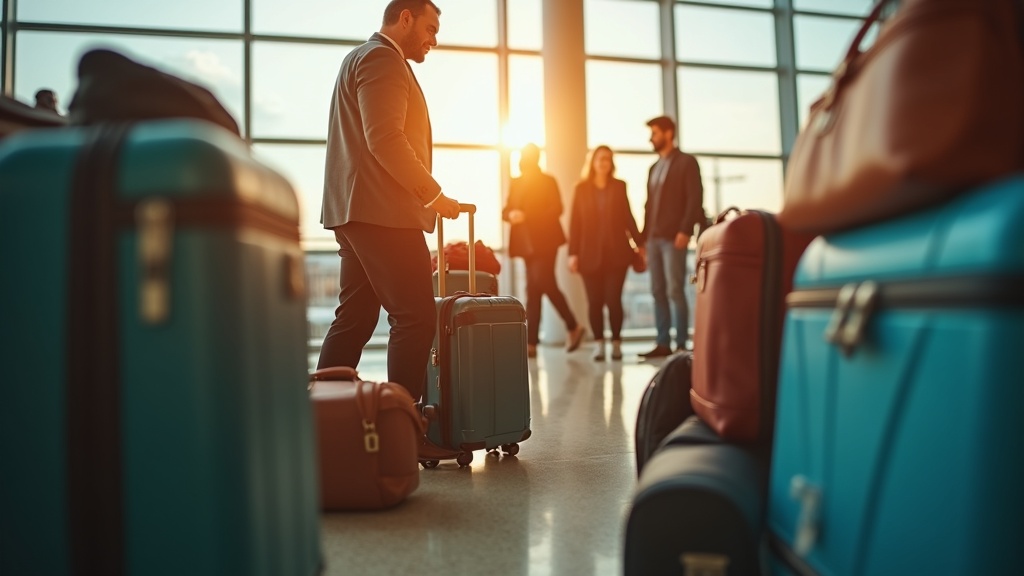
Your carry-on bag isn’t just luggage. It’s your travel companion for the entire trip, and picking the wrong one can turn a smooth journey into a frustrating ordeal.
Think about it. The bag you choose determines whether you can sprint through the airport without shoulder pain, whether you’ll sail through security or get stuck reorganizing everything, and whether your belongings arrive intact or crushed. It affects how quickly you can grab what you need mid-flight and whether you’re hauling your bag up stairs in cobblestone alleys or rolling it effortlessly behind you.
The right carry-on makes travel feel easier. The wrong one becomes something you’re constantly fighting against.
But here’s the challenge: there’s no universal best bag. A sleek hard-shell roller that’s perfect for business trips might be awful for backpacking through Europe. A spacious travel backpack ideal for adventure travel could be overkill for a quick weekend getaway. And that stylish duffel? It might not even count as a carry-on on some airlines.
Most people choose their carry-on based on what looks good or what’s on sale. Then they discover too late that it doesn’t fit their airline’s overhead bin, kills their back after twenty minutes, or can’t protect their laptop during baggage handling.
The good news is that matching the right bag type to your specific travel style isn’t complicated. You just need to understand what different bag types actually do well, what trade-offs they require, and how your own travel habits should guide the decision.
Start with how you actually travel
Before you even look at carry-on bag types, think about your last few trips. Not your dream vacation, but the actual ones you took. How long were you gone? Did you stay in one place or bounce between hotels?
A weekend city break is completely different from a two-week work trip. If you’re gone for three days and sleeping in one hotel, you can get away with almost anything. But if you’re changing cities every other night, dragging your bag up narrow stairs in a European walk-up, suddenly wheels matter a lot. Or maybe they don’t, if those stairs are steep enough that carrying works better than bumping a suitcase behind you.
Think about how you actually move around when you travel. Do you take rideshares everywhere, or do you walk from the train station dragging everything you own across cobblestones for fifteen minutes? That choice alone changes whether you want a rolling bag or something you can wear on your back.
Weather matters more than people admit. A beach trip in July means swimsuits and sundresses that squish down to nothing. A winter trip means bulky layers that eat up space fast. And if you’re working remotely from the road, you need room for a laptop and chargers without crushing everything else.
The right carry-on bag type isn’t about having the best gear. It’s about matching the bag to what you’ll actually do with it. Once you’re honest about your travel pattern, whether you need hard protection or easy access, wheels or backpack straps, the choice gets a lot simpler.
Hard shell vs soft shell is mostly about protection and flexibility
Hard shell bags are exactly what they sound like: rigid cases that hold their shape no matter what. They excel at protecting whatever’s inside from getting crushed or knocked around. If you’re traveling with a nice camera, a bottle of wine, or anything fragile, a hard shell gives you real peace of mind.
They also handle rain and spills beautifully. Water just beads up and rolls off. You can set one down in a puddle at the airport curb without worrying about your clothes getting soaked.
The downside? Hard shells are stubbornly inflexible. When the overhead bin is almost full, you can’t squeeze or smoosh your bag to make it fit. And most hard shells skip exterior pockets entirely, so grabbing your jacket or laptop means unzipping the whole thing.
Soft shell bags bend and compress, which makes them fantastic for tight spaces. That overstuffed overhead bin? A soft bag can often squeeze in where a hard one can’t. They usually come with exterior pockets too, so you can grab your headphones or boarding pass without unpacking.
Living out of a soft bag also feels more natural for many travelers. You can reach in from the top, rummage around, and leave it partially open on a hotel bed without it being awkward.
The tradeoff is protection. Soft shells won’t guard fragile items as well, and they can absorb water if you’re caught in heavy rain. They also tend to show scuffs and dirt faster, though many travelers consider that part of the bag’s character.
Neither type is better across the board. It really comes down to what you’re packing and how you move through airports.
Travel backpack vs suitcase comes down to mobility and comfort
The real difference between a travel backpack and a wheeled suitcase shows up the moment you step off the plane. A suitcase glides beautifully across smooth airport floors and hotel lobbies. Your arm barely feels the effort. But hit a cobblestone street, a broken sidewalk, or a crowded subway platform, and suddenly you’re lifting, tilting, and wrestling that bag through obstacles.
A backpack puts the weight on your shoulders and hips instead of your arm. You’re hands-free, which matters more than you’d think when you’re juggling a coffee, checking your phone, or grabbing a subway pole. Stairs become easy. Uneven surfaces don’t slow you down. But after an hour of wearing it, even a well-designed pack starts to feel heavy.
Think about where you’re actually going. If you’re hopping between hotels in Paris, climbing metro stairs multiple times a day, a backpack saves you from dragging wheels up and down. If you’re flying into a business conference and rolling straight from the terminal to a taxi to a carpeted hotel, wheels make perfect sense.
The comfort equation changes based on how long you’ll carry versus roll. A twenty-minute terminal walk with a wheeled bag feels fine. That same walk with a backpack on your shoulders might leave you sweaty and sore. But five minutes of stairs with a backpack beats five minutes of bumping a suitcase up each step.
City trips with lots of public transit usually favor backpacks. Resort destinations or business travel with car services usually favor suitcases. And if you’re doing both, you’re stuck making a tough choice about which hassle you’d rather deal with.
Flight regulations and real-world fit are not the same thing
Here’s something most travelers learn the hard way: a bag that meets the official size limits can still cause problems at the gate. Airlines publish maximum dimensions, usually somewhere around 22 by 14 by 9 inches, but those numbers don’t tell the whole story.
The rules vary more than you’d expect. Some airlines care about weight and will make you weigh your carry-on. Others focus purely on size. Budget carriers tend to enforce limits strictly, while full-service airlines might be more relaxed on half-empty flights and strict on packed ones. The same bag that sailed through security last month might get tagged for gate-checking today.
Bag shape matters as much as the measurements. A hard-shell suitcase is what it is. It won’t squeeze or compress, so if it’s at the maximum dimensions, it’s staying there. A soft-sided bag gives you a bit more flexibility, but here’s the catch: if you’ve stuffed it completely full, it’s going to bulge. That bulging bag might technically measure within limits when empty, but once packed tight, it can easily exceed the space it’s supposed to fit into.
Then there’s the reality of where your bag actually goes. Overhead bins vary by aircraft type. Larger planes generally have roomier bins. Smaller regional jets have tighter spaces, and sometimes bags that would normally fit have to be gate-checked simply because the plane can’t accommodate them. If you’re flying on a full flight with a smaller aircraft, even a regulation-size bag isn’t guaranteed overhead space.
The under-seat option is your backup plan, but it’s much smaller. That space is really meant for your personal item, not your main carry-on.
Personal item size can make or break your setup
Most airlines let you bring two bags on board: one carry-on and one personal item. The personal item is the smaller one that goes under the seat in front of you. It’s also the bag that can save you from a lot of headaches.
Here’s why it matters so much. Your personal item stays with you the entire flight. You don’t have to compete for overhead bin space during boarding. You don’t have to stand up and dig through your carry-on when you need something mid-flight. Everything you actually need during the journey should live in this bag.
Think of your personal item as your command center. It should hold the things you’d be stressed about losing or checking: your passport and boarding pass, prescription medications, phone charger, headphones, a sweater or light jacket, and anything valuable like a laptop or tablet. Maybe a book or snack too.
The trick is choosing something that fits under the seat without a fight. A slim backpack works well because it molds to the space. A tote bag can squeeze in easily. A briefcase-style messenger bag slides right under. What doesn’t work is trying to cram an overstuffed bag into a space it clearly won’t fit.
Most airlines define personal item dimensions around 18 inches long, 14 inches wide, and 8 inches deep, though the exact numbers vary. The real test is simpler: can you slide it under a standard airplane seat without shoving or folding it in half? If yes, you’re good. If you’re wrestling with it, it’s too big.
Your packing style should match your bag opening and layout
Think about how you actually use a bag when you travel. Do you dig around looking for things, or do you want everything visible at once? That difference matters more than most people realize.
Clamshell bags open flat like a suitcase, splitting into two halves. They’re brilliant if you’re staying put for a few days and want to see everything laid out. You can pack in layers without worrying about things falling out when you open it. If you’re the type who changes outfits twice a day or shares bag space with a partner or kid, being able to see both sides at once is a huge help.
Top-loading bags, common with backpacks, work differently. You access everything from the top opening, which means items at the bottom require unpacking half the bag. This sounds annoying, but it’s actually perfect if you’re moving between cities daily and living out of your bag without fully unpacking. Once you pack it right, you rarely need what’s at the bottom until you get home.
Then there’s the question of pockets. Exterior pockets are lifesavers if you travel with a laptop, need your passport handy, or constantly grab headphones and chargers. But too many interior compartments can feel restrictive if you just want to throw everything in and go.
If you’re someone who needs quick access to things, a bag with a big front pocket or side zippers will save you from that awkward airport shuffle where you’re crouched on the floor, digging through everything. Match the opening style to whether you unpack fully at hotels or live out of the bag itself. Your back will thank you.
Comfort and handling matter more than most people expect
Your bag looks perfect sitting on your bed at home. Then you’re rushing through an airport terminal, and suddenly that handle feels too short, the wheels are catching on every crack, and your shoulder is already sore. This is when you realize comfort isn’t a luxury feature—it’s the whole point.
Wheels make a bigger difference than you’d think. Spinner wheels that rotate in any direction feel smooth on flat surfaces, but they can roll away from you on a sloped jetway or wobble when the bag is fully packed. Two-wheel designs stay put but require you to tilt and drag them, which gets tiring fast when you’re covering distance. The best test? Imagine pulling your bag through three terminal gates when your flight gets moved twice.
Handle height is one of those things nobody notices until it’s wrong. If you’re constantly hunched over or holding your arm at an awkward angle, you’ll feel it in your back and shoulder within twenty minutes. Telescoping handles should lock firmly at your preferred height without rattling or slowly sinking down as you walk.
Lifting a fully loaded bag into an overhead bin is its own small nightmare if you haven’t planned for it. A bag that feels reasonable when rolling can turn into a wrestling match when you’re hoisting it chest-high in a crowded aisle. Weight distribution matters here—a bag that’s heavier at the bottom tends to fight you less.
For backpacks, strap comfort disappears fast under a full load. Padding helps, but strap width and how the weight sits on your shoulders will determine whether you’re comfortable or counting the minutes until you can set it down. Twenty minutes of wear time tells you more than twenty seconds.
Match carry-on bag types to a few common travel scenarios
If you’re traveling for business and hauling a laptop, chargers, and a few changes of clothes, a wheeled carry-on with a separate laptop compartment makes life easier. You can roll it through the airport without straining your shoulders, and you’ll have quick access to your tech when you need it. A soft shell version gives you a bit more flexibility if you need to squeeze in an extra jacket or documents at the last minute.
Weekend trips with light packing often work best with a travel backpack. You can move quickly through crowded train stations or cobblestone streets without worrying about wheels catching or tipping over. Your hands stay free for coffee, tickets, or your phone. Just make sure it fits personal item size limits if you want to stash it under the seat in front of you.
Multi-city trips with lots of transit usually call for something durable and mobile. A hard shell wheeled bag protects your belongings when you’re tossing it into overhead bins or train racks repeatedly. The rigid structure also helps when you’re stacking bags or navigating busy platforms.
Traveling with kids or in situations where your hands are constantly busy tends to favor backpacks again. You can carry the bag and still hold a child’s hand, manage snacks, or grab boarding passes without gymnastics.
If you’re heading somewhere with rough sidewalks, lots of stairs, or uneven surfaces, wheels lose their advantage fast. A quality backpack distributes weight across your shoulders and lets you navigate steps and curbs without stopping to lift and carry. Your arms won’t feel like they’re about to fall off halfway through the trip.