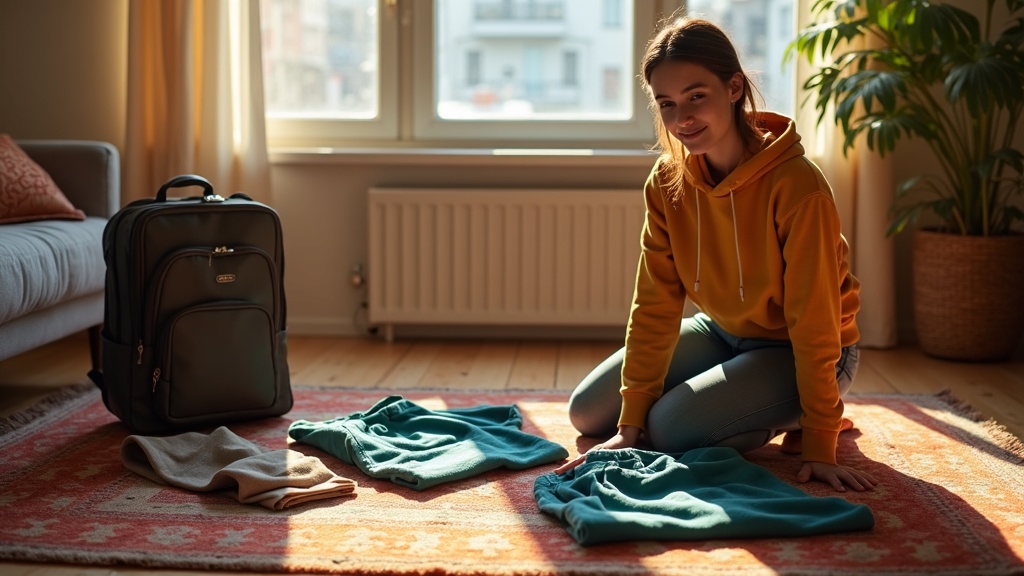
There’s something liberating about traveling light. You breeze through airports, hop on trains without wrestling luggage, and never worry about finding somewhere to stash a bulky suitcase. But here’s the thing that stops most people: how do you pack for a city break without looking like you just rolled out of a gym?
Cities have expectations. You want to feel put-together when you’re grabbing dinner at that bistro you read about, or wandering through a museum, or meeting up with friends. At the same time, you’ll be walking miles each day, dealing with unpredictable weather, and probably wearing the same pair of shoes two days in a row.
The good news is that packing light for a weekend city break doesn’t mean sacrificing style or comfort. It just means being a bit more intentional about what goes into your backpack. Think of it like creating a small capsule wardrobe where everything works together and nothing takes up unnecessary space.
With the right approach, you can fit everything you need into a single backpack and still have room for a souvenir or two. You won’t be digging through layers of clothes to find what you need, and you definitely won’t be doing laundry in a hotel sink at midnight. Instead, you’ll spend less time thinking about your luggage and more time actually enjoying your trip.
Whether you’re heading to Barcelona for tapas or Berlin for galleries, the principles stay the same. Let’s walk through exactly how to make it work.
Pick a backpack that makes packing easy
The bag you choose does half the work for you. If it’s too big, you’ll fill it with things you don’t need. If it’s too small, you’ll stress about what to leave behind. For a weekend city break, you want something that feels comfortable to carry for a few hours but doesn’t tempt you to overpack.
Think about how you’ll actually use it. You’ll be walking through streets, hopping on buses or trains, and maybe ducking into cafes or museums. A good city backpack sits comfortably on your shoulders without digging in, even when it’s full. Look for padded straps and a back panel that doesn’t make you sweaty after ten minutes.
A clamshell opening makes everything easier. That’s when the bag unzips and opens flat like a suitcase, so you can see everything at once instead of digging through a dark tunnel of clothes. You’ll appreciate this when you’re grabbing a fresh shirt in a hostel room or hotel.
A front pocket is surprisingly useful. That’s where your phone, wallet, and transit card live for quick access. You don’t want to take off your bag and root through your main compartment every time you need to tap onto the subway.
Side pockets matter too. One for a water bottle means you stay hydrated without stopping to unpack. Another small one can hold snacks or earbuds.
The right backpack keeps your valuables close to your body, not dangling behind you in a crowd. It lets you move freely without feeling like a pack mule. And it sets a natural limit that forces you to pack only what you’ll actually wear.
Build outfits around one simple color story
The secret to packing light without looking like you wore the same thing all weekend is choosing pieces that all work together. Pick two neutral colors as your base, like black and grey, or navy and tan. Then add one accent color that makes you feel good, maybe a rust orange or forest green.
When everything coordinates, you can mix and match without thinking too hard. A black tee works with both your jeans and your nicer trousers. That rust sweater looks good over the black tee during the day, then stands on its own for dinner. You’re creating different looks from the same few items.
Think in outfit formulas instead of specific outfits. You need something for walking around all day, something a bit nicer if you go somewhere fancy, and something comfortable for lazy mornings. One pair of jeans, one dressier bottom, two or three tops that layer over each other. That gives you plenty of combinations.
Layering is your friend here because it makes one outfit do different jobs. A button-up shirt worn open over a tee is casual daytime. Buttoned up and tucked in, it works for dinner. Add the sweater and you’ve got a third version.
Choose fabrics that bounce back after being stuffed in a backpack. Merino wool, ponte knits, and technical blends don’t wrinkle much. Cotton tees are fine, but skip anything linen or crisp that needs ironing. And here’s the thing nobody likes to say out loud: you can wear the same jeans or trousers multiple days in a row. Really. Swap your top layer and no one notices.
Choose shoes and a layer that handle most city plans
Your shoes and outerwear will eat up most of your backpack space, so they need to work hard for their room. The goal is simple: pick one pair of shoes that can handle miles of pavement and still look fine in a restaurant or museum.
Go for something with good cushioning and support that doesn’t scream “tourist.” Clean leather sneakers, low-profile walking shoes, or simple ankle boots usually fit the bill. They should feel broken in before you leave. If blisters show up on day two, your whole trip suffers.
A second pair only makes sense if you’ll actually use it. Flip flops for your accommodation or nicer shoes for a specific evening out might be worth it, but keep them lightweight and flat. Anything bulky stays home.
Now the layer. Cities are unpredictable, and you’ll be outside more than you think. A light rain shell works wonders in spring and fall. It folds down small, blocks wind, and keeps drizzle off without making you sweat. In summer, a thin hoodie or cardigan handles air-conditioned interiors and cool evenings. Winter calls for something warmer, but it should still compress reasonably well.
The point isn’t to prepare for every weather scenario. It’s to have one reliable layer that extends your comfort range without taking over your pack. When your jacket and shoes can handle most of what the city throws at you, everything else becomes easier to sort out.
Keep toiletries small without feeling unprepared
Toiletries are where most people go overboard. You tell yourself it’s practical, but then you’re hauling full-size bottles through the streets of Copenhagen. The trick is remembering you’re going to a city, not a remote village. Cities have shops on every corner.
Start with this rule: if you can buy it in any grocery store or pharmacy, you don’t need to pack it. Shampoo, body wash, even toothpaste can be purchased when you arrive. Buy the smallest size available and leave it in the hotel when you go home. Problem solved.
What you should pack are the things that matter to your comfort or routine. Your specific face moisturizer. The deodorant that actually works for you. Contact lens solution if you wear lenses. These are worth the space because finding the right replacement takes time you’d rather spend exploring.
For everything you do bring, think in tiny quantities. Get actual travel-size containers and fill them with just enough for three days. You probably need half of what you think. A blob of shampoo the size of a coin works fine for one wash.
Keep spills from ruining your trip by putting each liquid container in a small zip-lock bag before packing. Then put all your toiletries together in one larger clear pouch. This keeps everything contained and makes it easy to grab when you need to freshen up at the hotel or use a public restroom.
The goal isn’t to rough it. It’s to bring what genuinely makes you comfortable without carrying a pharmacy on your back.
Pack the urban essentials you’ll actually reach for
The stuff you need most often in a city should never be buried at the bottom of your backpack. Your phone charger, payment cards, transit pass, and keys deserve a dedicated pocket or pouch where you can grab them without unpacking half your bag on a crowded street corner.
A small zippered pouch works wonders here. Toss in your charging cable and adapter, any payment cards you’re bringing, and your ID. If your destination uses transit cards or apps, make sure you can reach them quickly. Nobody wants to dig through rolled t-shirts while a line of impatient commuters waits behind them.
Sunglasses are worth the space, even if the forecast looks grim. Cities have a way of surprising you with glare bouncing off windows and pavement. A compact umbrella makes sense if rain seems likely, but skip it if your jacket has a hood and you’re only gone for two days. You won’t melt.
Keep your most valuable items close to your body when you’re out exploring. A cross-body bag or jacket pocket works better than an open tote or exterior backpack pocket. This isn’t about paranoia, just making life harder for opportunistic hands in crowded spaces like metro platforms or busy markets.
Before you leave each day, do a quick pocket check. Phone, wallet, keys, and anything else you’d genuinely panic about losing. It’s a tiny habit that saves you from that sinking feeling when you’re three metro stops away from your accommodation and suddenly can’t remember where you put your room key.