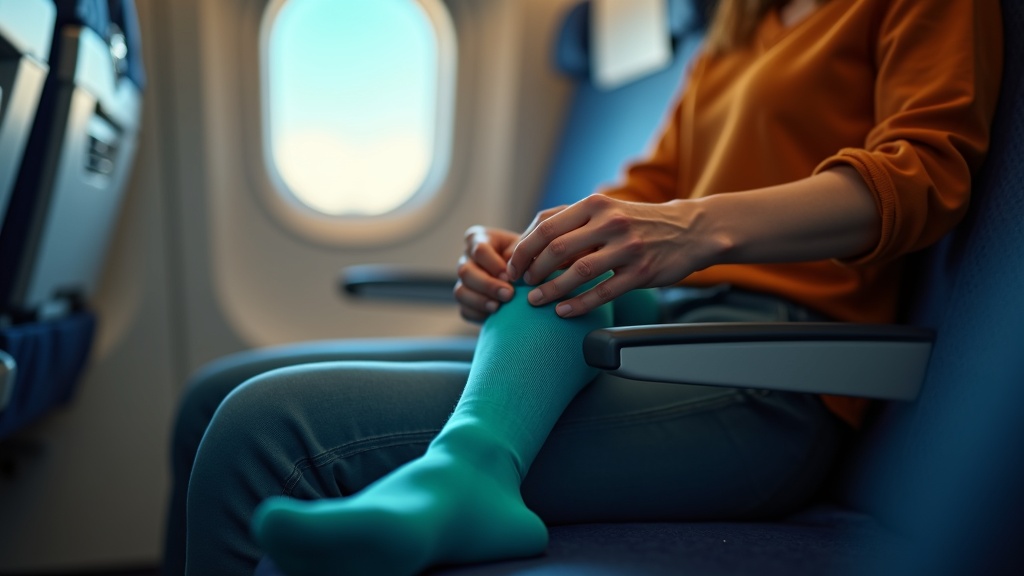
If you’ve ever finished a long flight with swollen ankles or achy legs, you’re not alone. Sitting still for hours makes it harder for blood to flow back up from your feet and calves. That pooling creates uncomfortable puffiness and tired, heavy legs.
Compression socks are designed to squeeze gently around your lower legs, helping blood move upward more efficiently. They can reduce swelling, ease discomfort, and lower the risk of circulation problems during travel. But they’re not magic. They won’t prevent every ache, and they can’t replace moving around or staying hydrated.
What matters is finding a pair that actually fits your situation. Someone flying once a year for vacation has different needs than someone with varicose veins or a history of blood clots. The wrong compression level might feel too tight or do nothing at all. The wrong style might slip down or bunch up in your shoes.
This guide walks you through what to consider based on your own health, comfort preferences, and travel habits. We’ll cover how much squeeze you actually need, what length works best, and which features make a difference when you’re stuck in seat 32B for eight hours. By the end, you’ll know exactly what to look for instead of guessing in the airport store or scrolling through endless online reviews.
Why flying often leads to swelling and heavy legs
When you’re on a plane for hours, your legs are doing almost nothing. You’re sitting still in a cramped seat, maybe shifting now and then, but your calf muscles aren’t really working. Normally, those muscles act like pumps that help push blood back up toward your heart. Without that movement, fluid starts to pool in your lower legs and feet.
Gravity doesn’t help either. Blood has to work harder to flow upward when you’re sitting for long stretches. Add in the low cabin pressure and dry air, and your body holds onto more fluid than usual. The result? Your ankles puff up, your shoes feel tight, and you might notice deep marks where your socks were sitting.
Most people feel it after a few hours in the air. Your calves might feel heavy or achy. Your feet look a little swollen. When you slip your shoes back on to use the restroom, they suddenly feel like they’ve shrunk a size. Those sock lines around your ankles look deeper than they did when you boarded.
For most travelers, this kind of swelling is just uncomfortable. It goes away within a few hours of landing once you’re moving around again. But on longer flights, or if you’re already dealing with circulation issues, the discomfort can be more than annoying. Your legs might feel tired and sluggish for a day or two after you land.
That’s where compression socks come in. They’re designed to gently squeeze your legs in a way that keeps blood flowing, even when you’re sitting still.
Who benefits from compression socks on a plane (and who may not)
Here’s something that surprises a lot of people: you don’t need a medical condition to wear compression socks on a plane. Plenty of healthy travelers use them simply because their legs feel better when they land. If you’ve ever arrived at your destination with puffy ankles or achy calves, compression socks might help.
That said, certain travelers tend to notice the biggest difference. Long-haul flyers are at the top of the list, especially on flights longer than four hours. Pregnant travelers often find them helpful, as do people who’ve had blood clots in the past or who’ve recently had surgery. If you have varicose veins or notice your legs swell easily even on the ground, compression socks can make flights much more comfortable.
Older travelers and anyone who struggles to move around in their seat—whether because of height, leg length, or cramped seating—may also benefit. When you can’t stretch or walk the aisle easily, your circulation needs a little extra help.
But compression socks aren’t right for everyone. If you have certain circulation problems, peripheral artery disease, congestive heart failure, neuropathy, or open wounds on your legs, you should talk to a doctor before wearing them. The gentle pressure that helps most people could cause problems in these situations.
The bottom line? Compression socks are a comfort tool for many travelers, not a medical guarantee. They can reduce swelling and help your legs feel less tired, but they’re not a substitute for moving around during the flight or following your doctor’s advice if you have specific health concerns.
Compression levels, explained without the confusion
When you look at compression socks, you’ll see numbers like 15-20 mmHg or 20-30 mmHg. These measure how much pressure the sock applies to your leg. Think of it like a gentle squeeze versus a firmer hug.
The key thing to understand is graduated compression. This means the sock is tightest around your ankle and gradually loosens as it moves up your calf. That design helps push blood back up toward your heart, which is exactly what you want when you’re sitting still on a long flight.
Light compression, usually 15-20 mmHg, works well for everyday comfort and preventing mild swelling. These are what most healthy travelers need for flights. They feel snug but not restrictive, like a supportive athletic sock.
Moderate compression, around 20-30 mmHg, applies more noticeable pressure. You might want this level if you’ve had swelling issues before, you’re pregnant, or you’re taking a really long international flight. They feel firmer when you put them on, but they shouldn’t hurt.
Anything above 30 mmHg typically requires medical guidance. Don’t assume higher numbers are automatically better for you.
Here’s a common mistake: some people buy the strongest compression they can find, thinking it’ll work better. But compression that’s too tight can actually be uncomfortable or even restrict circulation in the wrong way. It can also be harder to put on, which means you might skip wearing them altogether.
If you have specific health conditions like diabetes, varicose veins, or circulation problems, check with your doctor before choosing a compression level. For most occasional travelers dealing with normal flight discomfort, starting with the lighter range makes perfect sense.
Fit and sock length matter more than most people think
Here’s something that surprises a lot of first-time buyers: compression socks aren’t sized like regular socks. Your shoe size alone won’t cut it. What really matters is the circumference of your ankle and calf, because the sock needs to apply the right amount of pressure at specific points on your leg.
When compression socks fit correctly, they should feel snug and supportive, almost like a firm handshake around your leg. You’ll notice the pressure, but it shouldn’t hurt or make your toes tingle. Your skin shouldn’t change color or feel numb. If any of that happens, the socks are too tight.
Most travelers do best with knee-high compression socks. They cover the area where swelling typically happens during flights and they stay put without feeling restrictive. Crew-length or ankle socks look more casual, but they often don’t reach high enough to really help with travel leg swelling. Thigh-high styles and full compression tights work well if you have specific circulation concerns or just prefer more coverage, though they can feel like overkill for a typical flight.
You’ll know your socks don’t fit right if they start rolling down at the top, creating a tight band that digs into your skin. That’s actually worse than not wearing them at all. Other red flags include bunching or pinching behind your knee, or socks that slide down your calf during the flight. A proper fit stays in place without adjustment and distributes pressure evenly from ankle to calf.
The right fit makes all the difference between socks you’ll actually wear and a pair that stays buried in your suitcase.
Comfort features to look for on travel days
The best compression socks in the world won’t help if you pull them off halfway through the flight. That’s why comfort matters just as much as compression level when you’re choosing a pair for travel.
Breathability should be high on your list, especially for long flights. Look for fabrics that wick moisture away from your skin rather than trapping sweat. Most compression socks blend nylon or polyester with spandex for stretch. These synthetic blends dry quickly and feel smooth, but they can get warm. Merino wool blends regulate temperature better and resist odor, which makes them popular for travelers who wear the same pair on long journeys.
Think about the climate you’re flying through. Thicker socks with extra cushioning feel cozier and more supportive, but they can make your feet hot on warm flights or in tight shoes. Thinner dress-style compression socks slip easily into loafers or heels without adding bulk, though they won’t have that plush feel.
Check the toe seam before you buy. A thick or raised seam can dig into your toes during a six-hour flight. Many higher-quality pairs have flat or seamless toes that disappear against your skin.
Finally, consider how easy they are to pull on. Compression means tight, and some pairs require serious effort to get past your heel. If you have limited flexibility or you’re getting dressed in a tiny airplane bathroom, that matters. Some styles have grippy silicone bands at the top to keep them up without being uncomfortably tight. Others use wider, softer bands that distribute pressure more gently.
The right balance depends on your priorities. Just remember that a slightly less compressive pair you actually wear beats a perfect pair sitting in your suitcase.
When to wear them and how to use them during a flight
The best time to put on compression socks is before you start to feel puffy or uncomfortable. That usually means slipping them on before you leave for the airport or right after you get through security. Once your legs have already swollen, it’s harder to get the socks on and they won’t work as well.
You can wear them through the entire flight and keep them on until you’re off the plane and moving around normally again. Some people like to take them off soon after landing, while others keep them on for a few hours if they’re still sitting in a car or train. There’s no magic rule here. Just listen to your legs.
When you put them on, smooth out any wrinkles or bunched fabric. Creases can dig into your skin and cause discomfort, especially on a long flight. Don’t fold or roll down the top band to make them shorter. That creates a tight ring around your calf that defeats the whole purpose.
If you’re someone who spills coffee or tends to get sweaty feet on flights, toss a backup pair in your carry-on. Fresh socks feel a lot better than damp ones halfway across the Atlantic.
While you’re wearing them, it helps to flex your ankles now and then or take a short walk to the bathroom when it’s safe. Staying hydrated matters too. These aren’t strict rules, just small habits that work well together. Compression socks do the heavy lifting, but a little movement and water go a long way toward keeping your legs happy.
If you’ve had recent surgery or have a medical condition that affects circulation, check with your doctor about timing and compression level before your trip.
Common problems and myths that trip people up
One of the biggest complaints is that compression socks feel too tight or hurt to wear. Most of the time, this means you’ve grabbed the wrong size or chosen a compression level that’s too strong for what you actually need. If you feel sharp pain, numbness, tingling, or notice your toes changing color, take them off right away. That’s your body saying something isn’t right.
Another common struggle is getting them on in the first place. If you’re wrestling with your socks for ten minutes, they’re probably too small or you’re trying a medical-grade pair when a moderate one would work better. The right pair should require a bit of effort to pull on, but it shouldn’t feel like you’re fighting with them.
Some people think compression socks only matter on ultra-long international flights. The truth is that travel leg swelling can start on flights as short as three or four hours, especially if you’re prone to it. Starting with them on shorter trips helps you figure out what works before a twelve-hour haul.
There’s also a myth that any tight sock does the job. Regular tight socks or those non-slip slipper socks just squeeze evenly, which can actually make things worse by creating a tourniquet effect. Real compression socks are graduated, meaning they’re tightest at the ankle and ease up as they go higher.
Finally, wearing compression socks doesn’t eliminate DVT risk entirely. They’re one helpful tool among several, not a magic shield. You still need to move around, stay hydrated, and talk to your doctor if you have specific risk factors.