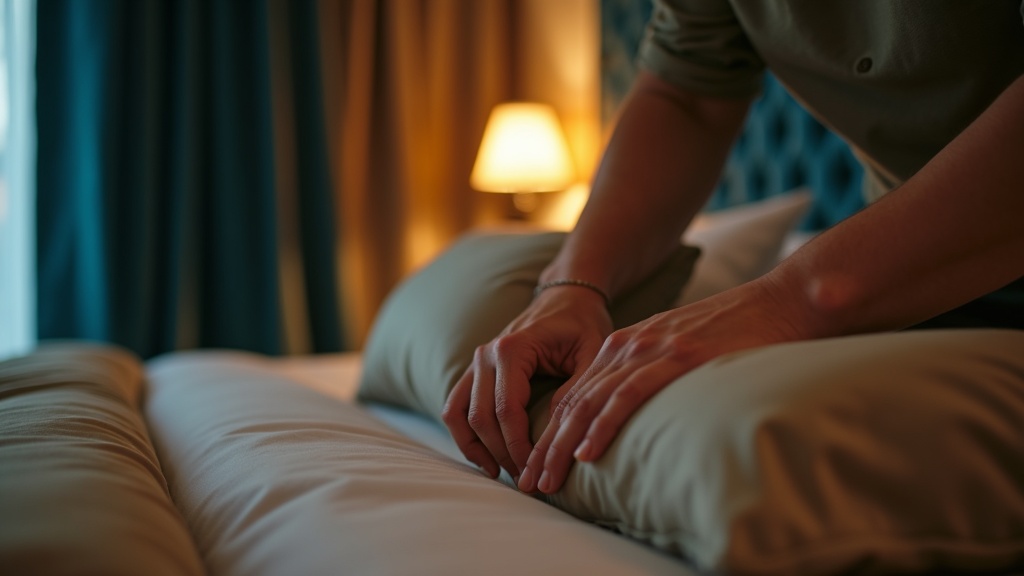
You’ve finally made it to your hotel after a long day of travel. You’re exhausted. The bed looks inviting. But somehow, when you actually lie down, sleep just won’t come.
This happens to almost everyone who travels. Hotel rooms feel different from home in dozens of small ways. The pillows are fluffier or flatter than yours. The air conditioning hums at a different pitch. Street noise filters through the windows. Even the darkness feels wrong because the blackout curtains let in slivers of light from unfamiliar sources.
Your brain notices all of this, even when you’re trying not to. It’s actually paying extra attention because you’re in a new place. This isn’t a character flaw or something you need to just push through. It’s a normal response that makes hotel sleep genuinely harder than sleep at home.
The good news is that you don’t need expensive gadgets or a complete bedtime overhaul to improve your nights on the road. Most hotel rooms already contain the tools you need to sleep better. You just need to know how to use what’s already there.
This guide focuses on simple, free adjustments you can make using items in your room or things you’re already carrying. Small changes to light, sound, temperature, and even how you position yourself in the space can make a real difference. You won’t transform a hotel into your bedroom at home, but you can make it comfortable enough that your body actually relaxes and lets you rest.
Make the room feel familiar in the first five minutes
Your brain is wired to stay alert in new places. It’s an old survival thing, not a personal failing. The good news is you can calm that alertness down with a few quick actions right when you walk in.
Start by unpacking just a couple of things. You don’t need to empty your suitcase. Pull out your toothbrush, put it by the sink. Hang up one outfit. Set your book or charger on the nightstand. These small moves tell your brain this isn’t a random room anymore. It’s a space you’re using.
Next, arrange your bedside setup the same way you would at home. Put your phone charger on the same side you normally use. Fill a glass with water and place it where you can reach it in the dark. If you always keep tissues nearby, put those out too. The goal is to create one tiny zone that feels like yours.
Then do a quick scan for things that might annoy you later. Look for blinking lights on the TV or alarm clock. If you spot any, cover them with a towel or turn the device around. Open the minibar to see if the fridge hums loudly. If it does, unplug it. Check for strong air freshener smells or weird curtain gaps that might let in morning light.
This whole process takes five minutes, maybe less. But it shifts the room from feeling like a strange box to feeling like a temporary version of your own space. That shift matters more than you’d think when you’re trying to fall asleep.
Handle light problems that keep you half-awake
Hotel rooms leak light from surprising places. The alarm clock glows bright red. The bathroom night light spills into the bedroom. Curtains never quite meet in the middle, and streetlights find every gap.
Start with the curtains. Pull them closed, then overlap them as much as possible in the center. If there’s a gap where the curtain rod meets the wall, grab a hanger or binder clip from your bag and pin the fabric to itself. You can also tuck the curtain edges behind the headboard or nightstand to seal the sides.
Check the bathroom. Most hotel bathrooms have a light that stays on all night. If it bothers you, drape a towel over the top of the door to block the glow. You can also close the door most of the way and stuff a rolled towel along the bottom edge.
Turn off or cover the lights you can’t unplug. That bright alarm clock display can be dimmed by draping a washcloth over it. Some TV and AC units have glowing buttons you can disable in the settings, or just cover them with a piece of dark clothing.
Your phone is probably the trickiest light source because you actually need it. Turn on night mode or the warmest screen setting your phone offers. Dim the brightness as low as it will go while still being readable. When you’re done scrolling, place it face down on the nightstand so notifications don’t light up the room. Better yet, put it across the room if you can trust yourself not to check it again.
If you’ve done all this and light still creeps in, a sleep mask works as backup. But most people sleep better when the room itself is dark.
Reduce hotel noise without special equipment
Hotels are noisy places. Hallways echo with footsteps and rolling suitcases. Elevators ding at all hours. Ice machines hum and clatter near the stairs. Street traffic rumbles through windows. And sometimes the couple next door decides to have a loud conversation at midnight.
The good news is you can tackle most of this without packing a single thing. Start by moving away from the noise source when possible. If the window faces a busy street, try sleeping on the side of the bed farthest from it. If the door rattles from hallway noise, push a piece of furniture slightly closer to buffer the sound.
That gap under your door lets in more noise than you’d think. Roll up a bath towel and press it against the bottom of the door. It won’t block everything, but it makes a surprising difference.
Now create your own sound to mask the unpredictable noises. Turn on the bathroom fan or the heating and cooling system. Even if you don’t need climate control, that steady hum gives your brain something consistent to tune out. It’s much easier to ignore a constant whoosh than random voices or slamming doors.
If none of this helps enough, call the front desk. You don’t need to complain dramatically. Just say something simple like, “I’m having trouble with noise in my current room. Do you have anything available on a higher floor or away from the elevators?” Most hotels will try to accommodate you, especially if you ask politely and early enough in your stay. Higher floors tend to be quieter, and rooms at the end of hallways get less foot traffic.
Fix temperature and bedding so your body can relax
Hotel rooms tend to swing between too hot and arctic. The first thing you should do when you check in is set the thermostat, even if you’re heading out for dinner. Give the room time to stabilize before you climb into bed.
Most people sleep better when the room feels slightly cool rather than warm. You want to feel comfortable under the covers without waking up sweaty or kicking off the duvet at two in the morning.
If the air conditioner blasts directly at the bed, you don’t need to suffer through it. Push the bed a few inches away from the wall if possible, or drape a towel over the vent to redirect the airflow. Hotel air can also get seriously dry, especially in winter. Run the shower hot for a few minutes with the bathroom door open to add moisture back into the room.
Now tackle the bedding itself. Hotels love piling on layers, but you’re not obligated to use them all. Strip off the decorative throw blanket and extra duvet if you’re too warm. If you’re cold, call the front desk and ask for an extra blanket. Most hotels keep them on hand.
The pillows are often either too flat or too puffy. Try stacking two thinner pillows to get the height right, or fold one in half for more support. If your neck or lower back needs extra help, roll up a bath towel and tuck it where you need cushioning. It sounds simple, but a rolled towel can make a huge difference when the hotel pillows aren’t working for you.
Work with your schedule and jet lag instead of fighting it
Your body doesn’t care about your itinerary. When you arrive exhausted at a hotel after crossing time zones or just having a long day, trying to force yourself onto a perfect sleep schedule usually backfires.
On your first night, give yourself permission to prioritize any sleep over ideal sleep. If you arrive at 9 p.m. local time but your body thinks it’s 3 a.m., don’t fight to stay awake until midnight just because that’s your normal bedtime. Get some rest. You can fine-tune your schedule over the next day or two.
If you’re wondering whether to nap, keep it short and early. A 20-minute nap before 3 p.m. local time can help you feel human again without wrecking your night. Anything longer or later makes it harder to fall asleep when you actually want to.
Light is your most powerful tool for adjusting. Get outside or sit by a window during daylight hours in your new time zone. It sounds too simple to matter, but natural light tells your body what time it is more effectively than anything else.
Skip the heavy dinner and nightcap if you can. A big meal or alcohol within two hours of bed might make you drowsy at first, but both disrupt your sleep quality later in the night. You’ll wake up feeling worse than if you’d gone to bed slightly hungry.
Even if you’re arriving late, give yourself 30 minutes to wind down. Change into comfortable clothes, dim the lights, and do something boring. Check tomorrow’s weather. Organize your suitcase. Let your brain know that work mode is over and sleep is coming.