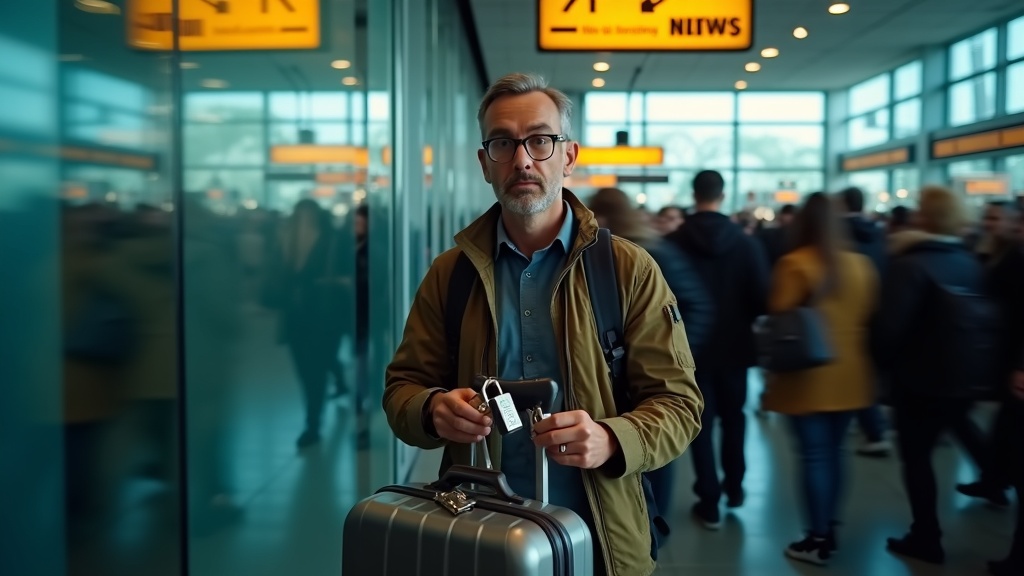
If you’ve ever stood in a travel store staring at a wall of luggage locks, you know the feeling. They all look roughly the same, yet the prices range from a few dollars to twenty or more. Some have keys, some have codes, and some have mysterious little red diamonds on them.
Here’s what most people don’t realize: the lock that works perfectly for a beach resort might be completely wrong for a hiking trip through Europe. And that TSA-approved lock everyone talks about? It could actually be less secure than a basic padlock in certain situations.
The truth is, there’s no single “best” luggage lock. What matters is matching the right type of lock to how and where you’re traveling. A combination lock might be ideal when you’re sharing a hostel locker with strangers, but it’s overkill for a checked bag on a domestic flight. A cable lock is fantastic for securing your backpack to a train seat, but useless for a hard-shell suitcase.
This isn’t about finding the most expensive or high-tech option. It’s about understanding what you actually need protection from in each situation. Sometimes you’re protecting against casual theft. Other times you’re just keeping your bag from popping open. And occasionally, you need something that airport security can open without destroying it.
Let’s walk through the different types of locks and figure out which ones make sense for your specific travel plans.
What a luggage lock can and can’t realistically do
Think of a luggage lock as a friendly deterrent, not a security system. Its main job is to make your bag less appealing than the one next to it. When someone’s looking for an easy target, a locked zipper means they’ll probably move on to something easier.
Locks work best against casual tampering. Picture someone in a crowded hostel dorm quickly testing zippers to see what opens easily. A simple lock stops that instant access. It also keeps your zippers from sliding open on their own during rough baggage handling, which happens more often than you’d think.
Here’s what locks can’t do: they won’t stop someone who’s serious about getting into your bag. Most luggage materials can be cut with a basic knife or pen. Zippers can be pried open and closed again without leaving obvious damage. If someone really wants what’s inside and has time alone with your bag, a lock won’t prevent that.
That’s why locks are about delay and deterrence. Every extra second it takes to open your bag increases the chance someone will notice. Most theft happens quickly, in moments of opportunity. A lock removes that split-second convenience.
Locks also serve practical purposes beyond security. Many hostel lockers and gym storage require them. Some travelers use locks simply to know their bag hasn’t been opened, even if they’re not worried about theft. It’s a visible signal that creates a small barrier, and sometimes that small barrier is exactly enough.
TSA locks vs non-TSA locks and when each makes sense
A TSA-approved lock has a hidden keyhole that allows airport security agents to open it with a special master key. This means they can check inside your bag without breaking your lock or cutting it off. The system exists because security screeners need access to any bag they want to inspect, whether you’re standing there or not.
Here’s what that actually means for you: if you’re checking a bag on a flight through the United States, a TSA lock lets you keep your bag locked while still playing by the rules. Without one, security can and will cut off your regular lock if they need inside. Many international airports use the same system now, so TSA locks work in lots of places beyond just American airports.
That said, TSA locks aren’t magic. They don’t make your bag theft-proof. Anyone with a TSA master key can open them, and those keys aren’t exactly a secret anymore. What they do is give you basic deterrence against casual theft while keeping airport security happy.
When does a non-TSA lock make more sense? If you’re only carrying on your luggage, you don’t need TSA approval because security screens you and your bag together. The same goes for securing your bag in a hostel locker or locking a daypack at the beach. In those situations, a sturdy non-TSA lock often gives you better security for the same price.
The tradeoff is simple. TSA locks are built with that extra keyhole, which sometimes means they’re a bit less robust than a regular lock at the same cost. If you’re checking bags regularly, get a TSA lock. If you’re not flying or only doing carry-on, a standard lock works just fine.
Choosing a lock for airports and transit days
When your bag leaves your hands during travel, the lock you choose needs to balance security with practicality. The last thing you want is fumbling with a complicated combination while other passengers wait behind you, or worse, having airport security cut off your lock because they couldn’t open it.
For checked luggage on flights to or from the United States, a TSA-approved lock is essential. These locks have a special keyhole that airport security can open with their master keys, so they can inspect your bag without destroying your lock. They’re marked with a red diamond logo. Without one, security staff will simply break whatever lock you’ve used if they need to look inside.
On trains or buses with overhead bins and luggage racks, your bag stays visible but not necessarily within reach. A simple combination lock threaded through the zippers serves two purposes here. It prevents your bag from accidentally popping open when it shifts around, and it signals to anyone nearby that you’ve secured your belongings. This isn’t fortress-level security, but it stops opportunistic grabbing.
Quick access matters during transit. You might need to open your bag at security checkpoints, during customs checks, or when retrieving items at your seat. A three-digit combination lock offers the best balance. It’s fast to unlock once you know the code, and you won’t lose a key in the chaos of travel.
Luggage storage services at train stations or airports call for a visible lock. Staff and other travelers can see you’ve taken basic precautions. A brightly colored lock works well here, making it obvious your bag isn’t abandoned or unclaimed. The lock itself doesn’t need to be heavy-duty, just present and functional.
Choosing a lock for hostels and shared lockers
Hostel lockers come in all shapes and sizes. Some have thick metal loops, others have thin wire holes, and a few have awkward angles that make certain locks impossible to use. This means your lock needs to actually fit the locker you’re assigned, which you won’t know until you arrive.
A separate padlock beats a built-in luggage lock every time for hostel situations. Those little combination locks attached to your suitcase zipper can’t reach around locker latches. You need something with a shackle, which is the U-shaped metal part that loops through the locking point. A medium-length shackle gives you the most flexibility without being so long that it’s easy to cut.
Think about how often you’ll open this lock. In a hostel, you’re probably accessing your stuff multiple times a day. A combination lock means no keys to lose or carry to the shower. But it also means spinning a dial or pressing buttons every single time, which gets old fast.
Picture this: you stumble into your dorm at midnight after a long day. Six people are already asleep. A key lock is silent and quick. A combination lock means squinting at tiny numbers in the dark, possibly clicking through the code twice because you rushed it the first time. The person in the bunk below you is definitely awake now.
On the other hand, keys can fall out of pockets or get mixed up with hostel door keys. Some travelers attach their padlock key to their keychain or wear it on a bracelet. Others prefer dealing with a combination, knowing they can’t physically lose access as long as they remember the numbers.
Whatever you choose, avoid anything too bulky. Hostel lockers are rarely spacious, and a chunky lock takes up room you need for your actual belongings.
Choosing a lock for hotels, room storage, and hotel lockers
Hotels present different security scenarios, and not all of them actually need a lock. Understanding which situations call for one can save you from dragging around extra hardware you won’t use.
If you’re leaving your suitcase in your hotel room while you’re out, a simple lock mostly guards against casual snooping. Housekeeping staff have legitimate access to your room, so a lock won’t stop anyone determined to look inside. But a small combination lock on your main luggage zippers can deter quick rifling or keep your bag from accidentally popping open. It’s a low-stakes situation where a lightweight lock provides peace of mind without heavy security.
Hotel gym and spa locker rooms are a different story. These are shared spaces where you’re storing your belongings alongside strangers. Here, a sturdy padlock actually matters. Look for something compact enough to fit through the locker latch without awkward wiggling. A small brass or zinc alloy padlock works well, or a resettable combination lock if you don’t want to track a key while you’re swimming or working out.
The lock doesn’t need to be massive, just solid enough that someone can’t pop it open with their fingers. Avoid bulky models that make the locker door hard to close or that stick out so far they’re tempting to mess with. A streamlined design that clicks shut easily and doesn’t require fumbling with tiny numbers in dim lighting makes your life easier.
If you’re checking a bag with the hotel front desk for a few hours, a lock can help you feel better about handing it over. But remember that desk staff could theoretically access it if needed, so this is more about marking your bag as secured than creating a vault.
Choosing a lock for backpacks and day bags
Backpack locks work differently than the locks you put on checked luggage. Most of them aren’t designed to stop a determined thief. Instead, they’re meant to slow down quick, opportunistic grabs when you’re in a crowd or have your bag resting near your feet at a café.
The simplest option is a small padlock that connects two zipper pulls together. This stops someone from quickly unzipping your bag and reaching inside while you’re distracted. These locks are lightweight and cheap, usually just a few dollars. The downside is that you need to unlock them every time you want your water bottle or camera, which gets annoying fast on a busy day of sightseeing.
Cable locks offer more flexibility. They’re thin, coiled wires with a lock on one end. You can thread them through your zippers like a regular zipper lock, or you can loop the cable around a fixed object like a chair leg or train luggage rack. This won’t stop someone with scissors or wire cutters, but it does prevent the grab-and-run scenario when you doze off on a bus.
Some travel backpacks come with built-in lock points, which are reinforced metal loops sewn into the fabric. These give you a solid anchor point for a small padlock or cable without putting stress on your zippers.
The real tradeoff with backpack locks is convenience versus security. If you’re constantly reaching into your bag for transit cards or snacks, a lock becomes a hassle. Think about how you’ll actually use your bag during the day. A lock that stays closed works best for bags you won’t open until you’re back at your hotel. For everything else, accept that you’ll be unlocking and relocking throughout the day.
Understanding common lock types and the features that matter
When you start looking at luggage locks, you’ll see a few basic types that show up everywhere. Small padlocks are the classic option, the kind you clip through zipper pulls or locker holes. Cable locks have a flexible steel wire instead of a rigid metal loop, which makes them great for wrapping around awkward shapes like backpack straps or hostel bed frames. Built-in combination locks are the little dials or buttons already attached to your suitcase. And zipper locks are tiny clips designed specifically to hold two zipper pulls together.
The first choice you’ll face is combination versus key. Combination locks mean one less thing to lose, which matters when you’re tired and distracted. Keys can get separated from your bag or dropped somewhere between the airport and your hotel. Most combination locks let you reset the code to something you’ll actually remember, though some cheap ones come with a fixed code you can’t change.
The physical fit matters more than most people realize. A padlock might be too thick to slide through the narrow slot on a locker door, or the shackle (that’s the U-shaped metal part that opens) might be too short to reach around chunky backpack zipper pulls. Cable locks need enough length to loop through what you’re securing. A twelve-inch cable works for a suitcase, but you might need twice that for locking a backpack to a fixed object.
If you’re heading somewhere humid or rainy, weather resistance keeps the mechanism from jamming up. Nothing’s more frustrating than a lock that won’t open because moisture got inside the combination wheels. Some locks have rubber seals or protective covers that help, though you won’t always see this advertised clearly.
Matching the lock to your trip without overbuying
The smartest way to choose a lock is to picture your trip’s most vulnerable moment. That’s usually not the flight itself, but what happens at the other end.
If you’re doing a weekend city break and staying in a decent hotel, you might not need anything at all. Your suitcase will sit in your room, and hotel rooms already lock. But if that same trip involves checking a bag on a budget airline, a simple TSA-approved combination lock makes sense. It keeps zippers closed and signals that someone’s paying attention.
Backpackers moving between hostels face a different problem. You’ll likely use shared lockers, and most of those need your own padlock. A small brass padlock or a compact combination lock works well here. If you’re also checking that same backpack on flights, you’re looking at two locks: a TSA lock for the bag itself and a separate one for lockers. That might sound like overkill, but they solve different problems in different places.
Business travelers who stick to hotels and take direct flights can often get by with just one TSA lock on their checked suitcase. You’re not dealing with hostel lockers or long layovers in dubious storage situations. One decent lock handles the only real risk, which is keeping your checked bag closed during handling.
The key is thinking about where your bag will actually be out of your sight or control. A daypack you’re wearing all day doesn’t need a lock. A locker in a twelve-bed dorm does. Don’t buy for every hypothetical scenario. Buy for the friction points your specific trip will actually create.