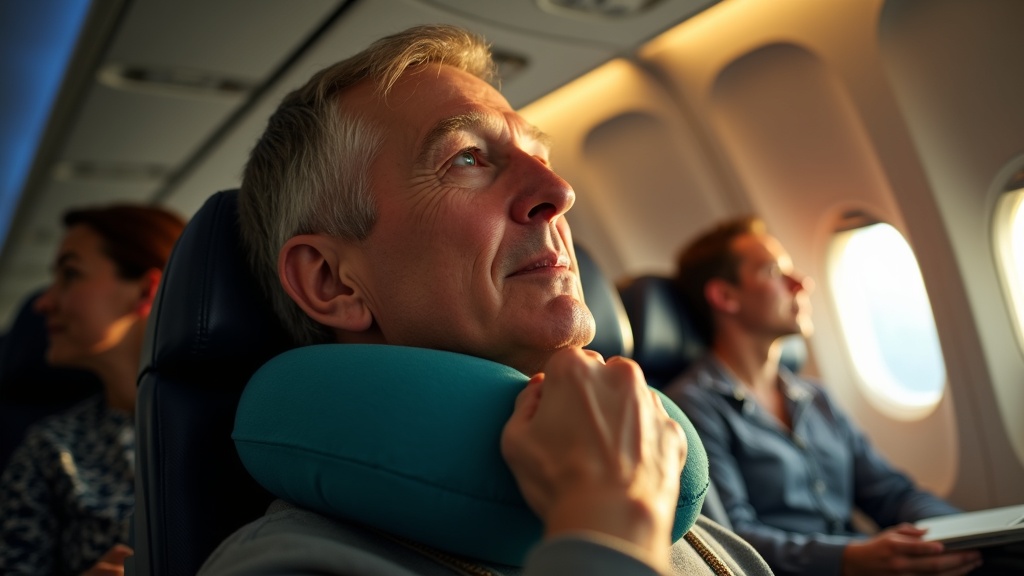
You’ve probably seen those U-shaped neck pillows in every airport shop. Maybe you’ve even bought one, thinking it would help you sleep on your next flight. Then you tried using it in an economy seat that barely reclines, and your head still flopped forward. Or the pillow pushed your neck into an awkward angle that made things worse.
Here’s the problem: most travel pillows weren’t designed for people who actually have to sit upright. They assume you can lean back at least a little. But if you’re in a standard economy seat on a budget airline, or stuck in the middle of a row, you’re basically sitting straight up for hours.
Your head weighs about ten pounds. When you fall asleep sitting upright, that weight pulls your neck forward or sideways. A flimsy pillow that just wraps around your neck doesn’t stop this from happening. It might feel cozy for five minutes, but it won’t hold your head in place when you actually drift off.
Real support means something different when you can’t recline. You need a pillow that physically prevents your head from dropping forward or rolling to the side. It needs to be firm enough to do its job, but still comfortable enough that you’ll actually use it for a long flight.
The good news is that some neck pillows for flights are specifically built for this exact situation. They use different shapes, materials, and support systems than the basic horseshoe design you see everywhere. Let’s look at what actually works when you’re stuck sitting upright.
Why upright sleeping on planes is hard on your neck
When you fall asleep sitting upright, your head becomes a heavy, unsupported object looking for somewhere to rest. Most adults carry around ten to twelve pounds of skull, brain, and tissue on top of their spine. The moment your neck muscles relax, that weight has to go somewhere.
The most common disaster is the forward drop. Your chin falls toward your chest, your airway gets compressed, and you jolt awake trying to breathe. This happens over and over through the flight, leaving you exhausted and sore.
Then there’s the sideways lean. Your head tips toward the window or the aisle, stretching the muscles on one side of your neck while crunching the other. You might stay asleep longer this way, but you’ll pay for it when you wake up with a stiff neck that lasts for days.
Turbulence makes everything worse. Even light bumps can snap your unsupported head around like a bobblehead doll. Your body tenses up to prevent injury, which means you never fully relax. You’re stuck in this half-asleep state where you’re constantly repositioning and never getting real rest.
The real problem is that your neck muscles aren’t designed to hold your head steady for hours while you’re unconscious. They need help. The goal isn’t to recreate your bed at home. It’s simply to give your head a stable place to rest so your neck can actually relax. Without that support, you’re fighting a losing battle against gravity for the entire flight.
What to look for in neck pillows for flights that actually support you upright
When you’re stuck sitting upright for hours, the real enemy isn’t just discomfort. It’s your head slowly tilting to the side or your chin dropping forward every time you start to doze off. A good neck pillow for flights needs to actually hold your head in place, not just cushion it.
The most important feature is tall, firm side panels. These are the raised parts on either side of the pillow that stop your head from flopping sideways when you relax. If the sides are too low or too squishy, your neck will bend at an awkward angle and you’ll wake up with that familiar ache. Think of them like bookends for your head.
Front support matters too, especially if you tend to nod forward. Some pillows have a higher front section that gently keeps your chin from dropping onto your chest. This isn’t about being propped up uncomfortably. It’s about maintaining a neutral position without effort.
The pillow also needs to stay put without strangling you. A secure fit usually means some kind of adjustable closure or a shape that naturally grips your shoulders. If it slides around or requires constant readjustment, it’s not doing its job.
One thing many people don’t consider is how the pillow works with the actual seat. Planes with winged headrests need a different approach than seats with flat backs. A pillow that’s too bulky might push your head too far forward when pressed against wings. A flatter design might work better there, while a thicker pillow could be ideal on older seats with no headrest at all.
What counts as good support really depends on how you naturally hold your posture and what kind of seat you’re in. There’s no universal perfect pillow, but understanding these features helps you find one that matches your needs.
Wraparound pillows with a front closure for stopping head drop
If your head keeps falling forward when you drift off, a wraparound pillow with a front closure might be exactly what you need. These pillows look a bit like a thick scarf that circles your neck and fastens somewhere near your chin or upper chest. The front clasp or cinch creates a gentle barrier that keeps your head from dropping down onto your chest.
The key benefit is forward support. Most standard U-shaped pillows only cushion the sides and back of your neck. When you nod off, your head tips forward and jerks you awake. A wraparound design closes that gap by adding a soft stop at the front, so your chin rests gently instead of dropping into the void.
This style works especially well if you’re stuck in an aisle seat where passing carts and elbows keep bumping you awake. The wraparound design stays put even when you shift around or get nudged. It won’t slide off your shoulders the way open-ended pillows sometimes do.
The trade-offs are worth knowing. These pillows tend to trap more heat around your neck, which can feel stuffy on a warm flight. They’re also bulkier than simpler designs, so they take up more room in your bag. And if the closure sits too high, you might feel pressure under your chin or against your throat, which gets uncomfortable fast.
If you’re wearing a hoodie or a jacket with a tall collar, loosen the front closure a notch or two before you fasten it. That extra room prevents the fabric from bunching up and digging into your neck. You want the pillow snug enough to support you, but loose enough that you’re not fighting your own clothes.
High-sided pillows for keeping your head from tipping sideways
If your head tends to roll to one side when you doze off, a pillow with tall side walls can act like guardrails to keep you upright. These designs have raised sections on either side that catch your jaw or cheek before your neck bends too far sideways. Think of them as soft bumpers that gently redirect your head back to center.
The key is finding side walls that are high enough to actually support your face without being so thick at the back that they push your head forward. That forward tilt is a common problem with overstuffed travel pillows. You want the bulk on the sides, not behind your neck.
Some pillows take this idea further with asymmetric side bolsters. One side might be taller or firmer than the other, which works great if you always lean the same direction. Window-seat sleepers who naturally drift toward the wall can use the taller side as a soft barrier between their head and the cold plastic.
This style is especially helpful if you have narrow shoulders. When your shoulders don’t fill the seat width, there’s more room for your head to wander. High sides give you boundaries without needing to wedge yourself into an awkward position.
They’re also a lifesaver on planes with those outdated headrests that stop at ear level and do absolutely nothing to keep your head stable. The pillow essentially replaces what the seat should be providing in the first place.
Just make sure the back section isn’t too bulky. If it forces your chin toward your chest, you’ll wake up with a stiff neck no matter how well the sides are designed.
Seat-attached and headrest-supported options that don’t slide around
The worst feeling is drifting off to sleep only to wake up with your pillow in your lap or twisted halfway around your neck. Traditional U-shaped pillows love to migrate. They slide forward. They rotate. They fall. If you move at all in your sleep, they move too.
Seat-attached pillows solve this by literally connecting to your seat. Some use adjustable straps that loop around the headrest wings. Others clip onto the metal bars behind the headrest. A few designs work by nestling into the gap between the headrest wings, using the existing support structure as an anchor point.
These work beautifully if you’re a restless sleeper or someone who shifts positions often. The pillow stays exactly where you put it. You can lean left, lean right, or tilt your head forward, and the support moves with you instead of slipping away.
The catch is setup. Straps and clips need a minute or two to adjust, which can feel awkward when you’re squeezed into a tight row with neighbors on both sides. You’re reaching behind the seat, fumbling with buckles, hoping you’re not elbowing anyone.
Headrest shape matters too. Seats with adjustable wings work great because they give the pillow something to grab onto. But older seats with fixed, flat headrests don’t cooperate as well. The pillow might still work, but it won’t feel as secure.
If you value stability over convenience and don’t mind a bit of fiddling during boarding, these options deliver. They’re especially good on long flights where you know you’ll be dozing on and off for hours.
Inflatable and foam options and what they change in real use
When you’re choosing a neck pillow for a flight, the material isn’t just about comfort. It changes how the pillow behaves after you’ve been leaning on it for an hour or two.
Inflatable pillows are the ones you blow up before use. They pack down to almost nothing in your bag, which is a huge advantage if you’re already juggling a laptop and a water bottle. You can also adjust the firmness by adding or releasing air, so if your neck needs more support halfway through the flight, you can fix that on the spot.
But inflatable pillows have a bouncy, almost plasticky feel. When you shift your head, the pillow shifts back. Some people find that sensation annoying when they’re trying to fall asleep. The surface can also feel sweaty after a while, especially if it’s covered in vinyl or thin fabric.
Foam pillows feel more stable. Memory foam or regular foam doesn’t bounce around when you move. It just holds your head in place, which is exactly what you need when you’re sitting upright and trying not to wake up with your chin on your chest. The tradeoff is bulk. Foam doesn’t compress much, so you’re carrying a full-sized pillow through the airport.
Foam also traps heat. After an hour, the spot where your neck rests can feel warm and a little damp, especially if the pillow doesn’t have breathable fabric.
For upright support, firmness wins over softness. A pillow that feels plush in the store might collapse under the weight of your head during a long flight. Stability matters more than how cozy it seems at first touch.
How to get a neck pillow to fit without feeling trapped
Most people put a neck pillow on exactly how it looks in the product photo and wonder why it feels suffocating. The trick is understanding that the pillow should support your jaw and the sides of your neck, not press against your throat.
When you first put it on, check where the bulk of the cushion sits. If it’s pushing into your windpipe or forcing your chin down toward your chest, you’ve got it positioned wrong. Slide the whole thing up slightly so the support lands just under your jawline. Your head should feel cradled, not shoved forward.
The closures on most neck pillows are adjustable for a reason. If yours has a snap or toggle, loosen it a notch or two. A death grip around your neck won’t help you sleep. You want snug contact without pressure.
Here’s something that surprises people: you can rotate the pillow. If the opening is supposed to be at the front and it feels weird, try turning it so the gap is at the side or back. Some travelers swear by wearing it backwards. There’s no wrong way if it works for you.
If you tend to lean to one side when you sleep, shift the pillow slightly off-center in that direction before you settle in. And don’t forget the seat headrest. Push it forward if your seat allows it, so the pillow and headrest work together instead of fighting each other.
One last thing: if the fabric feels scratchy or too clinical, drape a soft scarf over it or pull up your hoodie. A little extra fabric can make a huge difference in whether you actually relax enough to doze off.
When a neck pillow won’t fix the problem and what that means for your choice
Some airplane seats are just terrible, and no neck pillow on earth can change that. If you’re stuck in an ultra-budget carrier with seats that feel like they’re locked at a ninety-degree angle and barely reach your shoulders, a neck pillow is trying to solve a problem it wasn’t designed for. You need something behind your entire back, not just around your neck.
The same goes if you’re tall or broad-shouldered. Most neck pillows are designed for average proportions, so if your shoulders are wide or your neck is long, that U-shape might sit awkwardly or not provide support where you actually need it. You’ll end up with a pillow that floats somewhere around your collarbones instead of cradling your head.
Then there’s the chin-drop issue. When you fall asleep sitting up, your head tips forward and your chin hits your chest or the front of the pillow. Some people can sleep through this. Others wake up immediately feeling like they’re choking or just uncomfortable. If you’re in the second group, even the best-rated pillow won’t help you sleep.
Knowing all this changes how you shop. You’re not looking for a miracle product that makes economy feel like first class. You’re looking for the least annoying option given your body, your seat, and how you actually fall asleep on planes. That might mean a firmer pillow if you need serious support, or a softer one if you just want something better than pressing your head against the window. It’s about damage control, not perfection.