You check into a perfectly decent hotel. The room looks clean, the bed seems fine, and you’re exhausted from travel. But somewhere around 2 a.m., you wake up too hot under a puffy duvet you can’t adjust. Or the pillows feel like marshmallows. Or the sheets have that slippery, cold hotel texture that just feels wrong.
These aren’t deal-breakers on their own. But they add up. A slightly-too-warm room, an unfamiliar pillow height, or sheets that don’t feel quite right can turn what should be restful sleep into a night of tossing and repositioning.
The good news? You don’t need to pack half your bedroom or spend a fortune on fancy gear. A few small, packable items can bridge the gap between a hotel bed and the sleep setup your body actually wants. We’re talking about things that fit in a carry-on and take less than two minutes to set up.
This isn’t about being high-maintenance or picky. It’s about recognizing that your sleep matters, especially when you’re away from home. Whether you’re traveling for work, visiting family, or on vacation, you deserve to wake up feeling rested instead of stiff and foggy. Small tweaks really do make a difference, and most of them are easier than you’d think.
Reset the bed surface before you settle in
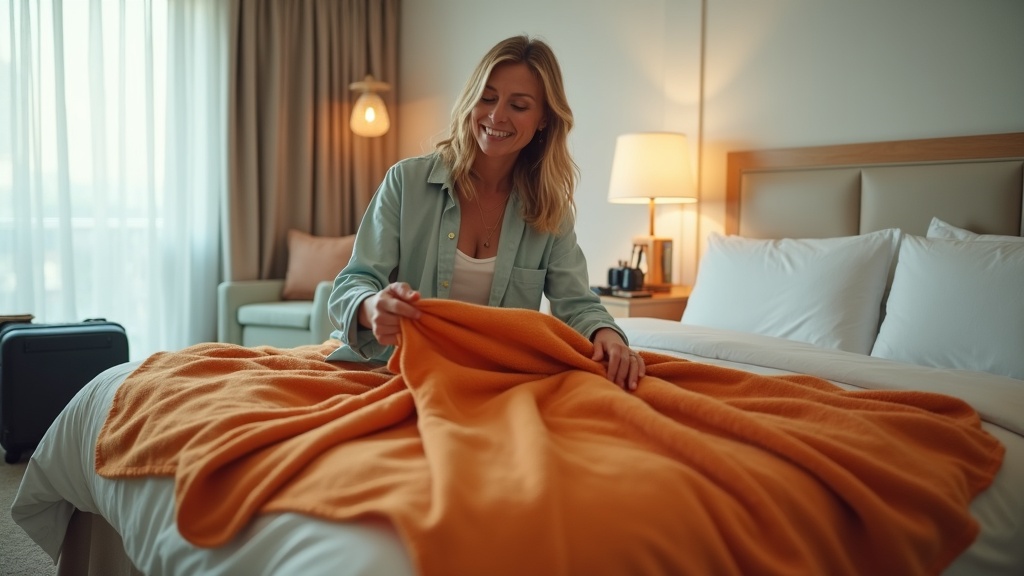
Before you climb into bed, take two minutes to make it feel more like yours. Pull back the duvet or comforter and take a quick look at what’s underneath. Sometimes hotels layer on extra blankets or use textured mattress protectors that feel scratchy or stiff. If something feels off, you can usually tuck it under or fold it away.
Remove anything you won’t actually use. Those decorative pillows and bed runners might look nice, but they often sit in storage between guests and add visual clutter. Set them aside on a chair or in the closet. The simpler the bed looks, the easier it is to relax.
Smooth out any wrinkles or bunched-up fabric with your hands. Even small creases can create uncomfortable pressure points when you’re lying down for hours. Run your palm across the fitted sheet and top sheet to make sure everything sits flat and even.
If the duvet feels too heavy, too synthetic, or just not quite right, consider sleeping on top of the top sheet instead. You can use the duvet as a loose cover or push it to the side entirely. This works especially well if the room temperature is adjustable.
This quick reset does more than improve comfort. It gives you a sense of control over your sleep space. When you’ve touched and adjusted the bed yourself, it stops feeling like a generic hotel setup and starts feeling like a place that’s temporarily yours. That mental shift makes it easier to unwind and actually get some rest.
Fix pillow height and firmness so your neck stops noticing
The pillow situation in most hotels is wildly inconsistent. You might get two flat pancakes or four puffy clouds, and neither will feel right if you’re used to something specific at home. Your neck knows the difference immediately.
If you sleep on your side, you need enough height to fill the gap between your ear and the mattress. Too flat and your head tilts down. Too high and it cranks upward. Back sleepers usually need something thinner so the head doesn’t pitch forward. Stomach sleepers often do best with almost no pillow at all, or just a really thin one.
The simplest fix is to raid the closet and swap pillows around. Most hotel rooms have extra pillows stashed on the top shelf or in a cabinet. Try them all. One might be firmer or flatter than the others. You can also stack a soft pillow on top of a firm one, or fold one in half to add height exactly where you need it.
If you have a tiny bit of luggage space, a compressible travel pillow can be a lifesaver. These squish down to nearly nothing and give you one consistent thing to sleep on no matter where you are. Even easier: bring a thin silk or cotton pillowcase. Hotel pillowcases can feel stiff or scratchy, and your own fabric makes an instant difference.
No pillowcase? Grab a bath towel, fold it lengthwise into a narrow roll, and tuck it inside the pillowcase along the bottom edge. It creates a gentle lift for your neck without throwing your whole head forward. You can also bunch up a hoodie or scarf to adjust height on the fly.
Handle temperature drift before it wakes you up
You fall asleep comfortably, then wake up three hours later either sweating or shivering. This happens all the time in hotels, and it’s not entirely your fault. Hotel beds typically come with thick duvets designed to please the widest range of guests. The sheets are often tucked military-tight, trapping heat around your legs. And the thermostat might cycle on a schedule you’d never choose at home.
The simplest fix is to set the room cooler than feels right when you’re getting ready for bed. You’re moving around, probably wearing clothes, so the temperature that feels comfortable then will likely feel too warm once you’re still and under covers. Adjust the thermostat a few degrees lower than your instinct suggests.
Next, untuck the sheets at the foot of the bed. Letting your feet poke out or just breathe gives you a quick temperature release valve during the night. If you tend to run cold, toss a pair of lightweight sleep socks in your bag. They warm you up fast without making your whole body overheat.
A thin long-sleeve shirt works the same way. It keeps your core warm without adding bulk, and you can peel it off halfway through the night if things shift. If the room has a window that opens, crack it slightly for airflow, especially if the air feels stale or dry.
For persistent warmth issues, a small battery-powered or USB fan takes up almost no luggage space and makes a surprising difference. And if you’re sensitive to light but worried a heavy sleep mask will trap heat, look for thinner versions with a breathable design. Small adjustments beat waking up uncomfortable every time.
Block the tiny light leaks that keep your brain on alert
You might not notice them at first, but hotel rooms are full of tiny glowing lights. The alarm clock display. The smoke detector LED. The charging cable for your phone. That thin strip of hallway light seeping under the door. None of them feel bright enough to bother you, but your brain notices anyway.
These small lights can keep you in a lighter stage of sleep without you realizing it. You might drift off fine, but you wake up feeling less rested than you should. This is especially true when you’re already dealing with jet lag or sleeping in an unfamiliar place.
The easiest fix is a comfortable sleep mask. Pack one that fits well and doesn’t press on your eyes. Look for something with a contoured design that blocks light without feeling tight. It makes a surprising difference, especially in rooms with heavy curtains that still let in slivers of light around the edges.
If you don’t want to wear a mask, you can deal with the lights directly. Turn the alarm clock to face the wall or drape a hand towel over it. Cover charging indicator lights with a small bandage or sticky note from your travel kit. For that annoying gap under the door, roll up a bath towel and press it against the base. It takes thirty seconds and blocks both light and hallway noise.
These aren’t dramatic changes, but they add up. When your room is truly dark, your body relaxes more completely. You’ll notice the difference most on nights when you’re already tired or struggling to settle in.
Quiet down the micro-noises that add up
It’s rarely the big noises that wreck your sleep in a hotel. Most people can drift off through the occasional siren or hallway conversation. What really chips away at rest are the small, repetitive sounds that your brain can’t quite ignore. The hum of the ice machine down the hall. The muffled bass thump from a neighbor’s TV. The elevator ding every few minutes. The soft whoosh of traffic that never quite stops.
These micro-noises don’t wake you up dramatically. They just keep you from sinking into the deeper sleep stages where your body actually recovers. You end up half-resting all night, which is why you feel tired even after eight hours in bed.
The simplest fix is a good pair of foam earplugs. Not the rock-hard ones from the airport kiosk, but soft foam plugs that actually seal without making your ears ache. Roll them thin before inserting, then let them expand gently. If earplugs feel claustrophobic or you need to hear your alarm, try noise-canceling earbuds designed for sleep instead. They’re flatter than regular earbuds and won’t jab your ear when you roll over.
Pair either option with a white noise track playing quietly from your phone. Place the phone across the room, not right next to your head. The goal is gentle background sound that evens out the unpredictable bumps and beeps. Rain sounds or brown noise work well because they mask irregular frequencies without demanding attention.
One last trick: if your bedside table rattles with every footstep or door close, pull it a few inches away from the wall. That small gap can stop vibrations from traveling through furniture and waking you up at odd hours.
Keep a mini sleep kit that earns its space
The secret to sleeping well in any hotel isn’t bringing everything from home. It’s bringing the same few small things every time. When you use the same items night after night, even an unfamiliar room starts to feel predictable.
Think of it as a tiny collection that solves specific problems, not a full comfort arsenal. A thin cotton pillowcase takes up almost no room but puts something familiar against your face. A sleep mask and earplugs handle the two most common hotel complaints: light leaking around curtains and hallway noise at odd hours.
Here’s something most travelers don’t think about until it’s keeping them awake: those bright little LED lights on smoke detectors, TVs, and coffee makers. A small roll of electrical tape or even a few bandages can cover them without leaving residue. It sounds trivial until you’re staring at three glowing dots at two in the morning.
One comfort item rounds things out nicely. A travel-size hand lotion works wonders in the desert-dry air most hotels pump out. Or maybe it’s a particular lip balm or a small sachet of lavender. Pick whatever makes you feel more like yourself.
The key is keeping everything flat and compact. Roll the pillowcase around the other items and tuck it in a corner of your bag. The whole kit should be smaller than a paperback book and light enough that you forget it’s there until bedtime.
Once you’ve used the same sleep setup in three or four different hotels, your brain starts to associate those items with settling down for the night. That’s the real trick: portability plus repetition equals familiarity anywhere.
Use a quick bedtime routine to make the room feel familiar
Your brain is surprisingly good at recognizing patterns. When you do the same few things before bed each night, your body starts to understand that sleep is coming. This works just as well in a hotel as it does at home.
The key is keeping it simple and quick. You don’t need an elaborate ritual. Just five to ten minutes of familiar actions can help make hotel bed comfortable even when everything else feels foreign.
Start by setting up the room the way you like it. Adjust the temperature if you can. Deal with any light issues by closing curtains fully or draping a towel over annoying indicator lights. If there’s noise, turn on a fan or use a white noise app on your phone.
Next, arrange your pillows the way you prefer them. This takes thirty seconds but makes a real difference. You’ve already fixed what you could fix about the bed itself earlier, so now you’re just getting it ready for sleep.
Finally, pick one calming thing you actually enjoy and can do anywhere. Read a few pages of a book. Do some light stretches on the floor. Take a warm shower if the bathroom is decent. The specific activity matters less than doing the same thing each night.
The routine itself becomes the signal. Your body learns to relax when it recognizes the pattern, even if the mattress isn’t quite right or the pillows are a bit flat. You’re not trying to create perfect conditions. You’re creating consistency, which often works better than perfection when you’re trying to sleep somewhere new.