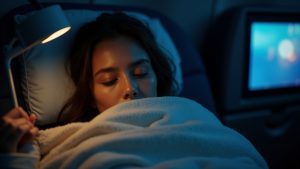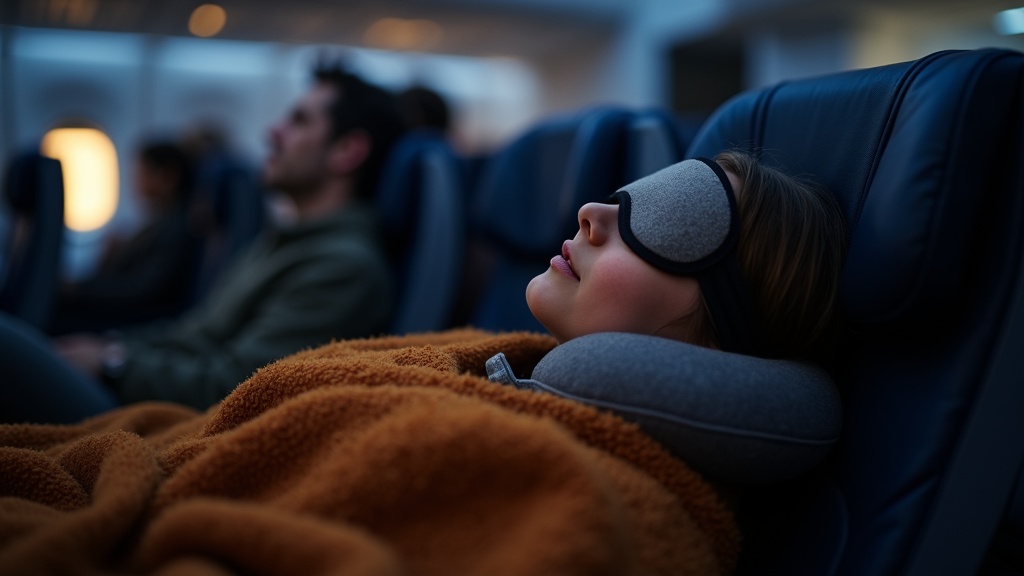
Trying to sleep while traveling is frustrating in a very specific way. You’re exhausted, you finally have time to rest, but your neck is bent at a weird angle, someone’s talking three rows back, and there’s a sliver of sunlight hitting your face at exactly the wrong spot.
The problem isn’t that you can’t sleep anywhere. It’s that travel throws five different sleep problems at you all at once. The overhead light that won’t quite turn off. The hum of the plane engine or the rattle of the train. The seat that seemed fine for the first twenty minutes but now feels like sitting on a wooden bench.
Most travel sleep accessories try to be everything at once. A pillow that also blocks light. An eye mask with built-in headphones. A blanket that somehow promises better sleep through sheer softness. But the truth is simpler than that.
Good sleep on the move comes from solving one problem at a time. If light is keeping you awake, you need something that actually blocks light, not a flimsy mask that shifts every time you move. If noise is the issue, generic foam earplugs might not be enough when you’re sitting near a crying baby or a loud air vent.
This isn’t about packing more gear. It’s about knowing which specific problem is ruining your sleep, and bringing the one thing that actually fixes it. Sometimes that’s a well-designed neck pillow. Sometimes it’s just better earplugs. Let’s look at what actually works for each common problem.
When light is the main thing keeping you awake
Light is one of those things that seems minor until you’re trying to sleep through it. A reading lamp two rows up on a red-eye flight. The sunrise blazing through hotel curtains at five in the morning. Even the glow from a train aisle can keep your brain alert when you desperately need rest.
Your body reads light as a signal to stay awake. It’s not complicated—light means daytime, and daytime means you probably shouldn’t be asleep. That’s fine at home where you control the curtains and lamp switches, but terrible when you’re stuck in a moving metal tube at 30,000 feet.
An eye mask seems like the obvious solution, and it can be. But most masks don’t actually work for sleep that lasts longer than twenty minutes. They slip off when you shift position. They press on your eyelids in a way that gets annoying fast. They leave a gap around your nose that leaks light exactly where you don’t want it.
A mask that actually helps you sleep needs full coverage around the nose bridge without crushing your face. The strap should adjust easily and stay put without snagging your hair or requiring origami-level adjustments. The fabric needs to breathe so you don’t wake up sweaty. And if you sleep on your side, the mask can’t be so bulky that it digs into your face against the seat or pillow.
Some people skip masks entirely and pull a hoodie down over their eyes, wrap a buff around their face, or tilt a hat brim low. These work in a pinch, but they’re harder to keep in place and usually let in more light than a decent mask. They’re backups, not solutions.
Light and noise are separate problems, by the way. Blocking one doesn’t fix the other, so you might need to tackle both.
When noise is the problem, not the seat
Not all travel noise is created equal. There’s the steady drone of an airplane engine or the low hum of air conditioning, which stays consistent. Then there’s the stuff that jolts you awake: announcements crackling over speakers, doors slamming, or your neighbor launching into a phone call at full volume.
Basic foam ear plugs handle sudden sounds surprisingly well. They physically block sound waves from reaching your ear, so a slamming door becomes a dull thud instead of a jolt. But they barely touch that deep engine rumble. You’ll still feel it more than hear it, which can keep you from falling into deep sleep.
Noise canceling headphones work the opposite way. They’re brilliant at erasing steady background noise, making that engine hum almost disappear. But they can’t react fast enough to block sudden sounds. An announcement will still come through, just slightly muffled. If your main enemy is constant drone, they’re worth their weight in gold.
Comfort gets tricky when you’re trying to sleep. In-ear options, whether plugs or earbuds, can press painfully against your ear when your head tilts into a pillow or window. Over-ear headphones avoid that pressure point, but they can get hot and feel bulky if you shift around much. Some people wake up with sore ears from either option after a few hours.
You can combine both if you’re dealing with a nightmare noise situation. Foam plugs under over-ear headphones give you passive and active protection at once. It sounds excessive, but on a red-eye flight next to the galley, it might be the only thing between you and misery. Just don’t feel like you need to go full combat mode for every trip.
When your neck keeps snapping awake
That sudden head-drop that jolts you awake is one of the most frustrating parts of trying to sleep sitting up. Your body starts to relax, your head tilts forward or sideways, and then snap—you’re awake again with a sore neck.
The classic U-shaped travel pillow rarely solves this problem. Most of them push your head forward instead of holding it steady, which makes things worse. They leave gaps at the sides where your head can still flop around. And if they’re too soft, they compress down to nothing under the weight of your head.
Better options depend on how your head actually moves when you doze off. If you’re a chin-dropper whose head falls forward, look for wrap-style pillows that tuck under your chin and fasten behind your neck. They stop that forward collapse before it happens.
If you’re a side-tilter, you need something with a higher back that works with the headrest behind you. Some designs have side wings that cradle your head in place without pushing it forward. The trick is finding one tall enough for your shoulders—wider shoulders need more height to keep your neck aligned.
Inflatable pillows pack down to almost nothing, which matters if you’re tight on space. But they can feel plasticky against your skin and sometimes squeak when you move. Foam or memory foam versions feel more comfortable and stay put better, though they take up more room in your bag.
A low-tech option that actually works: roll up a small scarf or light jacket and wedge it between your neck and the seat. It won’t look fancy, but it can stop your head from dropping just as well as a proper pillow.
One last thing nobody mentions—if your pillow has a removable cover, you’ll actually use it more. Airplane seats aren’t exactly clean, and neither is the back of your neck after a long day of travel.
When temperature swings keep waking you up
Your body needs to stay in a fairly narrow temperature range to sleep well. When you get slightly too cold or too warm, you don’t always wake up completely. But you do drift up into lighter sleep, and that wrecks the restorative part of rest. This happens constantly when you travel because planes blast cold air, hotel thermostats have minds of their own, and you can’t control whether your room faces the sun.
The fix isn’t complicated. You just need layers you can add or remove without getting out of bed or fumbling in the dark. A thin merino or synthetic zip hoodie takes almost no space in your bag and works equally well on a freezing plane or in an over-air-conditioned hotel. Warm socks make a surprising difference because cold feet wake people up more reliably than almost anything else.
A packable travel blanket or silk sleep liner gives you one more layer of control. Look for something that stuffs into its own pouch and weighs less than a paperback. These work well on planes where the provided blanket feels like a napkin, and in hotels where the duvet is either missing or suffocating.
If you run hot, pack a moisture-wicking sleep shirt instead of cotton. It pulls sweat away from your skin so you don’t wake up clammy. A breathable neck gaiter serves double duty as a draft blocker when it’s cold and an eye mask when you need darkness. Some travelers crack the hotel window or bathroom door to create gentle airflow instead of relying on noisy AC units.
The key is planning for two scenarios. Planes and buses usually run cold, so keep a layer accessible in your carry-on. Hotels are unpredictable, so toss your packable blanket and spare shirt in your checked bag or day pack.
When dryness makes you uncomfortable enough to stay awake
You’ve finally settled into your seat, pulled on your eye mask, and positioned your travel pillow. Then you notice your lips feel like sandpaper. Or your eyes start stinging. Or your nose gets so dry it’s all you can think about.
Airplane cabins are notoriously dry, with humidity levels often below twenty percent. That’s drier than most deserts. Hotel heaters and unfamiliar climates can create similar problems. These aren’t dramatic discomforts, but they’re persistent enough to keep your mind from relaxing.
The fix is simpler than you might think. A good lip balm, a small tube of hand cream, basic saline nasal spray, plain eye drops meant for dryness, and a travel-sized face moisturizer can eliminate most of these nagging irritations. None of these are fancy skincare products. They’re just practical comfort tools.
The timing matters more than people realize. Apply everything before you try to sleep, not after you’re already uncomfortable. Trying to dig out eye drops when you’re half-asleep and cramped in a window seat defeats the purpose entirely.
Keep these items in a clear travel pouch that stays in your personal bag, not your overhead luggage. You want them within arm’s reach without unpacking half your belongings. If you’re flying, remember liquids need to follow security rules, but these small sizes usually fit easily in your quart-sized bag.
Will moisturized lips guarantee you’ll fall asleep? Of course not. But removing small, fixable discomforts gives your body one less reason to stay alert. Sometimes that’s enough to tip the balance toward actual rest.
When small irritations add up and you can’t settle
Sometimes the problem isn’t one big discomfort. It’s a dozen tiny ones that keep you shifting around just when you’re about to drift off. Your seatbelt digs into your collarbone. Your feet dangle awkwardly because you’re not quite tall enough. Your lower back starts complaining after an hour in an upright seat.
None of these things scream for attention, but together they create a low-level restlessness that makes real sleep impossible. You keep adjusting, reopening your eyes, trying to find a position that works. The fixes aren’t glamorous, but they work.
A soft scarf wrapped around the seatbelt strap stops that cutting feeling across your shoulder or neck. It sounds almost too simple, but that constant pressure point can keep you awake for hours without you fully realizing why you’re uncomfortable.
Compression socks help reduce that heavy, achy feeling in your legs during long stretches of sitting. They’re not just for medical reasons. They keep your lower legs feeling less swollen and restless, which means less fidgeting overall.
If your feet don’t quite reach the floor or rest comfortably, a small inflatable footrest or even a lightweight foot hammock that hooks to your tray table can make a surprising difference. Dangling legs create tension up through your hips and back.
A compact lumbar support or even a rolled-up travel blanket tucked behind your lower back fills the gap that airplane and bus seats leave. It’s not about perfect posture. It’s about not waking up every twenty minutes because your back is quietly complaining.
None of these accessories create sleep on their own. But they remove the small, persistent annoyances that prevent it. Less fidgeting means more chance of actually staying asleep once you get there.
When you’re trying to sleep near other people
Shared sleeping spaces come with their own set of problems. Someone’s scrolling their phone with the brightness cranked up. A roommate snores like a diesel engine. Bags rustle at three in the morning. You can’t control any of that, but you can build yourself a small bubble of calm.
Start with light. If there’s a gap under the door leaking hallway brightness into the room, a rolled towel works surprisingly well as a quick fix. For light coming from nearby devices or reading lamps, a good eye mask is your best friend. Look for one with deep contouring so it doesn’t press on your eyelids and blocks light from every angle.
Noise is trickier because you need a solution that helps you without disturbing others even more. Foam ear plugs are the simplest option and they’re cheap enough to replace often. If you find regular plugs uncomfortable, try the softer wax or silicone versions that mold to your ear shape.
For people who can’t stand the sealed-ear feeling, sleep headphones give you another route. The headband style lies flat and won’t dig into your ear if you’re a side sleeper. Play white noise, rain sounds, or quiet music at a volume only you can hear. This masks irregular sounds like snoring or rustling without adding to the room’s noise level.
One underrated trick: wearing a buff or a hoodie pulled forward creates a subtle signal that you’re off-duty. It adds a thin layer of visual privacy and helps you feel a bit more separated from the room. You’re not blocking out the world completely, just turning down the volume on everything that isn’t sleep.
How to pick sleep travel accessories without buying a bunch of junk
Start by figuring out what actually stops you from sleeping when you travel. Is it light bleeding through your eyelids? Noise from the cabin or your seatmate? Your head flopping forward every ten minutes? Most people have one or two main culprits, not five.
Once you know your biggest problem, pick the smallest thing that solves it. If light wakes you up, you need an eye mask that blocks light completely, not one with fancy cooling gel pockets. If noise is the issue, simple foam earplugs might work better than expensive noise canceling headphones that hurt after twenty minutes.
Test everything at home before you pack it. Wear that eye mask for an hour on your couch. Sleep with those earplugs in for a full night. Does the travel pillow still feel good after half an hour, or does it start digging into your shoulder? Does it stay put when you shift positions, or does it migrate toward your lap?
The tried-and-tested label means something survived real use. It stayed comfortable past the first fifteen minutes. It didn’t fall off or slide around. You could stuff it in a bag without special care, and you could wipe it down or throw it in the wash without it falling apart.
People get disappointed with sleep travel accessories when they buy for an imaginary version of travel. You imagine yourself serenely napping in a perfectly reclined seat, so you buy something bulky and elaborate. Then you’re crammed in a middle seat and the thing doesn’t fit.
Ignore fit at your own risk. An eye mask that works beautifully on someone with a small face might gap and let in light on yours. A neck pillow designed for long necks will feel wrong if you’re built differently. Comfort beats features every single time.