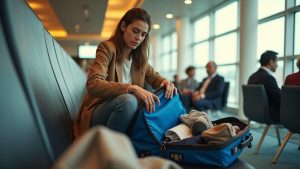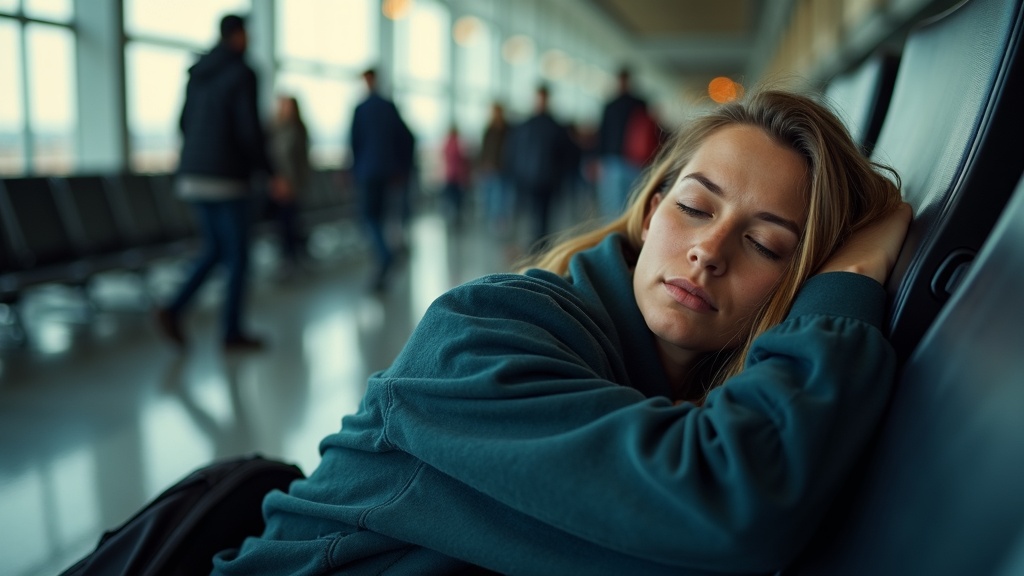
You’re stuck in an airport terminal at two in the morning. Your flight was delayed, or maybe you’re between connections with eight hours to kill. The overhead lights are blazing like it’s midday. Announcements echo through the speakers every ten minutes. The seats have armrests positioned exactly where you’d want to lie down.
This is not a hotel. Nobody designed this space for sleeping. Yet here you are, exhausted and trying to figure out how to get even a few hours of rest before your next flight.
The good news is that thousands of travelers have been exactly where you are right now. They’ve tested what works and what doesn’t. They’ve found the quieter corners, figured out which accessories actually help, and learned how to make peace with less-than-ideal conditions.
Sleeping in airports doesn’t have to mean a miserable night of tossing and turning on cold tile floors. With the right approach and a few smart strategies, you can actually get some decent rest. You won’t wake up feeling like you spent the night in a luxury suite, but you can absolutely wake up functional and ready for your journey.
This guide brings together real advice from experienced travelers who’ve mastered the art of airport sleep. Whether you’re dealing with an unexpected delay or a planned overnight layover, you’ll learn how to find the best spots, what to bring, and how to stay comfortable and safe while catching some sleep in one of the world’s least restful environments.
Choose a spot that makes sleep possible
The worst thing you can do is collapse at the first available seat and hope for the best. Where you settle down matters more than almost anything else when it comes to actually getting rest in an airport.
Start by walking around for a few minutes. Look for areas that feel quieter and darker than the main terminal. Gates where the last flight has already departed are often excellent because there’s no foot traffic and staff have moved on. Corners away from restaurants and bars help you avoid the constant hum of conversations and clattering dishes. Some terminals have carpeted sections tucked into hallways or alcoves, which are usually calmer and slightly more comfortable if you end up on the floor.
Pay attention to the seating itself. Armrests are your enemy because they make lying down impossible. Flat benches without dividers are rare but worth hunting for. If all the seats are terrible, scout for clean floor space near a wall. Position yourself so your back is against something solid and you’re not in the middle of a walking path. You don’t want to be dodging rolling suitcases all night.
Watch for drafts too. Spots near automatic doors or ventilation units get cold fast, even in warm climates. A corner away from the main flow usually means less wind and less noise.
Keep an eye out for cleaning staff and security as you settle in. You’re not doing anything wrong, but you also don’t want to block their work areas or set up camp somewhere they need access to. If someone asks you to move, just move. Being cooperative keeps the whole experience drama-free.
Reduce light and noise in simple, realistic ways
Airports are designed to keep you awake. Bright overhead lights stay on all night. Announcements echo through speakers every few minutes. Cleaning crews run loud floor buffers at three in the morning. Rolling suitcases click and clatter past your head. You won’t eliminate these problems completely, but you can take the edge off.
Start with the basics. A simple eye mask blocks most light and costs almost nothing. If you don’t have one, a clean t-shirt or scarf wrapped around your eyes works surprisingly well. Pull a hoodie forward over your face, or drape a jacket across your head. It might look odd, but nobody cares at two in the morning.
For noise, foam earplugs are your best friend. They muffle announcements and dull the worst of the ambient sound. If you have noise-canceling headphones, even better. Play white noise, rain sounds, or quiet music to mask the unpredictable bursts of noise that jolt you awake. Regular earbuds with a podcast or audiobook at low volume can help too.
Positioning matters more than you’d think. Face away from the brightest lights when you lie down. Put distance between yourself and the nearest speaker if you can. Use your backpack or carry-on as a barrier between your head and the main walkway. Even a few feet can make a real difference in how much noise reaches you.
Set realistic expectations. You probably won’t sleep deeply. Airport sleep tends to come in short patches between interruptions. That’s normal. Even broken rest is better than none, and a few hours of half-sleep can get you through the next day surprisingly well.
Use a few comfort items to make hard surfaces tolerable
Airport seating wasn’t designed for sleeping. The armrests dig into your ribs, the plastic feels like ice, and somehow every position makes your neck hurt within minutes. But you don’t need to haul a camping setup through security to make things bearable.
Start with what’s already in your bag. Your jacket becomes a surprisingly decent pillow when you fold it or roll it up. A hoodie works even better because you can stuff the hood with a scarf or spare shirt to add some bulk. If you’re stuck on the floor, lay your jacket flat under your hip or shoulder to create a thin barrier between you and the cold tile.
Spare clothes can solve the lower back problem that comes with airport chairs. Roll up a sweater or a pair of jeans and wedge it behind your lumbar region. It keeps your spine from twisting into uncomfortable angles. A scarf or large shawl doubles as a blanket, and it takes up almost no space in your carry-on.
If you’re someone who travels often or knows you have a long overnight layover coming up, a few small items make a real difference. An inflatable neck pillow supports your head without the bulk of a traditional one. A packable travel blanket weighs nothing but keeps you warm when the terminal air conditioning kicks in. Compression socks help if your feet start swelling after hours of sitting.
Keep your essentials within arm’s reach before you drift off. Tuck your boarding pass, phone charger, and water bottle into an outside pocket or loop the strap of your bag around your wrist. Waking up to fumble through your luggage defeats the whole point of trying to rest.
Sleep in public without feeling exposed
The hardest part of sleeping in airports isn’t the noise or the lighting. It’s the feeling of being watched while you’re trying to rest. You’re surrounded by strangers, security cameras, and staff who might ask you to move at any moment.
Start by keeping your most important items on your body, not just near it. Slip your passport and wallet into a pocket you can zip or button closed. Loop your bag strap around your leg or arm so nobody can grab it while you’re dozing. This isn’t paranoia, it’s just practical. Once you know your valuables are secure, your brain can actually relax.
Position matters more than you’d think. Face toward the main flow of foot traffic so you can see people approaching even with your eyes half-closed. Use your backpack or carry-on as a physical barrier between you and the open space. It creates a small buffer that makes you feel less exposed.
Before you settle in, take care of the basics. Visit the bathroom, drink some water, and loosen anything tight like belts or shoes. Set a phone alarm with vibration only or use earbuds so you don’t wake up everyone around you. Knowing you’ll wake up at the right time helps you let go and actually rest.
If airport staff ask you to move, just be polite and cooperative. They’re doing their job, and getting defensive never helps. Ask if there’s a better spot nearby or if you can return after a certain time. Most staff will work with you if you’re respectful. Flexibility usually gets you further than insisting on your rights.
Make the next day easier after a rough airport night
You survived the night, but now you feel like a crumpled receipt at the bottom of a bag. The good news is you can help yourself feel surprisingly human with a few simple steps once the sun comes up.
First, find a bathroom and do more than just use the toilet. Wash your face with cool water. Brush your teeth if you packed a toothbrush. If you brought a clean shirt or even fresh socks, change into them now. You’d be amazed how much better you feel after swapping out one sweaty layer.
Once you’re cleaned up, find a quiet corner away from the main traffic flow and do some gentle stretching. Roll your shoulders. Bend forward slowly. Twist your back gently side to side. Nothing fancy, just enough to remind your body it has joints that can move.
Eat something light and easy to digest. A banana, some toast, or plain yogurt works well. Your stomach might feel unsettled after a rough night, so skip the greasy breakfast sandwich for now. Pair it with water first, then consider caffeine.
Here’s the caffeine trick: have a small coffee or tea, not a giant one. Sip it slowly over thirty minutes instead of chugging it. This helps you feel alert without getting jittery or crashed later. If you drink too much too fast on an empty, tired stomach, you’ll just feel worse.
If your schedule allows it, plan for a proper nap later in the day. Even twenty minutes in a actual bed at your destination will do more for you than another hour slumped in a gate chair. And whatever you do, don’t sit directly under an air conditioning vent. Being cold and tired is a miserable combination that makes everything harder.