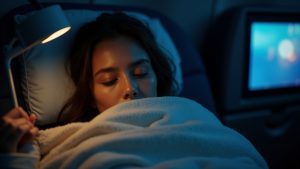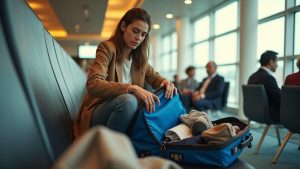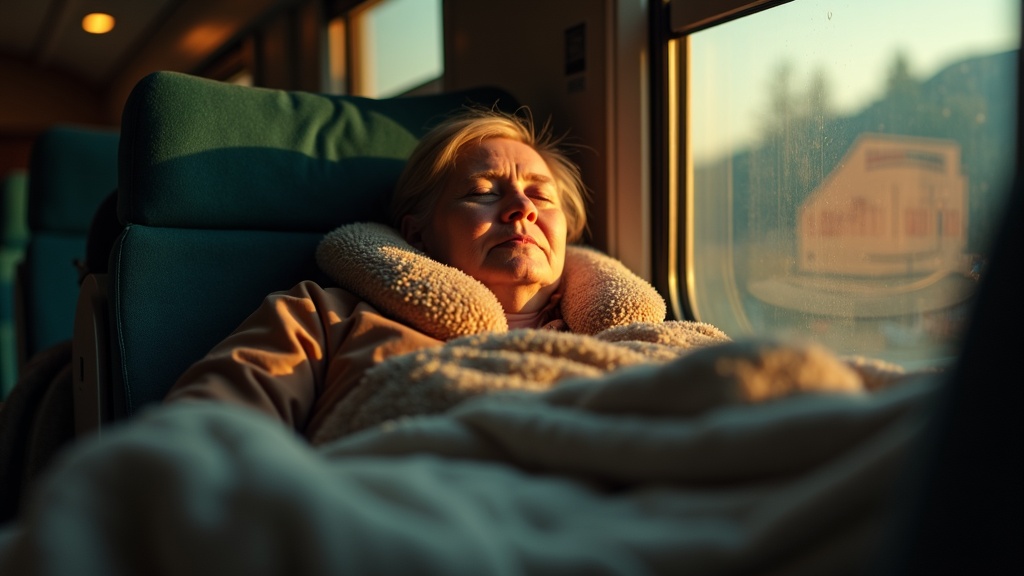
You know that feeling when you’re exhausted after a long travel day, finally in bed, but your brain won’t shut off? Or when the hotel pillow feels like a lumpy sack of regrets? Maybe it’s the airplane seat that won’t recline, or the street noise bleeding through thin curtains at 2 AM.
Some people struggle with sleep every single time they travel. Others only hit trouble now and then, usually when crossing time zones or dealing with particularly uncomfortable conditions. Either way, the result is the same: you arrive at your destination already tired, which isn’t exactly the ideal start to a trip.
Here’s the good news. You don’t need to pack your entire bedroom or spend hundreds of dollars on fancy gadgets. A few small, well-chosen items can dramatically improve your chances of actually sleeping well on the road.
Think of these as your personal sleep insurance policy. A good eye mask weighs almost nothing but can turn a bright hotel room into a dark sanctuary. Earplugs cost a couple of dollars but might save you from the couple arguing in the next room. A compact travel pillow could mean the difference between arriving with a stiff neck or feeling reasonably human.
The key is knowing which items actually work and which ones just take up space in your luggage. Whether you’re a frequent flyer dealing with chronic travel insomnia or an occasional traveler who just wants to sleep better on your next trip, the right gear makes all the difference.
Start with what usually keeps you awake when you travel
Before you start shopping for travel sleep gear, take a minute to think about what actually wakes you up or keeps you awake when you’re away from home. Most people blame “traveling” in general, but the real culprits are usually pretty specific.
The most common troublemakers are light sneaking through hotel curtains, noise from hallways or airplane cabins, uncomfortable temperatures, pressure from awkward seating positions, dry air that leaves your throat scratchy, feeling anxious in an unfamiliar place, or bedding that just feels wrong. You probably won’t struggle with all of these. Most travelers have one or two main issues.
Think back to your last few trips. Did you wake up when someone flushed a toilet down the hall? That’s noise. Did you lie awake staring at the glow from a streetlight? That’s light. Did you constantly shift around trying to get comfortable on the plane? That’s a pressure point problem.
Here’s a simple way to figure out your pattern. If you’re normally a light sleeper at home too, you’ll probably need to address multiple factors, especially light and noise. But if you usually sleep fine and only struggle when traveling, you’re likely dealing with one specific thing that throws you off. Maybe you can handle noise but hotel air conditioning makes the room too cold. Or maybe flights are fine but hotel pillows wreck your neck.
Once you know your actual problem, you can skip the gear that won’t help you and focus on the one or two items that will make a real difference.
Block light and create a sense of privacy
Light is one of the biggest sleep saboteurs when you’re traveling. Hotel curtains rarely block everything, and planes are basically flying tubes of fluorescent brightness. Even small amounts of light can make it harder to fall asleep and stay asleep, especially if you’re already dealing with an unfamiliar environment.
A good sleep mask is the simplest solution. If you’re a light sleeper or planning to sleep during daytime flights, look for a contoured mask that curves away from your eyelids rather than pressing flat against them. This style lets you blink freely and doesn’t smudge eye makeup if that matters to you. An adjustable strap is essential because masks slip when they’re too loose and create pressure headaches when they’re too tight.
For casual travelers who only need darkness on occasional red-eye flights, a basic flat mask works fine. But if you’re sensitive to light or travel frequently, investing in a more substantial mask pays off quickly. Some people find that blocking out visual stimulation also creates a helpful sense of privacy, making it easier to relax in crowded spaces.
Hotel rooms present their own challenges. Curtains often leave gaps at the edges or don’t quite meet in the middle. A large scarf or buff can cover those gaps in seconds without damaging anything. Some travelers pack a few binder clips or clothespins to cinch curtains together more tightly.
If you need to get up during the night, total darkness can be disorienting in an unfamiliar room. A small portable nightlight or even your phone’s dim screen mode can help you navigate safely without flooding the room with brightness that disrupts your sleep cycle.
Handle noise without making your ears miserable
The biggest challenge with travel noise isn’t always how loud it is. It’s that you’re stuck with it for hours, and your usual coping strategies don’t work when you’re trying to sleep on your side in an unfamiliar bed.
Foam earplugs are cheap and effective, but they can feel like you’re jamming corks in your head. If you sleep on your side, they press uncomfortably against the pillow. Silicone earplugs that mold to your outer ear are gentler and stay put better, though they don’t always create as tight a seal. For side sleepers, the softer and flatter the plug, the better.
Noise-canceling headphones are great for steady droning sounds like airplane engines or air conditioning hum. They won’t erase a crying baby or hallway conversations, but they take the edge off background noise that would otherwise keep you alert. Earbuds work similarly and pack smaller, though over-ear headphones tend to be more comfortable for long stretches. Just know that most aren’t designed for side sleeping.
If you hate having anything in or on your ears, white noise from your phone might be enough. It won’t block sudden sounds, but it can mask the low-level hum of a hotel or the muffled voices next door. A small portable white noise device does the same thing without draining your phone battery. This works best for light sleepers who need help with ambient noise, not for dealing with genuinely loud disruptions.
If you’re someone who can sleep through anything and only need backup for the occasional noisy neighbor, simple foam plugs are probably all you need. Save the fancier gear for trips where you know noise will be constant.
Support your neck and back so your body can relax
Your neck doesn’t know the difference between a plane seat and a medieval torture device. Without proper support, your head bobs forward every few minutes, jerking you awake. Your shoulders tense up trying to hold everything in place. This constant cycle of micro-adjustments makes real rest impossible.
A good travel pillow isn’t about perfect posture. It’s about keeping your head from flopping around so you wake up less often. The classic U-shaped pillow works for some people, but many find it pushes their head forward awkwardly. Wrap-style pillows that secure with a toggle tend to stay put better. Scarf-style options pack smaller and can double as lumbar support if you roll them up.
Test a pillow by actually closing your eyes and relaxing your neck muscles. If your head drifts or you feel strain in your shoulders within a minute, it’s not doing its job. You want something that holds your head gently in place without forcing your chin down.
For your lower back, even a small rolled-up sweatshirt tucked behind you can make hours of sitting more bearable. Some people swear by compact lumbar cushions that attach to seat backs. The goal is filling that gap so you’re not constantly arching or slumping.
Hotel beds are a different challenge. Don’t suffer through a too-flat or too-firm pillow when you can ask the front desk for extras. Stack them, fold them, or wedge one between your knees if you sleep on your side. If pillow texture bothers you, a lightweight pillowcase from home takes almost no space and makes any pillow feel familiar. Small adjustments like these cut down on the tossing and turning that fragments your sleep.
Stay comfortable through temperature swings
Planes run cold. Hotel rooms blast air conditioning. Then you step outside and it’s sweltering. Temperature swings are one of the sneakiest sleep disruptors when you travel, and they’re completely fixable with a few lightweight pieces.
The trick is layering with things that pack small. A pair of lightweight socks can make a surprising difference if your feet get cold on night flights. A thin cardigan or zip hoodie works as your go-to warm layer without taking up half your bag. Toss in a large scarf or travel shawl and you’ve got something that doubles as a blanket, shoulder wrap, or extra pillow padding.
If you run cold or you’re a light sleeper who needs consistent warmth to stay asleep, consider adding a soft beanie that won’t interfere with an eye mask. It sounds simple, but keeping your head warm can help you stay asleep through unpredictable cabin temperatures.
Hotel bedding is another issue entirely. Some of it feels scratchy, smells heavily of detergent, or just feels unfamiliar enough to keep you awake. A silk or cotton sleep shirt that covers more skin gives you a buffer layer between you and questionable sheets. If you’re particularly sensitive, a compact travel sheet or sleeping bag liner slips over the mattress and under you, creating a familiar sleep surface without hauling full bedding across continents.
Most occasional travelers do fine with just one reliable warm layer for flights. But if you know you’re sensitive to temperature or textures, bringing one or two of these small items can be the difference between tossing around at 3 a.m. and actually sleeping through the night.
Make dry air less disruptive
Airplane cabins and hotel heating systems can turn your mouth and nose into a desert overnight. You might not notice it at first, but waking up with a cracked lip or a throat that feels like sandpaper can wreck an otherwise decent night of sleep. The fix is usually simple, and the gear fits in your pocket.
Start with a good lip balm and keep it where you can reach it without thinking. Tuck one in your carry-on, another in your hotel nightstand. The same goes for a small nasal saline spray or gel. A quick spritz before bed keeps your nasal passages from drying out and getting uncomfortable. This matters most on overnight flights, during winter travel when indoor heating runs constantly, or anywhere with low humidity like desert climates.
Drinking water helps, but chugging a bottle right before sleep means waking up to use the bathroom. Instead, keep a small refillable water bottle within arm’s reach and take small sips if you wake up thirsty. On planes, fill it after you pass through security so you’re not relying on sporadic drink service.
If you tend to breathe through your mouth while sleeping and wake up feeling parched, a lightweight neck gaiter or buff can help. Pulled up loosely over your nose and mouth, it adds a bit of moisture to the air you breathe without feeling restrictive. It’s gentler and more forgiving than anything adhesive, and you can adjust or remove it easily if it feels odd. This approach works well in dry hotel rooms or on long flights where you can’t control the air quality.
Use small cues that tell your brain it’s time to sleep
Your brain likes patterns. At home, it knows that brushing your teeth, turning off the lights, and climbing into your own bed means sleep is coming. In a hotel room or unfamiliar Airbnb, those signals disappear. Everything feels different, so your brain stays a little more alert than usual.
The solution isn’t to recreate your entire bedroom. It’s simpler than that. You just need a few small, portable cues that travel with you and stay consistent no matter where you are.
A familiar scent can work surprisingly well. A tiny rollerball of lavender oil or a small sachet tucked into your pillowcase gives your brain something recognizable. You don’t need aromatherapy knowledge or special equipment. Just something that smells the same every night.
Sound works too. A specific playlist, a white noise app, or the same audiobook set on a timer can become a reliable signal. The key is consistency. Use the same sounds at home and on the road, and your brain starts to associate them with winding down.
If your mind races in new places, a small notebook can help more than you’d think. Spending two minutes writing down whatever’s bouncing around in your head gets it out of your system. You’re not journaling or doing anything formal. You’re just offloading thoughts so they stop circling.
Think of these as optional tools, not requirements. They’re especially helpful if you’re someone who sleeps fine at home but struggles the first night or two away. Pack a small kit with your toothbrush and one comfort item that signals bedtime. It doesn’t need to be elaborate. It just needs to be yours.
Prepare a flight sleep setup that works in a cramped seat
Sleeping on a plane is hard because everything works against you. The space is tight, the air is dry, and people keep walking past your shoulder. But a smart setup can make it tolerable, even if you won’t sleep like you’re at home.
Start by keeping everything you need within arm’s reach. Stuff your sleep mask, earplugs or noise-canceling earbuds, and a small water bottle in the seat pocket in front of you. You don’t want to dig through the overhead bin every time you need something. That wakes you up more than turbulence does.
A good neck pillow matters more than you’d think. The cheap inflatable ones slide around when you shift positions, which defeats the purpose. Look for something with a slightly textured cover or a shape that hooks around your seat. Your goal is to keep your head from flopping forward every time you relax.
Layer up before you try to sleep. Airplane temperatures swing wildly, and waking up cold at 3 a.m. is miserable. A light scarf or hoodie works better than fighting with the scratchy airline blanket. Keep it loose so you can adjust without fully waking up.
If you’re a light sleeper, go for redundancy. Wear earplugs under noise-canceling headphones. Use a contoured sleep mask that blocks light completely, not just the flimsy flat kind. Keep a backup set of earplugs in case one falls out.
If you sleep easily anywhere, skip the extras. A simple mask and one good pair of earbuds might be all you need. The key is knowing what actually wakes you up and blocking just that, without turning yourself into a mummy wrapped in travel gear.
Use quick hotel room fixes when the room is the problem
Sometimes a hotel room has just one annoying thing keeping you awake. The bed is fine, you’re tired, but there’s a blinking smoke detector or a sliver of hallway light under the door. If you normally sleep well at home, these small problems can feel surprisingly disruptive.
The good news is that most of them take less than two minutes to fix. A small strip of medical tape or even a bandage can cover those bright LEDs on alarm clocks, TVs, or air conditioners. Dark electrical tape works too, but it can leave residue, so stick with something gentler if you have it. You’re not damaging anything, just blocking a light.
Light leaking under the door is another common culprit. Roll up a bath towel and wedge it along the gap at the bottom. It blocks both light and some hallway noise. If the curtains don’t fully close and morning sun wakes you too early, a couple of binder clips or even heavy-duty clothespins can pull the panels together. Pack two small clips in your toiletry bag and you’ll always have them.
For noise issues, a white noise app on your phone works better when you place the phone closer to the source of the sound. If people are talking in the hallway, put your phone on the nightstand nearest the door. The steady hum helps mask irregular sounds that would otherwise jolt you awake.
Not everything is worth fixing. A faint hum from the mini fridge probably won’t keep you up, but a strobe-like LED will. Focus on the one or two things that genuinely bother you, not every imperfection. You’re aiming for good enough sleep, not a perfect environment.
Build a small kit that matches how you actually sleep
The best travel sleep kit is the one you’ll actually use. That means being honest about what kind of sleeper you are and what your trip really involves.
Start with a core kit: one thing for light, one for sound, and one for comfort. A light sleeper on a long-haul flight might pack a good sleep mask, earplugs or noise-canceling headphones, and a neck pillow. Someone who sleeps easily might just bring a lightweight scarf to double as an eye mask and skip the rest entirely.
Then add items only for problems you know you have. If hotel air conditioning always dries out your nose, bring a small spray bottle or nasal moisturizer. If you run cold on planes, pack a large scarf or travel blanket. If anxiety keeps you awake in unfamiliar places, consider a white noise app or a calming essential oil roller. Don’t pack solutions for problems you’ve never actually had.
Your kit should also shift with the type of trip. A weekend getaway in a decent hotel needs far less than a red-eye flight followed by three time zones of adjustment. For short trips, many people find that just controlling light and sound is enough. For longer travel or multiple destinations, it’s worth adding temperature and air quality solutions.
The key is building around your patterns, not someone else’s packing list. If you’ve never used a white noise machine at home, you probably won’t start using one in a hotel. If you always sleep with socks on, bring socks. Keep it simple and keep it real.