Picture this: you’re planning a trip to Seattle, Dublin, or Bali during monsoon season. Your first instinct? Pack the heaviest raincoat you own, throw in an extra pair of shoes, maybe a backup jacket just in case. Before you know it, half your suitcase is devoted to staying dry.
Here’s the thing though. That bulky approach doesn’t actually work better. It just makes your bag heavier and leaves less room for everything else you need.
The secret to staying comfortable in wet climates isn’t about packing more stuff. It’s about packing smarter stuff. We’re talking about gear that folds down to the size of a water bottle, fabrics that dry while you sleep, and strategies that keep you moving instead of hiding indoors waiting for clear skies.
Think of it like this: locals in rainy cities don’t walk around in giant puffy coats. They’ve figured out how to stay dry without looking like they’re preparing for an arctic expedition. You can do the same thing, even as a traveler with limited luggage space.
The good news is that staying dry doesn’t require special skills or expensive gear. It’s mostly about knowing which items actually earn their weight in your bag and which ones just take up space. A few smart choices can make the difference between spending your trip soggy and miserable or barely noticing the rain at all.
Decide what “staying dry” really means for your day
Not all wet is created equal. A ten-minute drizzle while you duck between cafés is completely different from standing at a bus stop in a downpour for half an hour. Your body can handle a little moisture. What drives you crazy is specific: maybe it’s that cold trickle down your neck, or the way your thighs chafe when your jeans get soaked, or finding your phone damp inside your bag.
Think about what actually ruins your day. If you’re city hopping and mostly indoors, you might only need something to cover you during short walks between stations and museums. A damp shoulder dries fast when you’re inside. But if you’re waiting for rural buses or photographing landscapes, standing still in steady rain is a different problem. You need coverage that lasts.
Wet socks are misery for everyone, but they matter more on a hiking day than during an afternoon of gallery visits. A soaked backpack is annoying if it’s holding snacks, but devastating if your laptop’s inside. Your tolerance changes depending on what you’re doing and where you can dry off.
The good news is you don’t need to solve every possible rain scenario. You just need to handle the kind of wet that matches your plans. Someone bouncing between hotels and restaurants needs less protection than someone spending hours outside. Both can stay comfortable without packing like they’re summiting a mountain. It’s about being honest with yourself: what part of getting wet actually bothers you, and when will you actually be exposed to it?
Use packable outer layers that block rain without taking over your bag
The secret to staying dry without hauling around heavy gear is a good packable rain layer. These are made from lightweight shell fabric that repels water but doesn’t weigh much or take up space. When you’re not wearing it, the whole thing folds into a pouch about the size of a water bottle.
What makes these useful is the design. A simple hood keeps rain off your head and neck, which are usually the first places to get soaked. The cut is loose enough to fit over a sweater or fleece, so you can adjust for temperature. And the length matters: a jacket that covers your hips protects the top half where rain hits hardest when you’re walking.
You have a few options depending on how you move around. A rain jacket works well for walking through town or hiking. It stays put and doesn’t flap around. A compact poncho gives you more coverage and can drape over a backpack, which is helpful if you’re carrying gear. A rain cape falls somewhere in between: it covers your shoulders and arms but lets air circulate, so it’s nice for cycling or warmer days when a full jacket feels stuffy.
The trick is keeping your rain layer where you can actually grab it. If it’s buried at the bottom of your bag, you won’t use it. Tuck it in the top compartment or an outer pocket. That way, when the sky starts looking gray, you’re ready in seconds instead of unpacking everything on a wet sidewalk.
Treat a travel umbrella like a tool, not an afterthought
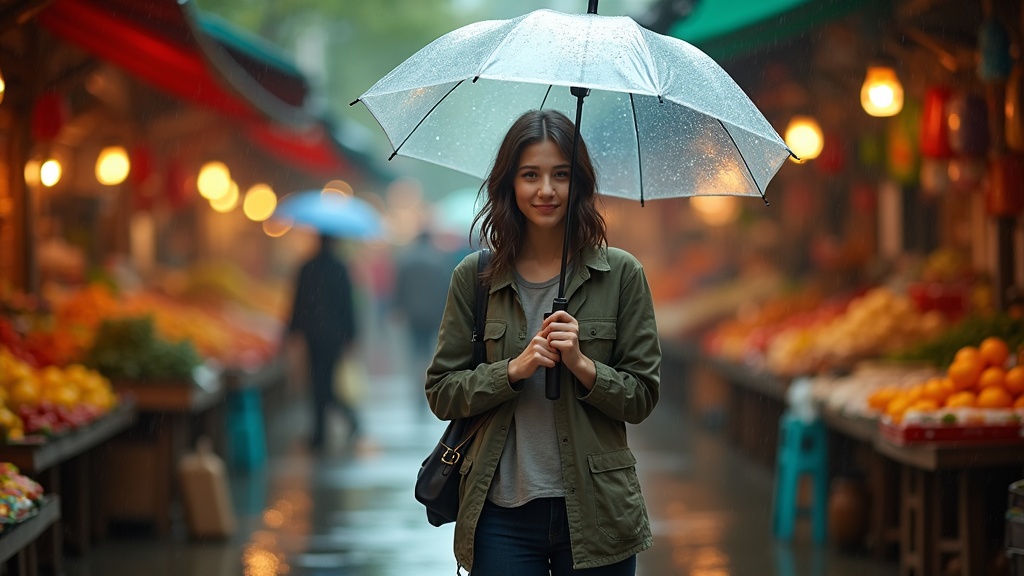
Most people think of umbrellas as something you grab on the way out the door, not as serious travel gear. But a good travel umbrella can keep you drier than a rain jacket in plenty of situations, especially when the weather is warm and the rain isn’t howling sideways.
Here’s why umbrellas often win: they keep rain off you without trapping heat against your body. A jacket makes you choose between getting wet from rain or wet from sweat. An umbrella just keeps you dry. In light to moderate rain, that’s a huge advantage.
What makes a travel umbrella actually useful? It should fold small enough to fit in a daypack or large purse without eating up all your space. It should open reliably without a fight. And it needs enough coverage that your shoulders stay dry, not just the top of your head. You also want something with a sleeve or case, so when you duck into a shop or museum, you’re not dripping all over your bag or other people’s floors.
Umbrellas have real limits, though. Wind turns them into kites or breaks them entirely. Crowded sidewalks make them awkward. And if you’re hiking, biking, or need both hands free, they’re not going to work. They’re best for urban exploring, market days, and anywhere you’re mostly walking on paved surfaces.
The key is treating your umbrella like you’d treat a headlamp or a water bottle. It’s not fancy, but when you need it, you really need it. Pack it where you can actually reach it, and you’ll use it far more than you expect.
Wear quick-dry layers so a little rain doesn’t ruin your day
Here’s the thing about wet climates: you don’t need to stay completely dry every second. You just need to avoid feeling miserable when you do get a bit damp. That’s where quick-dry clothing changes everything.
Quick-dry fabrics are exactly what they sound like. They don’t soak up water like a sponge. When they get wet, they don’t cling to your skin or feel cold and clammy. And if you hang them up at night, they’re usually dry by morning. This means a little drizzle or an unexpected shower doesn’t derail your whole day.
Think about regular jeans for a second. They get heavy when wet, stay cold against your legs, and take forever to dry. Same with thick cotton t-shirts. They hold onto moisture and make you feel damp for hours. Socks are another problem spot. Cotton socks trap water and give you that squelchy, uncomfortable feeling all day long.
The simple fix is thinking in three layers. Start with a base layer that touches your skin and dries fast. Add a mid layer for warmth that also won’t hold water. Then throw on an outer layer that sheds rain when it’s actually coming down. None of these need to be technical hiking gear. A thin synthetic shirt, a fleece or light sweater, and a packable rain jacket do the job.
When your clothes dry quickly, getting caught in the rain becomes less of a disaster and more of a minor inconvenience. You’re not walking around in soggy denim wondering if you’ll ever feel warm again. You just keep going, knowing you’ll be comfortable again soon.
Keep feet comfortable with smarter shoe and sock choices
Wet feet are the fastest way to ruin a day of exploring. The good news is you don’t need heavy waterproof boots or extra pairs of shoes to stay comfortable. The trick is choosing footwear that deals with water better, not gear that tries to keep water out completely.
Look for shoes made from materials that dry quickly. Mesh running shoes or sandals with decent grip work surprisingly well in wet climates because they let water drain out instead of trapping it inside. Yes, your feet will get wet at first, but they’ll dry within an hour or two instead of staying damp all day.
Here’s where waterproof shoes can actually backfire. In warm, rainy places, waterproof materials trap sweat and humidity inside your shoe. You end up with wet feet anyway, except now they’re marinating in their own moisture. Save true waterproof boots for cold rain or snow.
Socks matter more than most people think. Pack a few pairs of synthetic quick-dry socks instead of cotton ones. Cotton holds moisture and takes forever to dry. Quick-dry socks feel almost normal again after a couple of hours, even if they got soaked.
Keep one backup pair of dry socks in a small waterproof bag in your daypack. Changing into dry socks halfway through a rainy day makes a shocking difference in comfort. At night, a simple routine helps too. Stuff wet shoes with crumpled newspaper or a small travel towel to pull out moisture overnight. Prop them near a fan or window if possible. These tiny habits prevent the miserable cycle of starting each morning with damp footwear.
Protect what matters most with simple bag and electronics defenses
The worst moment in rainy travel isn’t getting wet yourself. It’s opening your bag to find your passport wrinkled, your phone damp, or your clean clothes soaked through. A little planning here saves a lot of stress.
Start with a simple trash compactor bag or dry bag liner inside your main pack. These weigh almost nothing and cost very little, but they create a waterproof barrier around everything that matters. Just line your bag before you pack, fold the top over once everything’s in, and you’re done. Even if your bag’s outer fabric gets drenched, the inside stays dry.
For smaller essentials like your phone, wallet, and passport, keep a dedicated ziplock bag or small waterproof pouch in an easy-to-reach pocket. You’ll access these items constantly throughout the day, so they need their own protection rather than being buried in your main compartment. A freezer bag works perfectly and takes up no extra space.
The tricky part is what to do with wet outer layers when you come inside. If you stuff a soaked rain jacket directly into your bag, it’ll soak everything around it. The simplest solution is carrying one extra plastic grocery bag or ziplock specifically for wet items. Wring out your jacket first, fold it loosely, and seal it away from your dry things.
Some bags have external mesh pockets that work well for damp layers, since they let things air out while keeping the wet fabric away from your main compartment. If your bag doesn’t have one, that designated plastic bag becomes your best friend. It’s not fancy, but it works every single time.
Build a fast drying routine for nights and layovers
The trick to traveling light in wet weather is making sure something is always ready to wear. That means developing a simple end-of-day routine that gets your gear as dry as possible overnight.
Start by wringing out wet items as soon as you get to your room. Don’t twist fabric like you’re squeezing a towel. Instead, roll the item tightly and press down along its length. This squeezes water out without stretching seams or damaging material.
Next, lay the item flat on a dry towel and roll them together like a burrito. Step on it or press down hard with your hands. The towel pulls out way more water than wringing alone. Unroll, swap in a fresh section of towel if needed, and repeat.
Now hang everything with air flow in mind. Space items apart so they’re not touching. Drape them over chair backs, door edges, or shower rods. The goal is exposure on all sides. If you only have one hook, rotate items halfway through the night so the bunched-up parts get air too.
Shoes need special attention because they hold water in places you can’t reach. Pull out the insoles immediately and stand them up separately. Unlace the shoes completely and open the tongues as wide as they’ll go. Stuff them loosely with dry paper or a small towel if you have one, but don’t pack it tight. You want air moving through, not blocked.
By morning, most quick-dry fabrics will be ready to wear. Even if something’s still slightly damp, it’s better than soaked. And because you’re rotating items, you’ll always have a dry backup ready.
Accept the moments you’ll still get wet and plan for them lightly
Even with the best rain jacket and a sturdy umbrella, some moments will soak you anyway. Wind whips rain sideways under your hood. A sudden downpour catches you between shelters. You wait twenty minutes for a bus with no awning in sight. These things happen, and pretending they won’t just makes the experience more frustrating.
The smarter approach is to expect a few wet spells and set yourself up so they don’t ruin your day. When rain picks up hard, slow down. Don’t sprint between stops or rush through puddles. Moving deliberately keeps you from splashing yourself and helps you spot covered walkways or doorway alcoves where you can pause until the worst passes.
Pay attention to your route, too. If you know rain is likely, choose streets with awnings, arcades, or cafés where you can duck in. Sometimes adding five minutes to your walk saves you from being drenched for an hour.
Here’s the most useful trick: keep one truly dry item sealed away and untouched. A spare shirt in a waterproof pouch. A pair of sleep clothes tucked in the center of your bag. Whatever you wear to bed at night. When everything else is damp and uncomfortable, that one dry thing becomes a reset button. You can change into it, let the wet stuff air out, and feel human again.
It’s not about staying bone-dry every second. It’s about bouncing back quickly when rain gets the better of you.