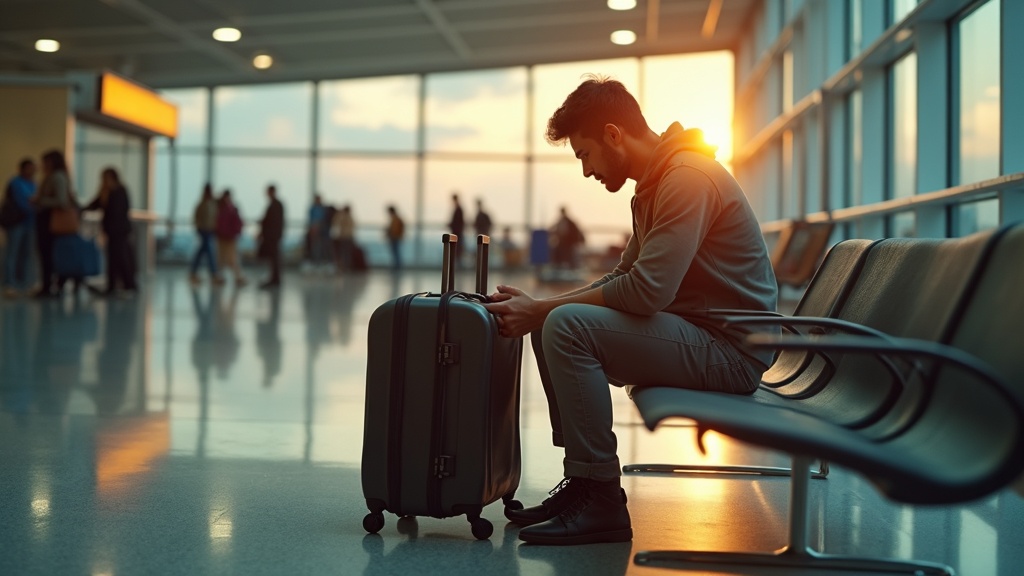
Rolling suitcases are supposed to make travel easier. And in many ways, they do. You can glide through the airport without straining your shoulder or counting down the steps to your gate. But there’s a hidden problem with how easy they feel.
Because rolling luggage doesn’t hurt to carry, we pack like the weight doesn’t exist. That sleek shell opens up, and suddenly you’re playing Tetris with shoes, jackets, and things you might need just in case. The wheels make it feel light, so you keep adding more. One extra sweater. Another pair of pants. A backup bag that you’ll probably never touch.
Then reality shows up. You try to lift your suitcase into an overhead bin and your arms shake. Or you hit the weight limit at check-in and have to unpack in front of strangers. Worst of all, you spend your whole trip lugging around stuff you never use, wishing you’d brought less.
The truth is that rolling luggage doesn’t just make travel easier. It makes overpacking easier too. The physical feedback that used to stop us from bringing too much is gone. Your back doesn’t ache, so your brain doesn’t hit the brakes. You only realize the problem later, when it’s too late to fix it.
Understanding why this happens is the first step to avoiding it. Once you see how rolling suitcases trick you into packing more, you can start making smarter choices before you zip that bag shut.
Why rolling luggage makes you want to fill every inch
There’s something almost uncomfortable about a half-empty suitcase. You zip it open, see all that space, and it feels wrong. Like you’re leaving something important behind. Or wasting an opportunity.
Rolling luggage makes this feeling worse. The bag is designed to hold a lot, and when you look inside, your brain treats empty space like a problem that needs solving. You start thinking about what else might fit. An extra pair of shoes. That jacket you probably won’t wear. Another dress, just in case.
Packing becomes a form of insurance. You imagine scenarios where you’ll need options. What if it rains? What if that restaurant has a dress code? What if you spill something? Each “what if” adds another item to the pile. Before long, you’re stuffing in backups for your backups.
The tricky part is that rolling luggage hides the consequences. You’re not carrying the weight on your back. You’re just rolling it along smooth airport floors, and it feels fine. Easy, even. So you keep adding things.
Then reality hits. The cobblestone street outside your hotel. The broken escalator at the train station. The airline agent who points at the scale and shakes their head. Suddenly all that “free” space you filled has a cost. Your arm aches from hauling the bag up stairs. You’re doing awkward lunges to tilt it over curbs.
The weight was always there. Rolling wheels just delayed the moment when you’d notice.
How suitcase design can trick you into packing more than you need
Your rolling suitcase wants you to fill it. That sounds dramatic, but the design features that make luggage convenient also create sneaky invitations to pack more than you should.
Start with those expansion zippers. You know the ones that let you unzip the case and add an extra two inches of depth? They feel like a safety feature, a little breathing room just in case. But they’re really a trap. The moment you see that extra space, your brain registers it as available space that shouldn’t go to waste. You start filling it before you’ve even questioned whether you need what you’re packing.
The clamshell design does something similar. When your suitcase opens flat like a book, both deep halves sit there looking deceptively roomy. You can’t see the total bulk until you try to close it. By then you’ve already committed to too much, and you’re playing Tetris instead of editing your choices.
Compression straps make the problem worse. They’re meant to keep things tidy, but they also let you squash down an overstuffed bag until it closes. The suitcase looks neat and organized, so it feels like you packed well. You didn’t. You just compressed a poor decision.
Then there’s the math nobody thinks about. Those wheels, the telescoping handle, and the hard frame all take up space and add weight. A fancy rolling bag can weigh ten pounds empty. That’s ten pounds of your airline allowance gone before you pack a single sock. The suitcase itself is eating into your limit, but because the inside still looks spacious, you pack as if you have more capacity than you actually do.
Just because something fits doesn’t mean it’s smart to bring. Your luggage doesn’t know the difference, but you should.
Choose your limits before you start packing
The best time to avoid overpacking is before you put anything in your suitcase. Once you start filling it, every empty space starts to look like wasted potential. Your brain sees room and wants to use it.
Instead, set your limits first. Pick a target weight that’s lighter than the airline maximum. If your bag can hold fifty pounds, aim for thirty-five. This gives you breathing room for the trip home and makes the bag easier to lift into overhead bins or haul up stairs.
Think about how you’ll actually move around. If you’re switching hotels three times, that extra weight matters. If you’re walking from the train station to your rental, it really matters. A bag that feels fine in your bedroom can feel miserable after ten minutes on cobblestones.
Here’s another useful boundary: keep one side of your suitcase partially empty. Not stuffed to the edges, not using every pocket. This space isn’t wasted. It’s insurance for the sweater you buy, the souvenirs you pick up, or the dirty shoes you don’t want touching clean clothes on the way back.
Finally, resist expanding your bag if it has those zipper extensions. Treat them like they don’t exist. The moment you unzip for more room, you’ve already lost the battle. That extra space will get filled, your bag will get heavier, and you’ll be the one wrestling it through the airport.
These limits might feel restrictive at first. But they make every packing decision simpler. You’re not asking “could this fit?” You’re asking “is this worth the space I’ve decided to give myself?” That’s a much easier question to answer honestly.
Pack for the trip you’re taking, not every possible scenario
The easiest way to overpack is to pack for a trip that exists only in your imagination. You start picturing fancy dinners that might happen, rainstorms that could arrive, or sudden invitations to go hiking. Before you know it, you’re bringing three pairs of shoes and a dress you’ll never take out of the suitcase.
Instead, ask yourself a few simple questions. What will I actually do most days? If it’s a work trip, you’ll probably wear business clothes during the day and casual clothes at night. If it’s a beach vacation, you’ll live in shorts and swimsuits. Pack for that reality, not for the unlikely party or the spontaneous gala.
Think about what you can re-wear. Pants, shorts, and jackets can go multiple days without washing. That one nice shirt can do double duty if you need it. You don’t need a fresh outfit for every possible moment.
Next, ask what you can replace easily if you actually need it. Forgot sunscreen? You can buy it almost anywhere. Need an extra t-shirt? Most destinations have basic clothing stores. You’re not packing for a expedition to the Arctic.
Here’s the real secret: plan for one simple laundry option. If you can rinse a few items in a sink and hang them overnight, or find a laundromat for a quick wash mid-trip, you can cut your luggage volume in half. You don’t need seven days of underwear for a seven-day trip. You need three or four and one evening near a sink.
This isn’t about being unprepared. It’s about being realistic. Pack for what will probably happen, not what might possibly happen.
Use your suitcase layout to stop last-minute stuffing
The best way to avoid overpacking is to make excess obvious before you zip up. Think of your suitcase as having invisible walls inside it. When you divide the space into zones with specific jobs, you create natural limits that are hard to ignore.
Split your main compartment in half. One side is for clothing, the other for shoes, toiletries, and everything else. This simple division makes it clear when one category is taking over. If your clothing pile is creeping into the other side, you’re bringing too much.
Packing cubes work because they turn your belongings into fixed blocks. Once a cube is full, it’s full. You can’t squeeze in one more shirt without it being painfully obvious. Even without cubes, you can bundle similar items together in a way that creates the same effect. The key is to stop thinking of your suitcase as one big empty container.
Leave one small buffer space somewhere visible. This is your safety valve for truly forgotten items, not an invitation to pack three extra pairs of socks. When that space fills up, you’re done.
Put your heaviest items low and toward the center, near the wheels. This isn’t just about balance. It’s a warning system. Your suitcase will feel heavy sooner, and that physical feedback reminds you to stop adding more.
Those outer pockets are sneaky. They feel like free bonus space, but they’re not. Treat them like part of your total capacity, not a hiding place for extra weight. Use them only for things you need to grab quickly, and keep them light.