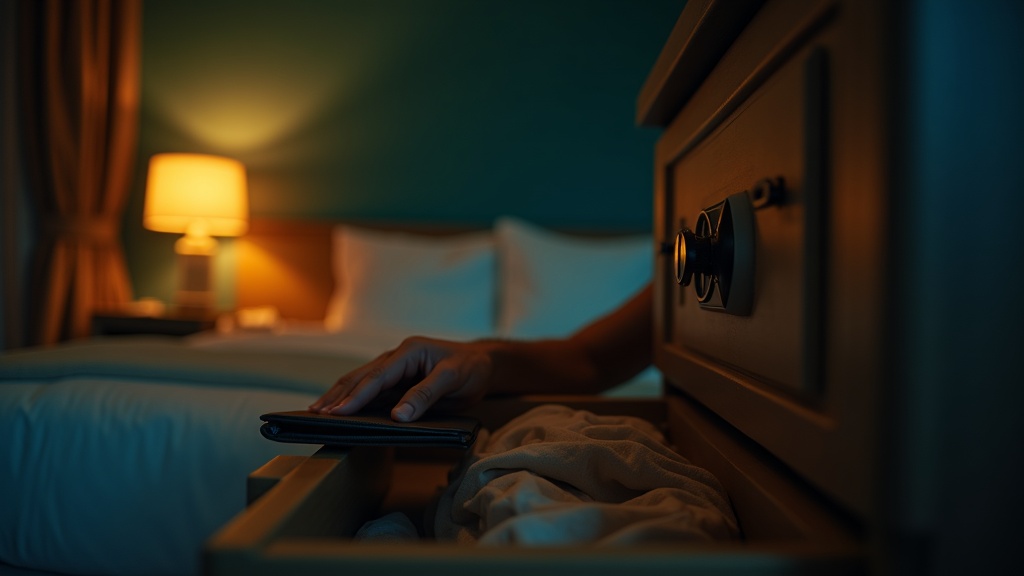
You’ve packed your passport, your jewelry, and maybe some cash or credit cards. Now you’re standing in your hotel room staring at that little metal box on the wall, wondering if it’s actually secure. Spoiler: your instinct to question it isn’t paranoid.
Hotel safes can be opened surprisingly easily. Some use default codes that never get changed. Others have master keys floating around that staff members share. And in cheaper hotels, the safe might just be bolted to a flimsy piece of furniture you could pry loose with a butter knife.
But here’s the thing. Most hotel theft isn’t some Ocean’s Eleven operation. It’s opportunistic. Someone walks into an unlocked room, grabs what’s visible, and walks out. That means even imperfect security measures can make a real difference.
The goal isn’t to create a fortress. It’s to make your valuables less visible, less accessible, and frankly, less interesting than the easier targets down the hall. Thieves want quick wins, not puzzles.
So if you don’t trust the safe, you’re not stuck. There are practical ways to hide, disguise, and protect your belongings that don’t require special skills or expensive gear. Some take seconds. Others just require thinking like someone who’s looking for trouble and then making sure they look somewhere else.
Start by deciding what never leaves your body
Before you worry about hiding things or locking them up, make a much simpler decision: what should just stay on you? This is the most reliable form of security you have, and it costs nothing.
Start by separating your valuables into two categories. First, the things that would ruin your trip if they disappeared: your passport, one credit card that works internationally, any essential medication, and your room key. Second, the things that would just be annoying to lose: extra cash, backup cards, jewelry, your nice camera.
The first category deserves to stay with you whenever possible. The second category is what you’ll decide how to stash back in the room.
For keeping things on your body, you have a few simple options. A flat money belt worn under your clothes works well at airports and when you’re out exploring the city, though it’s overkill for grabbing breakfast in the hotel lobby. A neck pouch tucked inside your shirt is lighter and less sweaty. If you’re just moving around the hotel, a zipped inner jacket pocket or secure pants pocket often does the job fine.
The key is creating a small “go kit” so your most critical items live in one consistent spot. Don’t scatter your passport in one bag, your card in another pocket, and your medication in a toiletry kit. When everything important is together and on you, you’re not doing mental math every time you leave the room about what you remembered to secure.
At the pool or beach, this gets trickier since you can’t exactly wear a money belt in your swimsuit. That’s when you’ll need the other strategies we’ll cover.
Know what a hotel safe can and can’t do
Hotel safes aren’t as secure as most people assume. The biggest issue is access. Many safes can be opened using master codes or reset procedures that staff need for emergencies or when guests forget their combinations. This means your valuables aren’t locked away from everyone, just from some people.
The safes themselves are often lightweight boxes bolted to a shelf or wall. They’re designed to be cheap and convenient, not bank-vault secure. Some can be pried open or bypassed surprisingly easily by someone who knows what they’re doing.
That said, hotel safes aren’t useless. They’re excellent at stopping casual snooping. If housekeeping comes in to clean your room, your passport and cash are safely out of sight. If you’re sharing a room with acquaintances or tour group members, the safe adds a helpful layer of privacy. It also keeps things organized so you don’t accidentally leave your jewelry on the nightstand.
Think of a hotel safe as a deterrent, not a guarantee. It stops opportunistic problems, not determined theft.
If you do use the safe, follow a few simple rules. Always set your own code rather than using the default one. Avoid obvious choices like 1234 or 0000. Test it before you trust it by locking something unimportant inside, closing the door, and making sure your code actually opens it again.
One last thing: don’t make a show of using the safe. If you’re constantly opening it in front of staff or other guests, you’re advertising that something valuable is inside. Treat it casually, just like you would your room key.
Use small, low-cost tools that create friction
The goal here isn’t to build a fortress. It’s to make your stuff annoying enough to mess with that a housekeeper or random passerby won’t bother. Most hotel theft is opportunistic. Someone sees a laptop sitting out, grabs it, and walks away. If it takes effort or draws attention, they usually move on.
A simple cable lock can do a lot of this work. You loop it through your bag’s zippers and lock it to something heavy or bolted down, like a bed frame or radiator pipe. It won’t stop someone with bolt cutters and five minutes alone in your room, but it will stop a quick grab. More importantly, it signals that you’re paying attention.
Travel safe pouches work on a similar principle. These are small lockable fabric or mesh bags, sometimes with slash-resistant material. You put your passport, cash, and cards inside, then lock it to something fixed. Again, not impenetrable, but enough of a hassle that most people won’t bother.
Tamper-evident seals are another low-key option. These are basically numbered plastic tags you thread through your bag’s zippers. If someone opens your bag, the seal breaks and you’ll know. They don’t prevent theft, but they give you peace of mind and make it clear you’re keeping track.
None of this is bulletproof. A determined thief with time and privacy can defeat just about anything. But hotel theft usually isn’t that sophisticated. It’s about raising the bar just high enough that your valuables aren’t the easy target.
Hide valuables in ways that don’t feel ‘clever’
The worst hiding spots are the ones that feel clever. Under the mattress, inside a sock, taped behind a drawer—these are the first places someone looking for valuables will check. They’re obvious precisely because they seem like good ideas to everyone.
Better hiding means placing items somewhere low-attention. Think about a closed toiletry bag with your valuables tucked inside a smaller pouch, surrounded by actual toiletries. Or a nondescript drawstring bag inside your main luggage, containing valuables wrapped in a scarf or clothing. The goal is to add layers and make the target blend in with ordinary travel items.
This container-within-a-container approach works because it takes time to search through mundane objects. Someone in a hurry won’t dig through every zippered pocket of a toiletry kit or unwrap every piece of clothing in a bag.
Avoid anywhere housekeeping needs to access. Don’t hide anything in towel stacks, under bedding, or inside the coffee station supplies. These areas get handled during cleaning, and items can be moved or accidentally discarded. A cleaning cart is not a safe place for your passport to end up.
Also skip anything that looks like trash. An empty shopping bag might seem forgettable, but it could get thrown away. Use something that clearly belongs to you but doesn’t look valuable itself.
One more thing: split your items up. Don’t put all your cash, cards, and documents in one spot. If something does go missing, you haven’t lost everything at once. Keep some cash separate from your cards. Keep your backup credit card away from your primary one. It’s simple redundancy that makes a real difference.
Reduce room access and remove temptation
The simplest way to protect your valuables is to make your room less accessible and less interesting to anyone who might wander in. Start with the basics: when you’re inside, use the deadbolt and security latch every single time. These extra locks make it much harder for someone to enter, even with a keycard.
When you leave, make sure the door closes completely behind you. Hotel doors can be heavy and sometimes don’t latch properly if you don’t pull them shut. Give it a tug to confirm it’s locked. A door that looks closed but isn’t actually latched is an open invitation.
If you’re uncomfortable with housekeeping entering while you’re out, you can hang the “do not disturb” sign and arrange cleaning at a specific time when you’re present. You don’t need to skip housekeeping entirely, but being strategic about when it happens gives you more control. Just remember that some hotels have policies requiring staff to check rooms periodically for safety reasons.
When cleaners do come through, don’t leave valuables sitting out in plain sight. Tuck your laptop, jewelry, and cash into a drawer or your luggage. It’s not about assuming staff will steal, it’s about removing temptation and reducing risk.
The same goes for what’s visible through your window or when you open the door. Don’t leave luxury shopping bags with recognizable logos displayed on the bed. Use a plain backpack or generic bag instead. And avoid leaving phones or tablets charging on the nightstand right by the door where they’re the first thing anyone sees. Out of sight really does mean out of mind for most opportunistic situations.