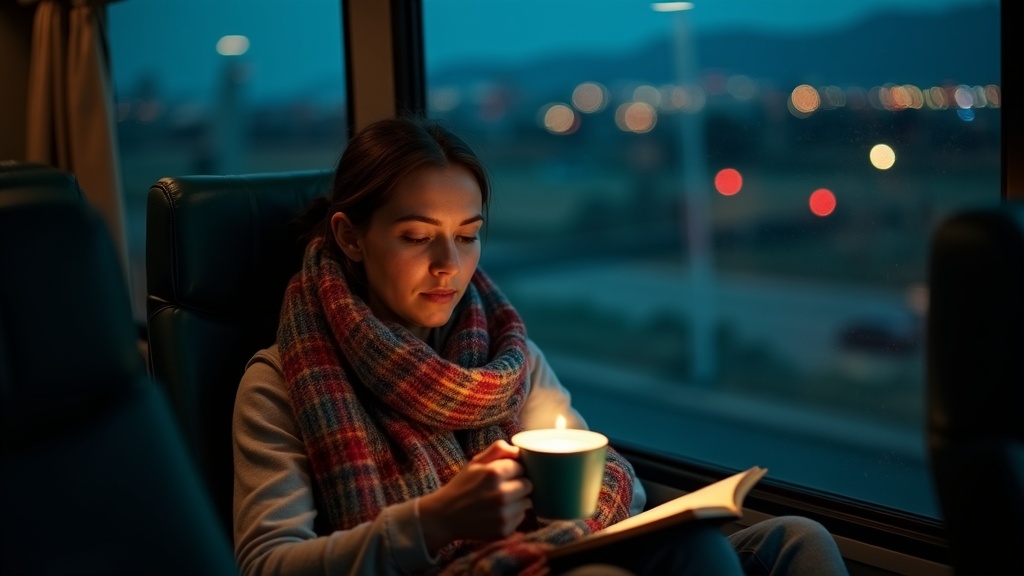
Most of us have gotten pretty good at air travel. We know the drill: pack a neck pillow, dress in layers, maybe spring for the better seat. But overnight buses and trains? That’s a different game entirely.
Here’s the thing. On a plane, you’re sealed in a controlled bubble for a set number of hours. The temperature stays steady. The lights dim on schedule. Everyone’s doing the same thing at the same time.
Overnight land travel doesn’t work that way. Buses pull into stations with fluorescent lights blazing at two in the morning. Trains slow down, speed up, and sometimes just stop for reasons nobody explains. People get on and off throughout the night, dragging luggage and having conversations. The heating blasts until you’re sweating, then cuts out completely.
You’re also trying to sleep sitting up, or mostly sitting up, which your body doesn’t naturally love. Add in the fact that you’re sharing armrests, dealing with reclining seat politics, and possibly wondering if that smell is coming from the bathroom or someone’s dinner, and you’ve got yourself a challenge.
So when we talk about comfort on overnight buses and trains, we’re not talking about feeling like you’re in your own bed. That’s not happening. We’re talking about getting enough rest to actually function the next day. We’re talking about arriving without a headache, a stiff neck, and the deep regret that comes from zero sleep. That’s the realistic goal, and it’s absolutely achievable with the right approach.
Your seat or berth choice can make or break the night
The single biggest decision you’ll make for overnight bus comfort happens before you even board: where you sit. This choice affects how much you’ll feel every bump, how often you’ll be woken up, and whether you’ll actually sleep or just close your eyes for eight hours.
Start with the wheels. Seats directly over the wheel wells amplify every bump and turn. The middle of the bus or train car usually offers the smoothest ride because it’s the pivot point for movement. Think of it like sitting in the middle of a seesaw versus the ends.
Next, consider the bathroom and entrance doors. Sitting nearby means constant foot traffic, bright lights every time the door opens, and the lovely symphony of flushing toilets. But there’s a trade-off: if you need to use the bathroom yourself, you won’t be climbing over sleeping passengers at 3 AM. A few rows away often strikes the best balance.
On overnight trains with berths, the lower bunk feels more stable and gives you easier access to your bags and the bathroom. The upper berth sways more and requires climbing, but you’ll deal with fewer disturbances when your bunkmate needs to get up. Neither is obviously better, it depends on whether you prioritize stability or privacy.
Window versus aisle matters more on buses with frequent stops. If passengers board throughout the night, an aisle seat means people brushing past you and overhead lights hitting your face. The window seat lets you lean against something solid and creates a small buffer from the action. Just be prepared to ask people to move when nature calls.
Plan for temperature swings without overpacking
Here’s something frequent flyers often miss when they first try overnight buses or trains: the temperature can swing wildly during a single trip. That climate-controlled airplane cabin experience doesn’t really exist on the ground.
Buses typically blast the air conditioning hard, sometimes uncomfortably so. Drivers keep it cold to stay alert, and what feels fine up front can turn frigid in the back rows overnight. Trains present a different challenge. The cars themselves might run warm and stuffy, but then you hit a station stop and cold air rushes in every time the doors open. Or you need to walk between cars and suddenly you’re in a drafty vestibule that feels ten degrees colder.
The trick isn’t packing more stuff. It’s packing smarter with layers you can add or remove without digging through your entire bag. Start with a breathable base layer, something comfortable enough to sleep in if the heat gets cranked up. Then bring a warm top layer like a hoodie or cardigan that you can pull on when the AC kicks in.
Don’t forget your feet. Socks make a huge difference when you’re trying to sleep in a cold environment, and they take up almost no space. A light blanket or large scarf works beautifully as a multipurpose layer. You can use it as a blanket, roll it into a pillow, or drape it over your shoulders.
The most important tip: keep at least one warm layer within arm’s reach, not buried in the overhead bin or under the bus. You don’t want to be that person unpacking half their luggage at two in the morning because you’re freezing.
Control light and noise so your brain can switch off
Your brain needs darkness and quiet to produce the hormones that make you sleepy. But overnight buses and trains seem designed to prevent exactly that. Interior lights stay on longer than you’d expect. Passing streetlights strobe through the windows every few seconds. Other passengers scroll through bright phone screens at two in the morning.
Then there’s the noise. Announcements crackle over loudspeakers at every station stop. People chat, rustle plastic bags, and play videos without headphones. The engine hums constantly beneath everything else.
A simple sleep mask blocks most light problems. The key is finding one that fits snugly without pressing too hard on your eyes. Contoured masks with deeper eye cups let you blink freely and don’t smudge makeup if that matters to you. Adjust the strap so it’s secure but not tight enough to give you a headache.
For noise, foam earplugs work surprisingly well and cost almost nothing. Roll them between your fingers to compress them, insert gently, and let them expand in your ear canal. If you find total silence unsettling or want to hear important announcements, leave one earplug slightly loose or wear just one.
Noise-canceling headphones handle low rumbles better than earplugs, but they’re bulkier and harder to sleep in. Regular earbuds playing white noise or quiet music can help too.
One small courtesy while you’re at it: turn your own phone brightness down. That glowing screen bothers your seatmate more than you realize, and they might be too polite to mention it.
Support your neck, lower back, and legs to reduce waking up sore
The biggest reason people wake up miserable on overnight buses and trains isn’t the noise or the lights. It’s the pain. Your neck cranes at a weird angle, your lower back protests against a flat seat, and your legs go numb because you can’t straighten them. A little strategic padding makes a huge difference.
Start with your neck. A good travel pillow keeps your head from flopping forward or to the side while you sleep. The U-shaped ones work well if they fit snugly, but plenty of people find them bulky or uncomfortable. A rolled-up hoodie or scarf wrapped around your neck can do the same job. The goal is to fill the gap between your head and the seat so your neck muscles can actually relax.
Your lower back needs attention too. Most bus and train seats have a gap right where your spine curves. Roll up a jacket, sweater, or small bag and wedge it behind your lower back. This simple trick stops you from slumping into positions that leave you stiff for hours after you arrive.
Legs are tricky because space is tight. If you can, prop your feet on your luggage to take pressure off your thighs. Change positions every so often, even if it’s just shifting your weight or tucking one leg under you briefly.
When the bus or train stops, stand up if you can. Walk a few steps down the aisle. Roll your ankles in circles. Gently stretch your arms overhead. These tiny movements keep your body from locking into one painful position for the entire journey. You don’t need a full routine, just enough motion to remind your muscles they still work.
Expect interruptions and make them less disruptive
Overnight buses and trains stop more often than you might expect. There are ticket checks by conductors, border crossings where officials board to inspect documents, refueling breaks, scheduled station stops, and occasional crew changes. Unlike a flight where you settle in after takeoff, land travel means accepting that someone might wake you multiple times during the night.
The key is making these interruptions easy to handle. Keep your ticket and ID in a jacket pocket or a small pouch around your neck, not buried in your backpack overhead. When an attendant needs to check your documents at three in the morning, you want to hand them over without fully waking up or turning on lights.
If you’re traveling through multiple stops and need to get off at a specific station, set a quiet vibrating alarm on your phone for about thirty minutes before arrival. Don’t rely on announcements. They might be garbled, in another language, or simply not happen. Trusting that someone will wake you is risky.
Arrange your sleep setup so you can quickly put it back together after an interruption. A travel pillow that clips to your bag is easier to manage than one that slides to the floor. Keep your sleep mask looped around your wrist when officials need to see your face.
For valuables, the safest spot is on your body. Tuck your phone in an inside pocket or keep your bag strap wrapped around your arm while you doze. It’s not about paranoia, just about staying relaxed. When you know your essentials are secure, you’ll actually sleep better between the interruptions.
Eat and drink in a way that helps you sleep and stay comfortable
What you eat and drink before and during an overnight bus or train ride can make the difference between restful sleep and hours of regret. The goal is simple: avoid waking up thirsty, hungry, or desperately searching for a bathroom that might not exist.
Have a proper meal an hour or two before you board, but keep it moderate. You want something satisfying enough that you won’t wake up hungry at three in the morning, but not so heavy that you feel uncomfortable trying to sleep sitting up. A pasta dish or sandwich works well. Skip anything extremely spicy or greasy if your stomach tends to complain later.
Bring light snacks for the journey itself. Crackers, nuts, or a granola bar can settle your stomach if you wake up feeling off. Just avoid anything that will make you incredibly thirsty or give you heartburn halfway through the night.
Hydration matters, but timing matters more. Drink water steadily in the hours before departure rather than chugging a bottle right before you try to sleep. Once you’re on board, take small sips when you need them. The trick is staying hydrated without creating a bathroom emergency at four in the morning when the bus is flying down a dark highway.
Watch your caffeine and alcohol intake too. That coffee at nine might seem harmless, but it could keep you wired until midnight. Alcohol might make you drowsy at first, but it usually disrupts sleep quality and makes you wake up feeling worse. If your journey has scheduled stops, plan your bathroom breaks around them. Your body will thank you for the strategy.
Keep the few comfort essentials within reach
The worst part of overnight bus comfort isn’t the cramped seat. It’s waking up at 2 a.m. realizing your lip balm is buried in the overhead bin, and now you have to wake up your neighbor to get it. Or discovering your phone charger is stowed under the bus with your main luggage, completely out of reach until morning.
The solution is simple: pack a small overnight kit before you board. Think of it as your sleep survival pouch. You want everything you might need during the journey in one place, small enough to keep at your feet or tucked beside you.
Your kit should cover the basics for sleep on the go. A sleep mask and earplugs are obvious. Add your travel pillow, a water bottle, lip balm, a small pack of tissues, your phone charger, and any medications you take at night or might need. That’s it. You’re not packing for a week, just for one night of trying to rest in motion.
Where you keep this kit matters. On buses with undercarriage storage, you won’t see your main bag again until you arrive. Keep your overnight essentials in something small, like a tote bag or drawstring pouch, that stays with you in the cabin. On overnight trains with overhead racks, you have more flexibility, but you still don’t want to stand up and rummage through a full backpack every time you need something.
Having one dedicated pouch means you’re not digging, guessing, or waking up frustrated. You know exactly where your essentials are, and you can grab them in the dark without thinking. That small bit of organization makes a surprising difference when you’re half asleep and just want to stay that way.
Small etiquette choices can protect your comfort and others’ sleep
When you’re packed into a small space with strangers for hours, tiny habits make a big difference. The person next to you can ruin your night with loud phone calls or overpowering cologne. You can do the same to them without meaning to.
Start with sound. Use headphones for anything that makes noise, and keep the volume low enough that others can’t hear it leaking out. If you need to take a call, keep your voice down and make it quick. Some overnight trains have designated quiet cars where silence is expected after a certain hour. Worth checking before you settle in.
Strong smells travel fast in tight quarters. Skip heavy perfume or cologne before boarding. If you’re bringing food, avoid anything with a powerful odor that will linger. A sandwich is fine. A bag of fast food with extra onions is not.
Armrests become contested territory on long trips. The unofficial rule is that the middle seat gets both armrests as compensation for being squeezed. If you’re on the aisle or window, share space and don’t sprawl.
Reclining your seat is fine on most overnight buses and trains, but ease it back slowly so the person behind you has time to move their drink or laptop. And organize your bags so they stay in your footwell or overhead space, not creeping into someone else’s area.
When you need to get up, try to step carefully and avoid grabbing the seat in front of you for balance. That jolt wakes people up fast. A gentle hand on your own armrest works better.
None of this is about being overly polite. It’s about making sure everyone, including you, has a shot at decent rest.