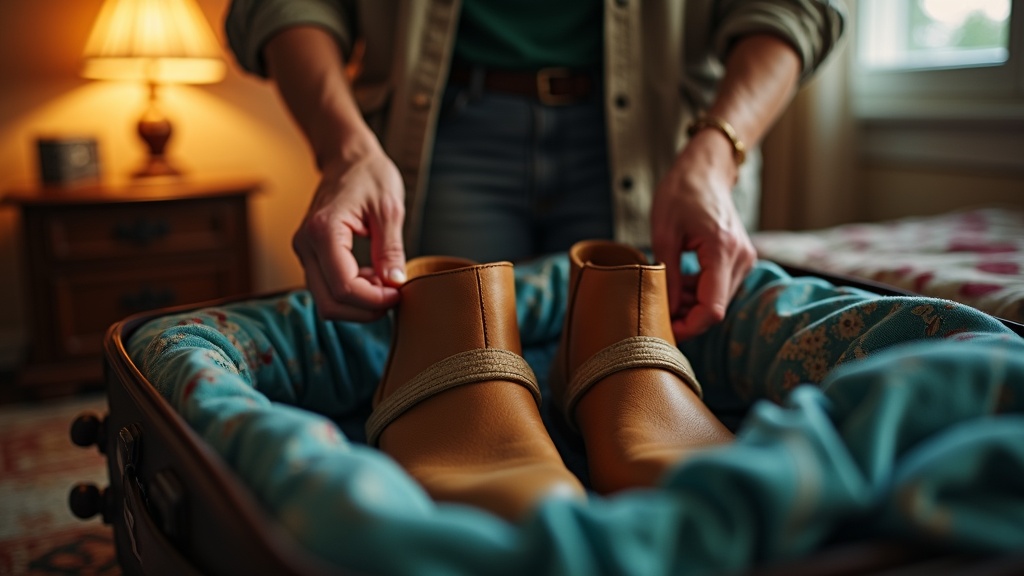
You’ve probably pulled a favorite pair of shoes out of your suitcase only to find the toes crushed flat, the heels bent at odd angles, or mysterious scuffs across the leather. It’s frustrating, especially when those shoes were meant for a special dinner or an important meeting.
The problem isn’t that your luggage hates your shoes. It’s that suitcases are essentially compression chambers. When you zip them shut and stack things on top, everything inside gets squeezed. Shoes are particularly vulnerable because they’re hollow structures with empty space inside, and that space collapses under pressure.
The good news is that protecting your shoes doesn’t require buying special shoe bags, packing cubes designed for footwear, or any other dedicated gear. A few simple adjustments to how you position and stuff your shoes can make all the difference.
Think about it this way: an empty cardboard box crumples easily, but fill it with paper and it suddenly holds its shape. Your shoes work the same way. By filling that hollow space and positioning shoes strategically among your other belongings, you can keep them looking exactly as they did when you packed them.
This isn’t about perfect Instagram-worthy packing techniques or complicated systems. It’s about understanding why shoes get damaged and making small, practical choices that prevent it. You probably already have everything you need in your closet right now.
Start by choosing shoes that can handle the trip
Not all shoes are equally good at surviving a suitcase. Some pairs shrug off the pressure and come out looking fine. Others emerge bent, creased, or completely out of shape.
Sneakers with firm soles and structured uppers usually travel well. The rubber and thick fabric can take a bit of squashing without losing their form. Loafers and slip-ons with reinforced toe boxes also tend to hold up, especially if they’re made from leather or canvas that bounces back.
Boots are surprisingly good travelers. Their height and stiffness mean they resist crushing better than you’d expect. The main challenge is the space they take up, not whether they’ll get damaged.
Heels and dress shoes are where things get tricky. Thin straps, delicate embellishments, and soft materials like suede or satin can get marked, bent, or scratched easily. Pointed toes are especially vulnerable. If the shoe feels fragile in your hand, it probably won’t love being wedged between jeans and toiletries.
Before you pack, hold each shoe and give it a gentle squeeze. Does it spring back? That’s a good sign. Does it fold or crumple? You’ll need to take extra care with that one, or consider leaving it behind.
Planning your outfits around two or three versatile pairs makes packing easier and protects your shoes better. Fewer shoes means less crowding, which means less pressure on each pair. You don’t need to pack like a minimalist guru, but a little restraint goes a long way when you’re trying to keep everything intact.
Support the shoe’s shape from the inside
The single best way to keep shoes from getting crushed is surprisingly simple: fill them with something soft. When a shoe is empty, the sides can collapse inward under the weight of everything else in your suitcase. But when you stuff it with something that holds its shape, it becomes much more resistant to pressure.
You don’t need anything fancy for this. Socks are perfect because they’re soft, compressible, and you’re packing them anyway. Roll up a pair and tuck them into the toe area of each shoe. That’s the part that tends to cave in first, so it needs the most support.
Underwear works just as well, especially for larger shoes like sneakers or boots. You can also use rolled t-shirts, scarves, or even a coiled belt if you’re careful not to let the buckle press against the shoe’s interior. The goal is to fill the empty space without forcing the shoe to stretch or bulge.
For boots, pay extra attention to the shaft—that tall part that goes up your leg. It loves to flop over and crease. Stuff it with something long and soft, like a rolled pair of pants or a small towel. The ankle collar also benefits from a little padding to keep its shape.
One small tip: try not to stuff both shoes in a pair with items that press against each other when you nest them together. If you’re tucking one shoe into the other to save space, separate what’s inside each one so they don’t create awkward pressure points. Keep it gentle, keep it full, and your shoes will arrive looking like they should.
Prevent scuffs by creating a simple barrier
The biggest culprit behind scuffed shoes isn’t how tightly you pack them. It’s direct contact with other items in your suitcase. Shoe soles pick up dirt and grime, and buckles or heels can scratch anything they touch. A simple barrier solves most of these problems.
You don’t need special shoe bags to make this work. Hotel shower caps are perfect because they stretch over most shoe sizes and keep soles from touching your clothes. Plastic grocery bags do the same job. Just slip one shoe per bag, tie a loose knot, and you’re done. If you’re staying somewhere without laundry facilities, these makeshift covers also keep your clean clothes clean on the way home.
For a slightly nicer option, use what you’re already packing. A clean T-shirt wrapped around a pair of shoes cushions them and prevents scuffs at the same time. Spare tote bags work well for flats or sandals. Old pillowcases are great for boots or larger shoes. Packing cubes with shoe compartments offer more structure, but they’re not essential unless you’re packing several pairs.
Before covering anything, give the soles a quick wipe with a damp cloth or paper towel. You don’t need to deep clean them, just remove visible dirt. If you’re short on materials, pack shoes sole to sole so the dirty parts face each other instead of your belongings. When placing them in your suitcase, position the soles facing outward toward the hard shell rather than inward toward your clothes.
The goal isn’t perfection. It’s keeping mystery marks off your favorite sweater and preventing your dress shoes from arriving with scratches they didn’t have when you left home.
Place shoes where suitcase pressure is lowest
Your suitcase has pressure hot spots. These are the places where weight piles up and squashes whatever sits underneath. The center of your suitcase is usually the worst offender because that’s where most people stack their heaviest items.
Your shoes fare better along the sides and near the base of the suitcase. These edges naturally bear less weight, especially if you pack them before you start layering everything else on top. Think of it like creating a protected lane where your shoes can sit without getting crushed by your toiletry bag or that hardcover book you packed.
When you place shoes in your suitcase, alternate their direction. Put one shoe toe-forward and the other heel-forward. This creates a more compact shape and helps them nest together without wasting space. If you’re packing multiple pairs, group shoes that are similar in height. Don’t wedge delicate ballet flats next to chunky boots.
Keep fragile shoes away from hard corners and zipper tracks. These rigid parts of your suitcase can dent leather or crush soft materials even without much weight pressing down. If your nicest pair must go near a corner, wrap them in a soft shirt first.
Once your shoes are positioned, lay soft clothing over them as a buffer layer. T-shirts, pajamas, and lightweight sweaters work well. This cushion absorbs pressure from whatever you pack next and stops hard objects from settling directly onto your shoes. You’re essentially building a protective ceiling that spreads weight more evenly.
Handle heels, boots, and other easy-to-crush shapes
Heels are surprisingly fragile when packing shoes in luggage. The biggest risk is the heel tip itself, which can snap or scratch everything around it. Wrap each heel tip in a sock or slip it into a small plastic bag before placing the shoes in your suitcase. If your heels have ankle straps or delicate buckles, tuck them inside the shoe or wrap them with a soft cloth so they don’t catch on other items.
Keep your heel pairs sole-to-sole when protecting shoes in suitcase. This way the hard bottoms face each other instead of pressing against soft leather uppers. If the heels have metal details or embellishments, place a thin piece of fabric between the shoes to prevent scratching.
Ankle boots need support to keep their shape. The shaft can crease or collapse under pressure, leaving permanent wrinkles. Stuff them with rolled socks, underwear, or even a water bottle if it fits snugly. The goal is to fill the empty space so the boot holds its form.
Tall boots are trickier because they take up so much room. Don’t fold them sharply at the ankle—this creates deep creases that are hard to smooth out later. Instead, let them lean gently or stuff the entire shaft with soft items like t-shirts. If your boots have a structured shaft, they can actually protect other items by creating a stable column in your luggage.
For any boots with zippers, buckles, or hardware, make sure these details face inward or are covered with a sock. Metal hardware can easily scratch sunglasses, electronics, or other shoes. A little padding goes a long way in preventing damage to everything packed nearby.
Use shoe space for packing without warping them
The hollow space inside your shoes is prime real estate in a packed suitcase. You can absolutely use it, but you need to be smart about what goes in there. The goal is to fill the space without creating lumps or pressure points that push the shoe out of shape.
Socks are your best friend here. Roll up a few pairs and tuck them into each shoe. They’re soft, they fill space nicely, and they keep the shoe’s natural shape intact. Think of them as gentle support pillows for your footwear.
Small, lightweight items work well too. Phone chargers wrapped in a small pouch, earbuds in their case, or travel-size toiletries sealed in a zip-top bag are all fair game. The key word is sealed. Never put anything that could leak directly into your shoes unless you want mysterious stains on your favorite sneakers.
Keep everything contained in its own small bag or pouch. This protects both the items and the inside of your shoes. Nobody wants their phone charger smelling like feet, and nobody wants shoe funk transferring to their belongings.
Avoid anything with hard edges or sharp points. A metal comb, a razor, or a heavy battery pack can create dents in the shoe’s interior or poke through the material. Also skip anything heavy that might compress and flatten the toe box or heel counter.
Distribute the weight evenly. If you stuff one shoe full and leave the other nearly empty, they won’t nest together well in your suitcase. Keep the fill balanced so both shoes maintain their shape and pack efficiently side by side.
Adjust your approach for carry-on, checked bags, and backpacks
Not all bags face the same journey. A carry-on sits gently in the overhead bin or under your seat. A checked bag gets tossed onto conveyor belts, stacked under dozens of other suitcases, and jostled around in a cargo hold. A backpack or duffel squishes and flexes with every step you take.
That means your shoes need different levels of protection depending on where they’re traveling. If you’re packing shoes in a carry-on, you can get away with lighter protection since you control how the bag moves. Wrap them in a soft layer or tuck them between stable items like folded jeans. Just make sure nothing inside can shift and press down on them during the flight.
Checked luggage is rougher territory. The pressure from other bags can flatten shoes from the outside, so think about internal support first. Stuff each shoe firmly with socks, underwear, or a small towel so it holds its shape even when squeezed. Place your shoes in the center of the suitcase surrounded by softer items rather than right against the hard shell where impacts happen.
Backpacks and duffels are the trickiest because they don’t have rigid structure. The bag itself bends and collapses as you move, which means your shoes can get crushed from any angle. Add extra padding around them and consider putting shoes in a harder case or wrapping them in something stiff like a magazine. Keep them away from the bottom where your bag hits the ground repeatedly.
One more thing: if you might need to change shoes during your trip, pack your second pair near the top or in an outer pocket. Digging through a tightly packed bag to find buried shoes usually means repacking everything, and that’s when careful arrangements fall apart.
Keep wet or dirty shoes from ruining everything else
Nothing derails a packing job faster than realizing your favorite sneakers are still damp from yesterday’s rain or caked with mud from that impromptu hike. But you’re leaving in an hour, and those shoes need to come with you.
Before those shoes go anywhere near your suitcase, give them a quick once-over. Wipe down the soles with a damp cloth or paper towel to remove loose dirt and debris. If they’re wet, stuff them with crumpled newspaper or a dry towel for ten minutes to absorb some of the moisture. Even this brief step makes a real difference.
Once they’re as clean and dry as you can reasonably get them, you need a barrier between those shoes and everything else. A plastic grocery bag works perfectly, but don’t seal it completely. Trapped moisture turns into mildew and odor. Tie the bag loosely or poke a few small holes near the top so air can circulate.
Hotel shower caps are surprisingly useful here too. Slip one over each shoe to contain dirt without creating an airtight seal. If you’re dealing with hiking boots or really muddy shoes, consider packing them in a separate small tote bag outside your main suitcase, even if it’s just for the first day of travel.
Keep damp shoes away from leather items, silk, or anything that stains easily. Tuck them into a corner of your suitcase near hard-sided items like toiletry bags or shoe trees. The goal isn’t perfection. It’s damage control that lets you travel without turning your entire bag into a laundry emergency.