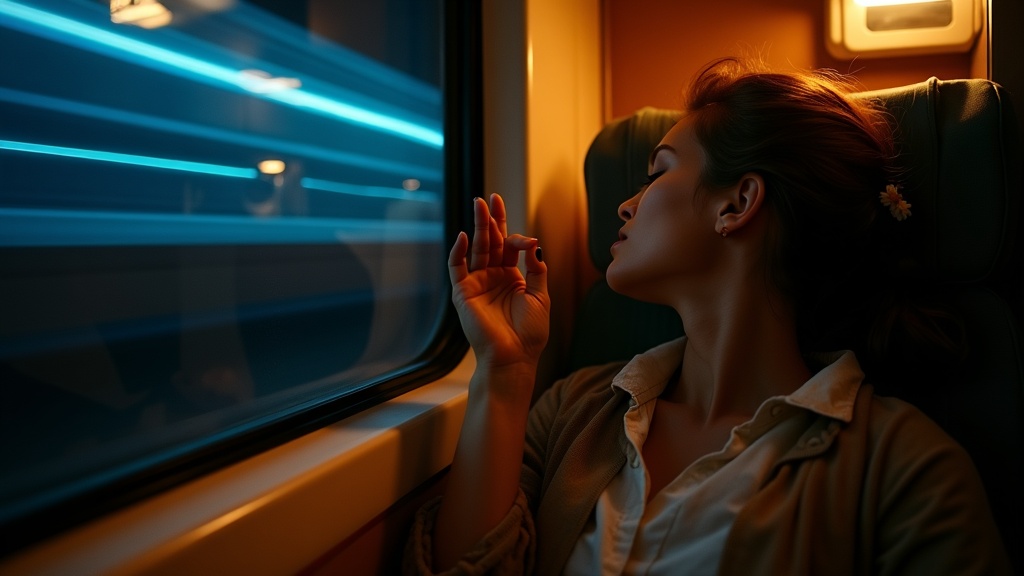
There’s something romantic about the idea of drifting off to sleep while a train carries you through the night. But anyone who’s actually tried it knows the reality is usually far less cozy. You’re wedged into a seat that wasn’t designed for lying down, surrounded by strangers, with mysterious clunking sounds echoing through the carriage every few minutes.
Trains are different from planes or buses in ways that matter when you’re trying to rest. The rhythmic clacking of wheels on tracks can be soothing or maddening depending on the night. Stations mean sudden stops, bright platform lights flooding through windows, and passengers shuffling on and off at odd hours. And unlike a plane where everyone tacitly agrees to stay quiet after takeoff, trains feel more like shared public spaces where normal rules don’t quite apply.
The good news is that sleeping on trains isn’t impossible. It just requires a different approach than other kinds of travel rest. Once you understand what makes overnight train comfort so tricky, you can actually prepare for it. The wobbling motion, the temperature swings between carriages, the person across from you who insists on having a phone conversation at midnight—all of these have practical workarounds.
This isn’t about turning a train seat into a luxury hotel bed. It’s about making peace with the conditions you’ll actually face and giving yourself the best shot at decent rest. With the right mindset and a few smart choices, you can arrive at your destination tired but functional, rather than completely wrecked.
Pick a sleeping-friendly spot before you even sit down
Where you sit makes a huge difference to how well you sleep on trains. The right spot can mean the difference between actual rest and lying awake listening to doors slam every ten minutes.
Stay away from the doors between carriages if you can. Every time someone walks through, you get a blast of noise and often cold air. The middle of the carriage is usually quieter and more stable temperature-wise. You’ll also feel less of the train’s movement there, which helps if motion bothers you.
Toilets are another thing to avoid. The smell is one issue, but the real problem is foot traffic. People line up, doors bang, and there’s a steady stream of movement right past your seat. The café car has the same problem, plus cooking smells and the hum of refrigerators.
If you’re in a sleeper car with bunks, lower beds are easier to get in and out of, but upper bunks are further from the action and tend to be quieter. You’re also less likely to have someone bumping your bed as they walk past.
Window seats let you control the shade and give you something to lean against. Aisle seats mean people will brush past you, and you might get woken by passengers heading to the toilet at three in the morning.
Forward-facing or backward doesn’t matter much for sleep, despite what some people say. Pick based on what feels more comfortable to you personally.
Board early if you can choose your own seat. If seats are assigned and you’re stuck somewhere noisy, it’s worth politely asking nearby passengers if they’d swap. Many people don’t care as much as you do about sleeping, and a friendly request often works.
Work with the vibration and motion instead of fighting it
Trains don’t just sit still while you sleep. They rock side to side, click rhythmically over rail joints, and lurch slightly when they brake or switch tracks. If you try to hold yourself rigid against all that movement, you’ll stay tense all night. The trick is to let your body move with the train instead of resisting it.
Start by anchoring yourself against something stable. The window side of your seat is your best friend here. Lean into it so your head has a fixed point instead of bobbing around every time the train sways. If you’re in the aisle, try wedging a jacket or bag between your head and the seat back to create that same kind of support.
Your lower back needs attention too. Trains love to throw you forward slightly when they brake for stations, which can leave your spine in an awkward arch for hours. Tuck a sweater or small pillow behind your lumbar area so you’re not constantly adjusting. Same goes for your knees—if they’re free to drift apart or knock together, you’ll wake up stiff. A bag or bundled blanket between your legs can keep everything stable.
Some people feel steadier facing forward, others prefer riding backward. It’s worth testing if you have the option. The difference comes down to how your inner ear processes motion, and there’s no universal answer. If you start feeling queasy or unusually restless after an hour, try switching seats or directions at the next stop.
Finally, secure anything loose in your space. A water bottle rolling back and forth under your seat will jolt you awake faster than any announcement.
Turn a seat into something you can actually rest on
Train seats weren’t built for sleeping. They’re designed for short trips, with narrow armrests that dig into your sides and headrests that stop right where your head wants to lean. Most recline just enough to make you feel awkward without actually letting you relax.
The secret is making your body feel supported in a few key spots. Start with your neck. A neck pillow helps, but not the puffy airplane kind that pushes your head forward. You want something that fills the gap between your neck and the seat without forcing your chin down. An inflatable pillow works because you can adjust how firm it is. Or just roll up a scarf or light jacket and wedge it where you need it.
Your lower back matters more than you’d think. When you’re sitting upright for hours, that curve in your spine gets tired fast. Tuck something small behind your lumbar area, even a sweater or a rolled-up blanket. It doesn’t need to be fancy. It just needs to stop you from slumping.
Now deal with your legs. Feet dangling or knees locked at weird angles will wake you up. If you can, slide your bag under your feet to raise them slightly. This takes pressure off your lower back and keeps your legs from going numb.
Finally, stay warm. Trains get cold at night, especially near windows. Drape a blanket or large shawl over yourself, even if it feels unnecessary at first. You’ll be glad when the air conditioning kicks in at 2 a.m.
Once you figure out what works, set it up the same way each night. Your body will start to recognize the routine, and that familiarity helps you settle in faster.
Lower the noise and light without starting a conflict
Overnight trains are rarely silent. You’ll hear station announcements at three in the morning, the beep of automatic doors opening and closing, rolling luggage bumping down the aisle, conversations in languages you may or may not understand, and yes, snoring. Sometimes loud snoring. These sounds are part of the deal, so your goal isn’t perfect silence. It’s making things quiet enough that your brain can let go.
Earplugs are the simplest solution and they work well for most people. The foam kind that you roll and insert create a decent seal and block a surprising amount of noise. If you find earplugs uncomfortable or they fall out while you sleep, noise-cancelling headphones are worth considering. They won’t eliminate every sound, but they take the edge off the rumble and hum. Some people play white noise, rain sounds, or gentle music at a low volume to mask irregular noises. Just avoid anything with lyrics that grab your attention or podcasts that make you want to stay awake and listen.
Light is easier to control than sound. A simple eye mask blocks most of it, and if you wear a hoodie or wrap a scarf around your head, you create a little cave of darkness even when someone turns on a reading light two seats over. Phone screens are the worst offenders at night, and there’s not much you can do about someone scrolling across the aisle except position yourself so it’s not directly in your line of sight.
If someone’s being especially loud or shining a light right at you, a polite and quiet request sometimes helps. Keep it brief and friendly. But if the situation doesn’t improve, it’s often easier to move to another seat or car than to push the issue. Trains are public spaces, and not every problem has a tidy solution.
Sleep more when you’re not worried about stops or your stuff
Your brain won’t let you sleep deeply if part of it is standing guard. The two biggest worries on overnight trains are missing your stop and losing your belongings. Both are fixable with simple preparation.
Set at least two alarms on your phone for about thirty minutes before your scheduled arrival. That gives you a buffer if the train runs early or you need time to gather your things. Download an offline map or a train tracking app before you board so you can check your progress without relying on spotty wifi. Some conductors will also offer to wake passengers at specific stops if you ask politely when they check your ticket.
For your belongings, the goal isn’t fortress-level security. It’s making theft inconvenient enough that someone would have to wake you in the process. Keep your most important items in a small pouch or bag that stays on your body, tucked inside your jacket or used as a pillow. Your passport, phone, wallet, and keys should never be out of reach.
If you’re traveling with a larger bag, loop the strap around your ankle or through the armrest before you settle in. Place it where you’d notice movement, not shoved far under the seat or in an overhead rack you can’t see. The goal is that anyone grabbing it would jostle you awake.
These aren’t complicated moves, but they let your mind relax. You’re not on high alert anymore. You’ve created conditions where someone can’t easily walk off with your things or leave you stranded at the wrong station. That mental shift is what finally lets you drift off.