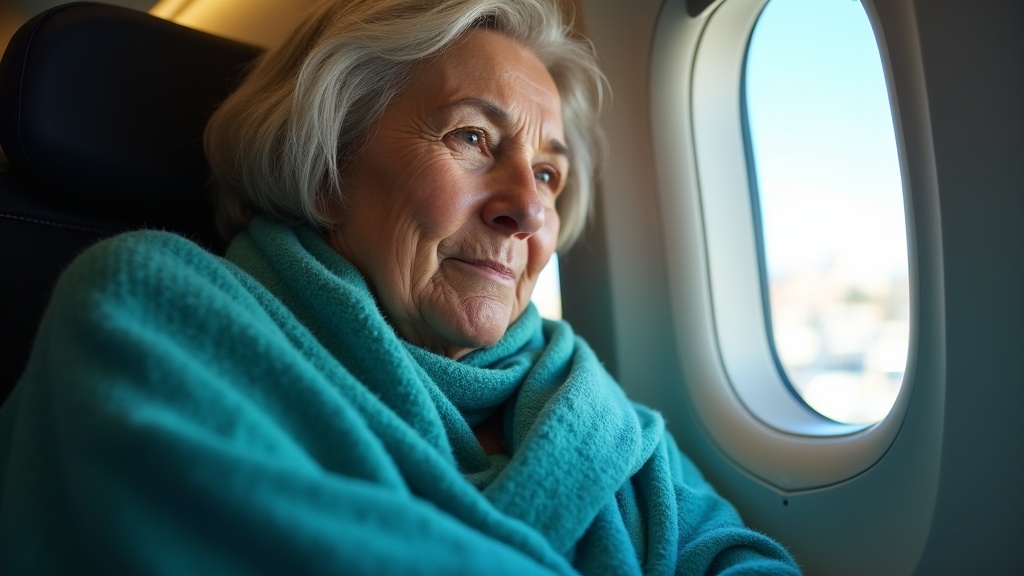
You’re buckled into your seat, settled in for the flight, and within twenty minutes you realize the cabin temperature feels like a walk-in freezer. Your arms are covered in goosebumps. You’re hugging yourself for warmth. And when you glance around hopefully, there’s not a single blanket in sight.
If this sounds familiar, you’re not alone. Airlines keep cabins cool for good reasons, but that doesn’t make it any more comfortable when you’re stuck shivering for hours. Some flights offer blankets, but many don’t anymore, especially on shorter routes or budget carriers. Even when they do, those thin squares of fabric barely help.
The good news is that staying warm on planes doesn’t have to depend on what the airline provides. With a few simple strategies, you can take control of your comfort without hauling around bulky winter gear or hoping for mercy from the flight attendants.
The key is planning ahead with the right layers, knowing a few cold airplane hacks that actually work, and understanding what to pack in your carry-on. Whether you’re a frequent flyer or just trying to survive your next vacation flight, these flight comfort tips will help you arrive at your destination cozy instead of frozen.
Let’s look at practical ways to stay comfortable, even when the cabin feels like an icebox and no blanket is coming your way.
Why airplane cabins can feel colder than you expect
If you’ve ever wrapped your arms around yourself mid-flight and wondered why you’re freezing, you’re not imagining things. Airplane cabins really do run cold, and there are a few reasons why.
Airlines typically set the temperature for a full plane packed with passengers. Body heat from a few hundred people adds up quickly in a small space. So the cabin starts out cooler than you’d keep your living room, anticipating all that extra warmth. If the flight isn’t full, or you’re sitting far from other passengers, you’re stuck with that lower baseline temperature without the benefit of everyone else’s body heat.
Then there’s the air circulation. Those vents above your head are constantly pushing air around the cabin to keep things fresh. Even if the air isn’t actually cold, that steady breeze makes you feel colder. It’s the same reason a fan cools you down in summer, except now you didn’t ask for it.
Sitting still for hours doesn’t help either. Your body generates less heat when you’re not moving around. Combine that with the dry cabin air, which can make you feel chillier than usual, and you’ve got the perfect recipe for feeling cold.
As for blankets, not all airlines provide them anymore, especially on shorter flights or in economy class. Even when they do, there might not be enough to go around if the flight is full. Some airlines now sell blankets instead of handing them out for free. It’s just another reason to come prepared with your own way to stay warm.
Dress in layers that work in a cramped seat
The key to staying warm on a plane is building a simple three-layer system that you can adjust without doing gymnastics in your seat. Start with a comfortable base layer like a fitted long-sleeve shirt or lightweight thermal top. This sits close to your skin and keeps your core temperature steady without adding bulk.
Your middle layer does the real work. A fleece pullover, cardigan, or hoodie gives you warmth you can easily pull on or peel off as the cabin temperature shifts. Choose something soft that won’t feel restrictive when you’re sitting for hours. A zipper or buttons make it easier to adjust without taking the whole thing off.
The outer layer is your secret weapon. A large scarf, wrap, or lightweight jacket can double as a blanket, lumbar support, or even a makeshift pillow. Look for something that compresses easily but still provides warmth when you need it. You want fabric that feels cozy against your skin if you drape it over your lap or shoulders.
Don’t forget the small stuff that makes a surprising difference. Warm socks are essential since airplane floors are often ice cold, and keeping your feet elevated or tucked under you helps retain heat. A beanie or the hood from your sweatshirt keeps warmth from escaping through your head without taking up packing space.
The goal is to stay comfortable without looking like you’re headed to base camp. Each piece should feel natural to wear in a confined space and easy to adjust when you’re squeezed into a middle seat.
Pack small items that replace an airline blanket
Airlines don’t always stock enough blankets, and the ones they do offer can feel scratchy or too thin to actually help. The good news is that plenty of compact items work better than airline blankets and fit easily in a carry-on or personal item.
Travel blankets designed for flights fold down smaller than you’d expect. Look for ones made from soft fleece or microfiber that compress into their own pouch. They’re not itchy, they wash easily, and they take up about as much space as a pair of sneakers.
A large scarf or wrap does double duty as a blanket and a neck pillow. You can drape it over your shoulders, wrap it around your legs, or bunch it up for extra cushioning. Cashmere-blend or thick cotton scarves feel warm without adding much weight to your bag.
An oversized hoodie gives you warmth you can wear instead of carry. Choose one with a roomy hood and deep pockets. You can pull the hood up when your head feels cold and tuck your hands in when the air vents blow directly on you.
Compressible down or synthetic jackets pack incredibly small and warm up fast. Keep one in your personal item so you can grab it before boarding. Once you’re settled, you can wear it or use it as a lumpy but effective blanket.
Warm socks matter more than you might think. Airplane floors and seat materials conduct cold, especially if you’re near a window where the fuselage gets chilly. A thick pair of socks keeps your feet comfortable and helps your whole body feel warmer. Keep them accessible in an outer pocket so you can slip them on as soon as you sit down.
Use your seat area to stop heat loss
When the cold hits mid-flight, your best defense is trapping the warmth you already have. Start with your core and lap. Drape a jacket, sweater, or scarf across your stomach and thighs like a makeshift blanket. This stops cold air from pulling heat away from the parts of your body that need it most.
Your feet and ankles lose heat fast on those freezing cabin floors. Tuck your legs up if there’s room, or wrap a scarf or extra layer around your ankles. Even resting your feet on top of your bag instead of directly on the floor makes a noticeable difference.
If cold air is blasting down on you, twist the overhead vent fully closed or angle it toward the aisle. Sometimes a neighbor’s vent is the real problem. If their air stream is hitting you, it’s completely fine to politely ask if they’d mind redirecting it. Most people don’t even realize their vent is bothering someone else.
Here’s an odd trick that actually works: pull down your tray table and tuck a layer between your chest and the table edge. It acts like a little shield that blocks drafts and traps warmth close to your body. Just make sure you’re not creating a tangled mess that makes it hard to get up when needed.
Finally, wrap something around your neck and shoulders. A scarf, hoodie, or even a cardigan draped like a shawl keeps warm air from escaping up and out. Your neck is surprisingly good at radiating heat away, so covering it helps you feel warmer faster than almost anything else.
What to do if you’re still cold and can’t get comfortable
Sometimes your own layers and tricks aren’t enough. When that happens, it’s okay to ask for help.
Start by pressing the call button and asking a flight attendant if any blankets are available. They might have extras tucked away, or they might not. Either way, it’s worth a polite ask. If blankets aren’t an option, you can mention that you’re uncomfortably cold and see if they have any suggestions.
If the flight isn’t full and you’re seated near a door, galley, or bathroom, consider asking if you could move to a warmer spot. These areas tend to be the coldest parts of the cabin. The crew may or may not be able to accommodate you depending on weight distribution and other factors, but it doesn’t hurt to ask respectfully.
Another simple fix is to get up and move a little if the seatbelt sign is off. A quick trip to the restroom or a brief walk down the aisle can get your blood flowing and warm you up temporarily. Just stay aware of the crew’s instructions and don’t wander if they’ve asked passengers to remain seated.
Once you land, make a mental note of what didn’t work. Maybe your sweater wasn’t warm enough, or you forgot to pack your travel blanket in your personal item. Next time, keep one reliable warm layer where you can grab it easily without digging through overhead bins. Learning from a cold flight means you won’t have to repeat it.